
An SEO strategy sets out how the website will compete for relevant unpaid search visibility, which work takes priority and how progress will be assessed.
It commonly connects three areas: on-page SEO , off-page SEO and technical SEO.
- On-page SEO: improving the relevance and usefulness of individual pages;
- Off-page SEO: earning relevant references and recognition outside the website;
- Technical SEO: improving technical access, reliability and the experience of using the website.
Some teams also use the term generative engine optimisation (GEO) for work concerned with visibility in AI-generated answers.
The practical question is which established tasks also help there, and which additional outcomes can be measured reliably.
Why an SEO strategy matters
A strategy helps the team make decisions, coordinate work and allocate limited resources.
It connects relevant visibility and visits with conversions and business outcomes, while accounting for the cost and uncertainty of the work.
Many established SEO practices also provide a useful basis for GEO AI search visibility, especially where a product retrieves information from the web.
Google’s published guidance explains that its established SEO practices apply to its AI search features.
It does not require a separate special optimisation method or schema.
The following steps turn that principle into a practical plan without promising a citation.
Research relevant queries
Start with keyword research: identify the queries and needs relevant to the business.
Look for the language the target audience uses at different stages of a decision.
For example:
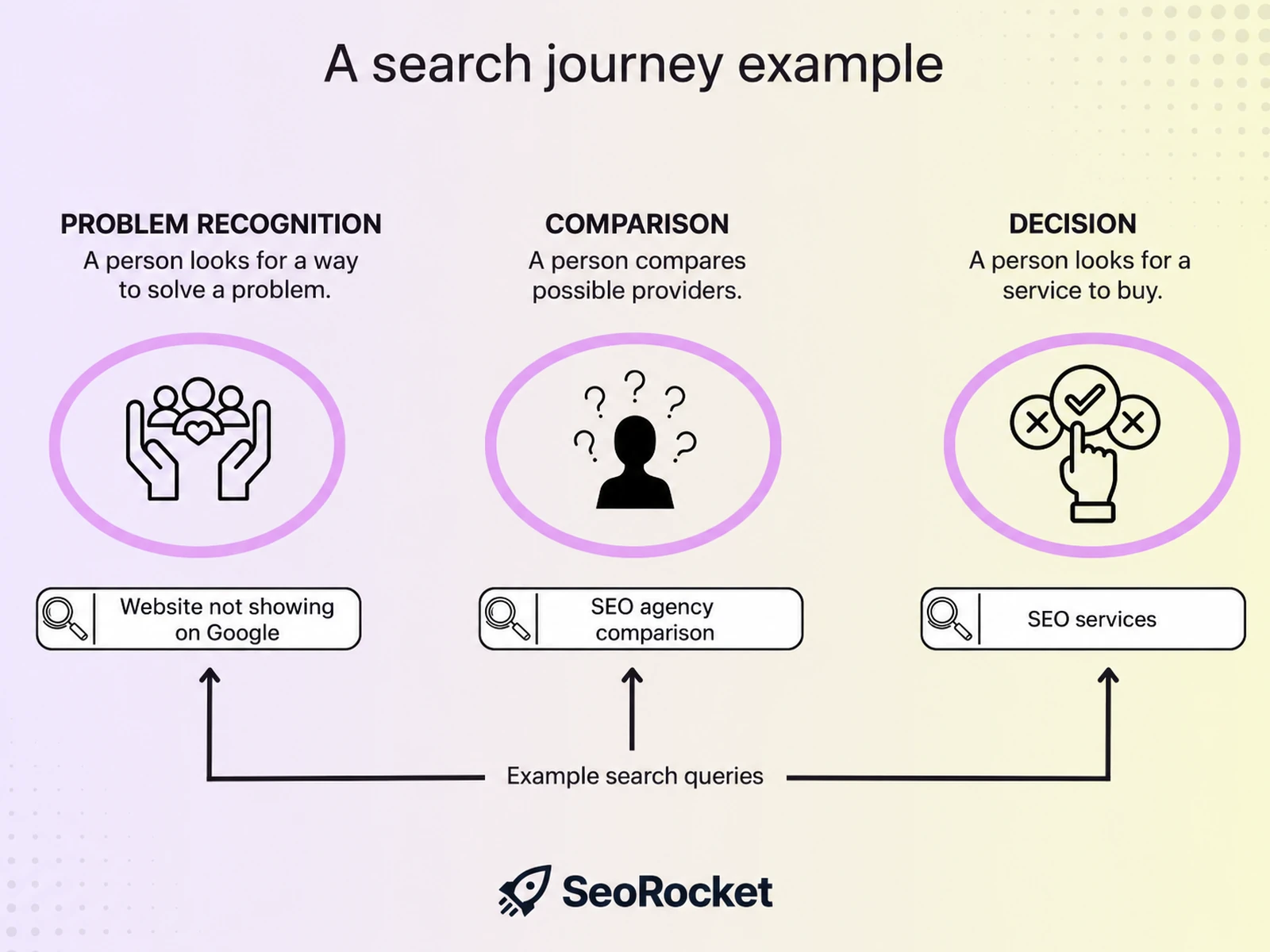
Someone may begin with “website not appearing in search”, compare SEO agenciesand later search for “SEO services”.
Query research helps reveal those needs. Using relevant language makes the page easier to understand, but repeating a keyword does not guarantee a ranking.
Use the research to decide where the website can provide a useful answer.
Autocomplete can suggest related wording, although it is not a complete measure of demand.
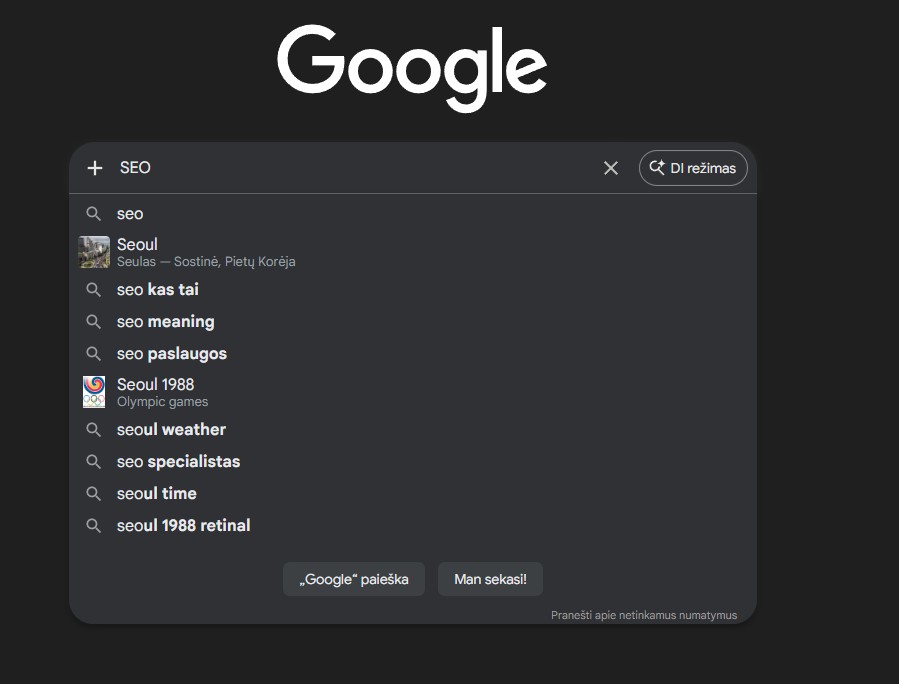
Depending on the location and context, suggestions might include “what is SEO”, “services” or “specialist”.
Dedicated research tools can expand the investigation.
They provide estimates and metrics that help prioritise, but those values need context.
For example, Ahrefs Keywords Explorer provides query ideas and measures such as:
- Search volume: an estimate of monthly searches for the selected query and market, not a forecast of visits to your page.
- Keyword difficulty: a proprietary estimate of competition. Inspect the actual results rather than use the score as a complete assessment.
- Intent: the likely purpose of a search, such as information, navigation, comparison or purchase. A label does not establish how likely an individual visitor is to convert.
Choose the target market and relevant seed terms.
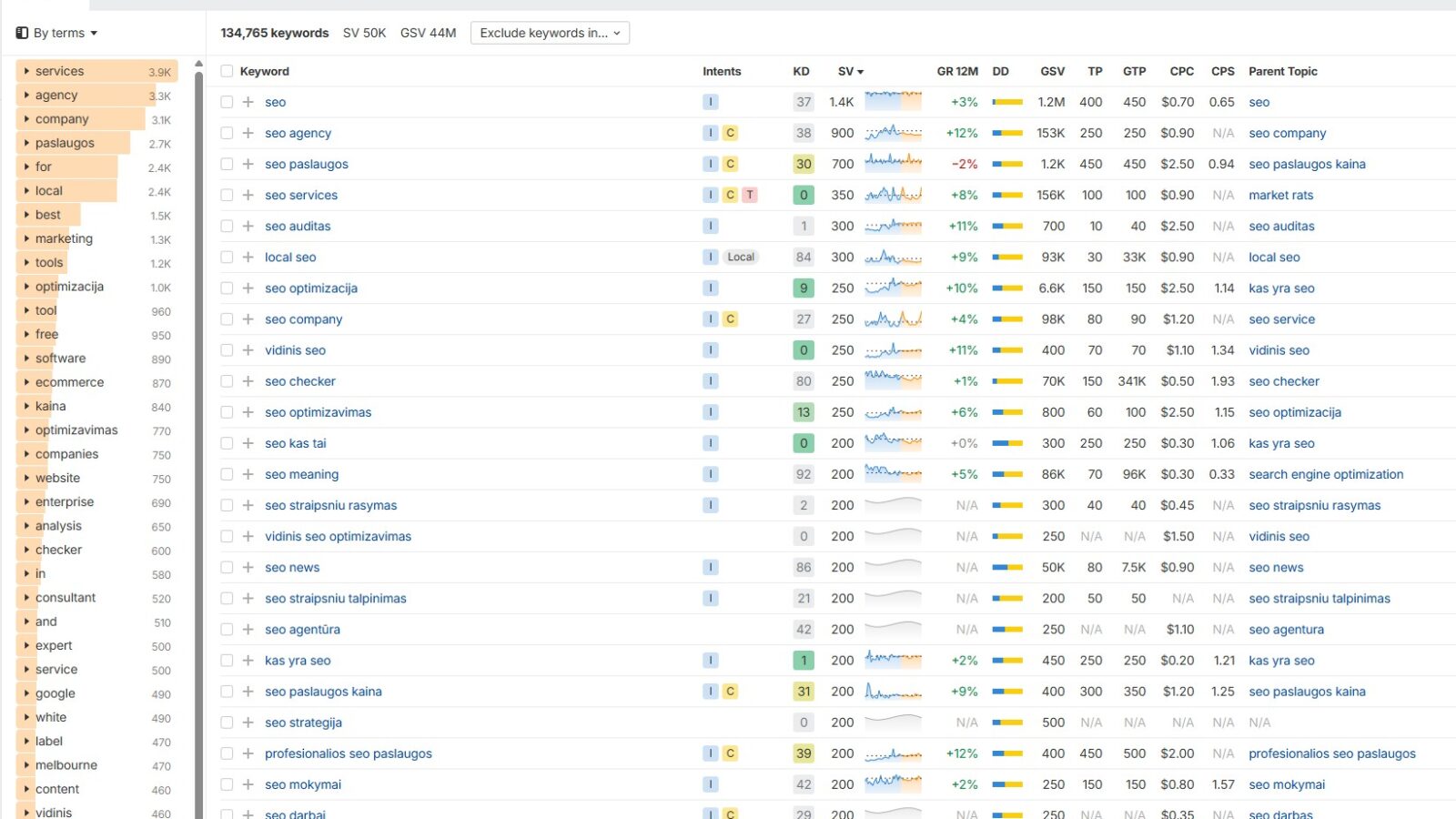
Use filters and sorting to investigate the queries that fit the offer.
A tool may support question filters and inclusion or exclusion rules. Confirm what the current interface provides rather than assume every screenshot represents the latest version.
Map queries to pages
A query map connects a relevant group of searches with the page intended to answer them.
If no suitable page exists, consider whether a new page is justified.
Group queries by the need and result type they share, rather than create one page per keyword variation.
Related resources can form a topic cluster, with internal links that help people move between them. The links should express a useful relationship.
An example query map:
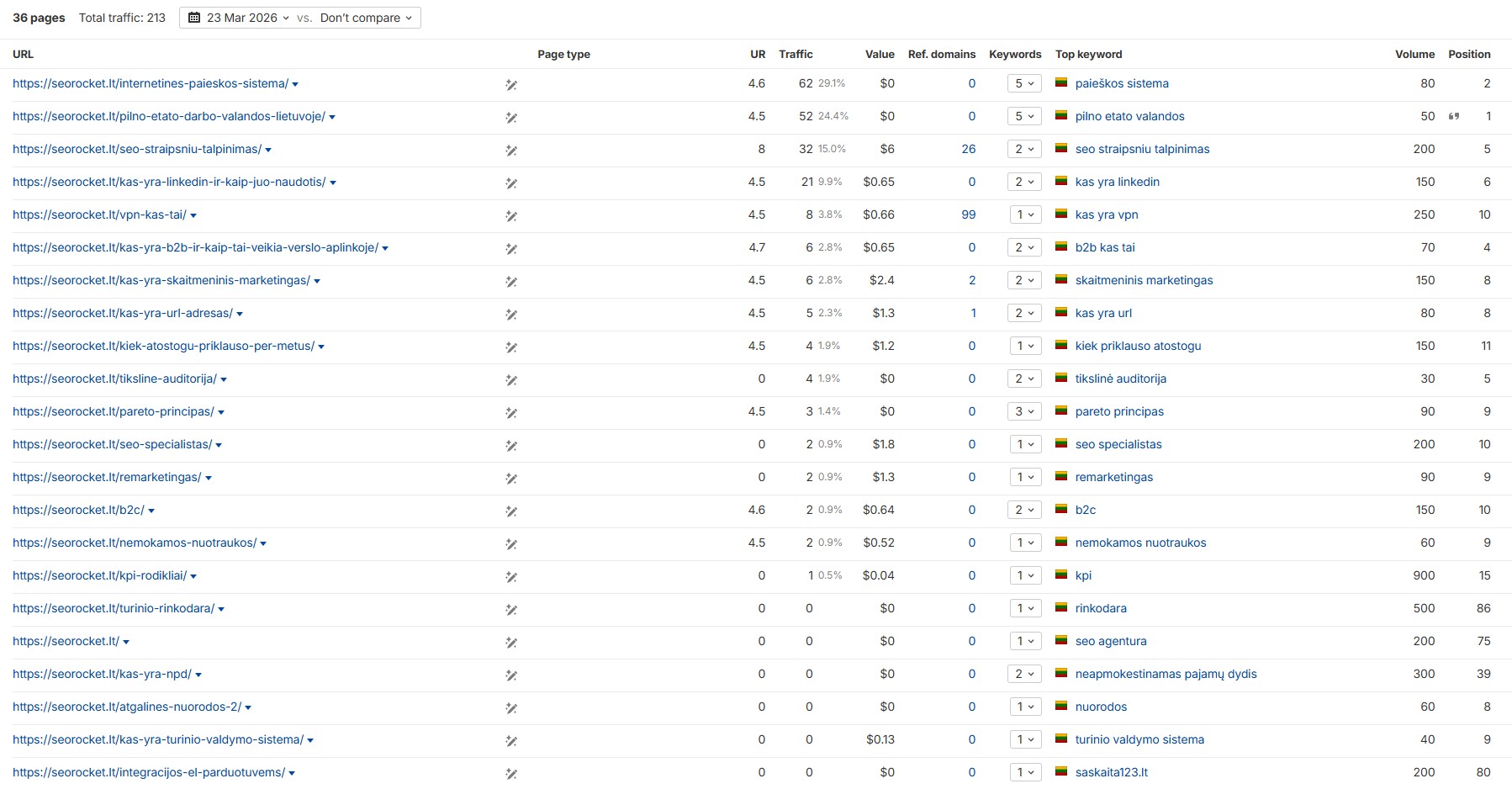
Inspect the search results to understand likely intent, page types and the information expected.
For example, searches about the best headphones may return comparisons for particular years, needs or price ranges. Review the current results in the target market.
Plan the content
A content plan identifies pages to improve and justified new resources to create.
Planning matters because search engines aim to surface useful, relevant information. The objective is to serve the reader’s task, not add sections to satisfy an arbitrary word count.
Review the existing pages in the query map:
- Does the page answer the intended need?
- Is the information accurate and current where dates matter?
- Does it offer useful evidence or detail beyond existing results?
- Is it readable and logically organised?
- Would an image, video, table or other element help explain something?
- Are the title and main heading descriptive?
- Is relevant terminology used naturally?
A gap in one area suggests a specific improvement to assess, not a reason to rewrite everything automatically.
Plan relevant references and mentions
Link building are links from other websites. Mentions refer to the brand whether or not they include a link. These can provide awareness, discovery or relevant visits, but they do not have interchangeable or guaranteed ranking effects.
Include a responsible plan for earning relevant references where it suits the business.
Choose methods according to the subject, audience and available resources.
Options include:
- Digital PR: publish and share genuinely newsworthy material;
- Broken-link outreach: identify a broken resource and offer a relevant, useful replacement where you have one;
- Contributing articles: provide useful editorial work for relevant publications, with appropriate disclosure and link qualification for paid arrangements;
- Reference-worthy resources: publish original research, practical tools or other material that people have a reason to cite;
- Expert contributions: respond to suitable requests for accurate commentary or supporting material.
Assess the publication and the reason for a reference, not just a third-party authority score. Avoid arrangements intended to manipulate search rankings.
Relevant searches and research tools can help identify potential publications to investigate.
Decide how to measure progress
Measurement helps the team assess progress and decide what to change.
Define the objective, baseline, measures and review dates before implementation.
Where appropriate, configure Google Analytics 4. Its standard edition can report recorded activity at website and page level; implementation and consent choices affect the data.
For organic acquisition, useful measures may include:
- Sessions: recorded visits attributed to organic search under the report’s scope;
- Average engagement time per session: recorded engagement time divided by sessions, rather than the full elapsed duration of a visit;
- Important events: confirmed actions such as purchases or completed forms, with appropriate deduplication and qualification outside analytics where needed.
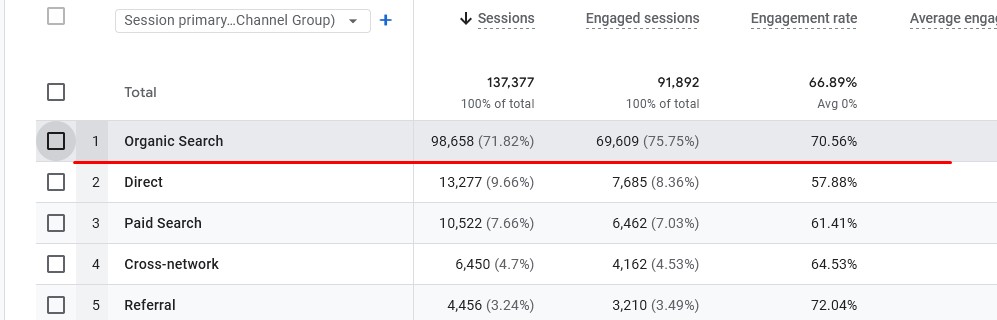
Use Google Search Consoleto examine search performance. Open Performance > Search results.

Review clicks, impressions, CTR and average position by relevant query–page groups, dates, country and device. Query tables omit some data for privacy and do not represent every search.
Consider AI search visibility
Consider AI visibility as an additional investigation, not a way to guarantee future performance.
For example, a cited answer may expose a person to a brand.
An answer listing agencies should be checked for its sources, date, relevance and factual accuracy; appearance in that list is not an independent endorsement.
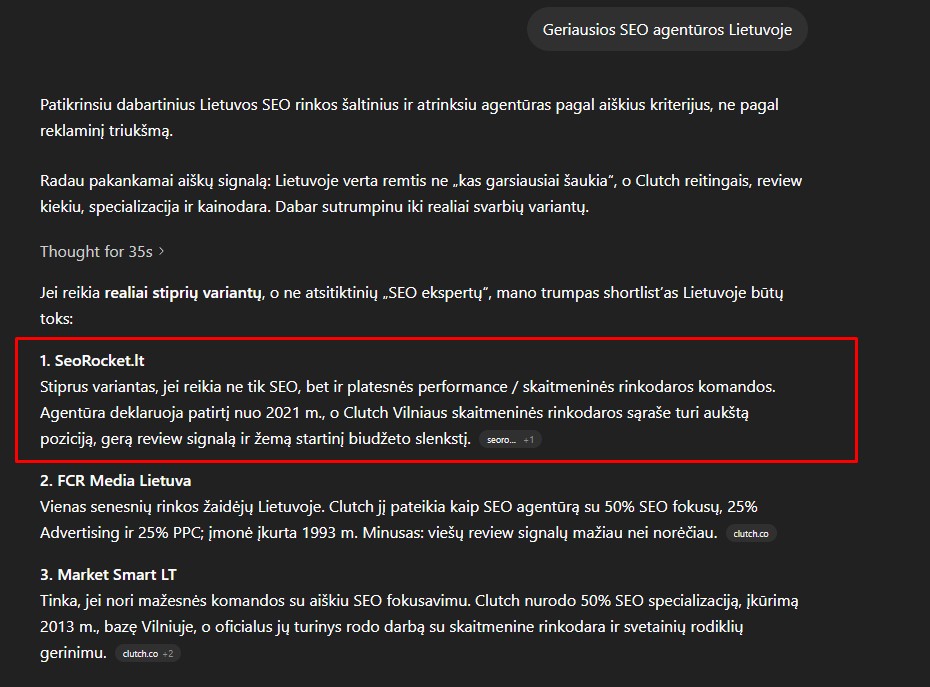
Acting now can improve content and measurement, but no task guarantees quick results or inclusion in future AI answers.
Practical priorities include:
- Describe the offer accurately and consistently.
- Write for a defined audience and its real questions.
- Earn genuine references where you have relevant expertise, without fabricating recommendations.
- Monitor public information and address factual errors appropriately.
- Invite genuine customer feedback without incentives or filtering that distort the review process.
- Make suitable public content accessible to the relevant crawlers, consistent with the site’s access policy.
- Use clear language and explain necessary technical terms.