Suppose ChatGPT recommends your company and says in the same sentence that you only work in Vilnius. You have been serving customers in Kaunas for a year. A monitoring report counts that answer as a mention, but a buyer in Kaunas might rule you out.
Start with the sentence that could mislead a buyer. Save the question and answer, open the source cited next to the claim and check it against the services you currently offer. That gives you a concrete fact to correct and a way to track it later.
Start with the questions buyers ask
“What do you know about [company name]?” shows how AI describes a particular company. To find out whether it recommends you, ask questions that leave the company name out. Think about what a customer needs to know before getting in touch. For example, “Who installs office ventilation systems in Kaunas and can also maintain them?” The area you serve can matter as much as whether your company makes the list.
Use sales conversations, enquiries and Search Console to build the question set. Include questions customers ask before they start comparing suppliers, such as “What kind of ventilation does a stuffy office need?” A few questions from each group are enough for a first test. Save them so you can repeat the test later. Ask each question several times in fresh chats. Record the date, platform, model if shown, exact wording, and web search and memory settings. If location matters, name it in the question. ChatGPT can take earlier messages into account, so start a separate chat for each run. Keeping a record of these settings makes the comparisons easier to interpret. ChatGPT search documentation
Record the mention, claim and source separately
If the answer names your company, note whether it recommends you for that buyer’s situation and what reason it gives. Save the specific page if the answer includes a link. The company mentioned and the source cited may belong to different domains. An answer can cite your website without recommending your company.
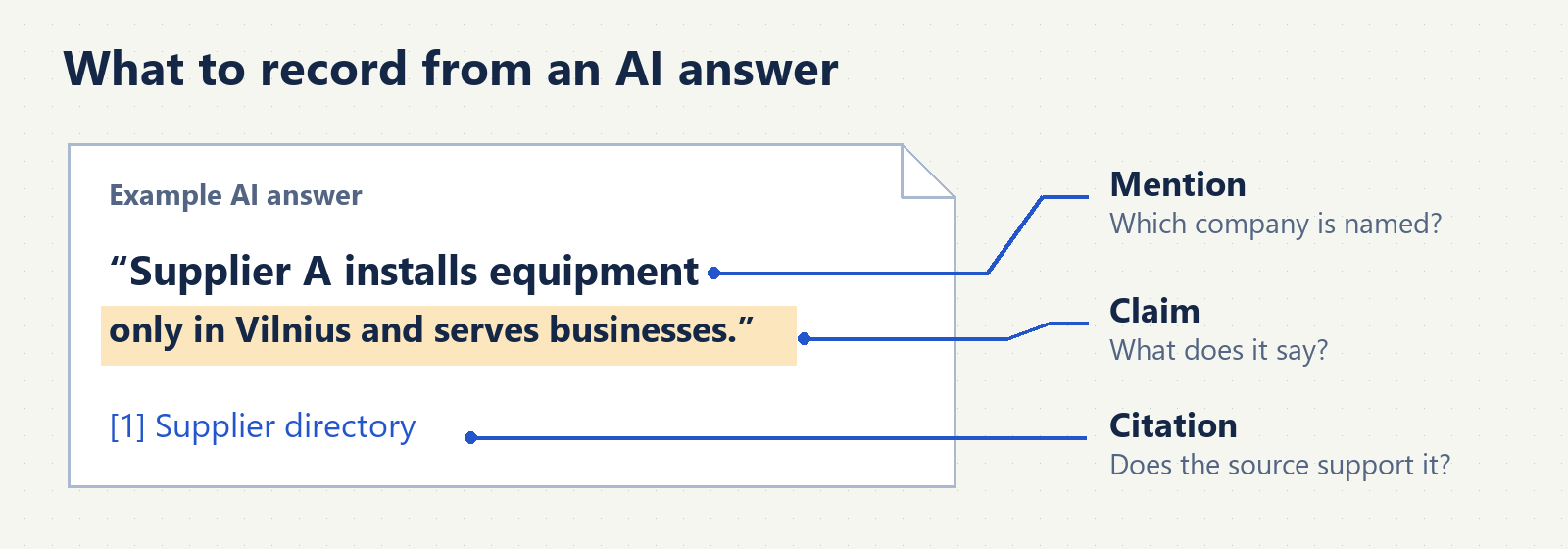
Copy the exact wording and mark the claim as accurate, outdated, incorrect or unverified. A polite line such as “This supplier only works with large companies” can put off a smaller buyer even when the rest of the answer is accurate. Start with claims that could change a buying decision.
Check what the source actually says
In this example, Supplier A installs equipment in Vilnius and Kaunas, but the answer claims it only installs equipment in Vilnius. The link leads to a directory listing that still says “We install in Vilnius only.” The current service page lists both cities. Ask the directory editor to update the listing and send them the page that shows the current service area.
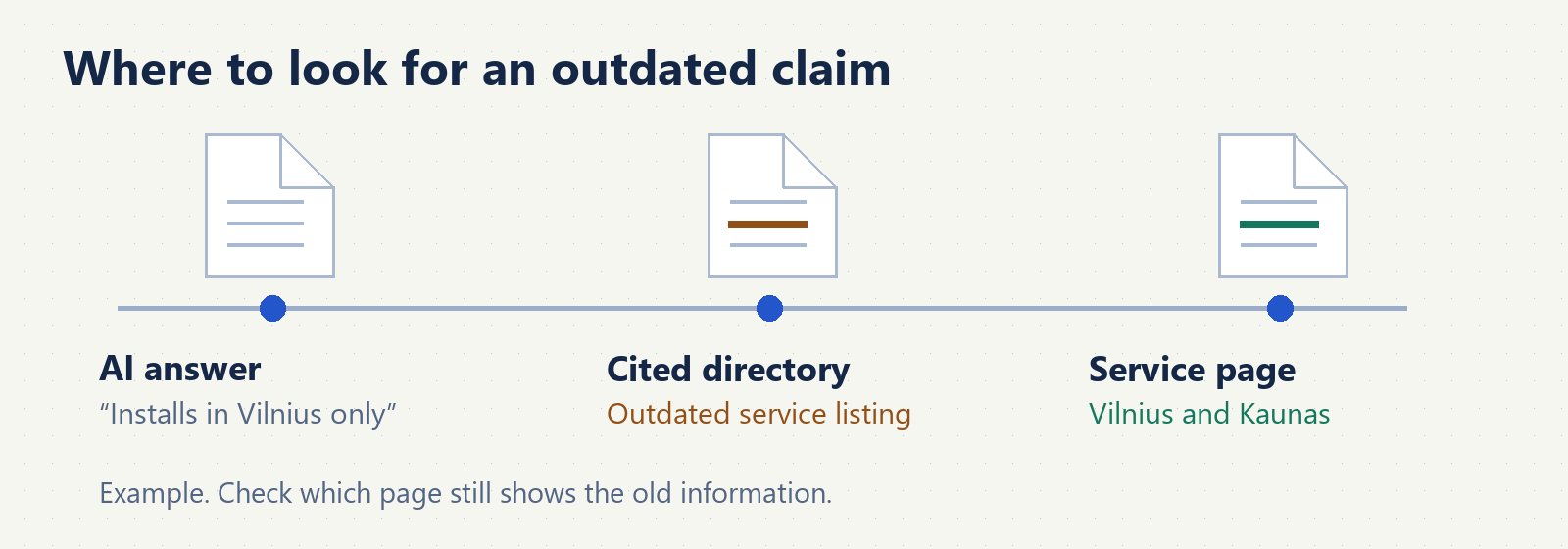
A citation gives you somewhere to look. If the source does not contain the claim, check the other cited pages and see if the answer has generalised from a specific example. A case study about one installation in Vilnius says where that project took place. It tells you little about the company’s full service area. If you cannot trace the statement to a source, record its origin as unknown.
Correct the fact where buyers would look for it
If the error appears on your site, update the service page, pricing page or wherever a buyer would expect to find that information. List the cities you serve in the service description itself. If a directory, partner or publisher has the old information, ask them to correct the specific fact and provide a source.
Sometimes the answer is accurate but keeps repeating a strength you used to emphasise. If your company used to compete mainly on price and now also provides installation and maintenance, explain the current offer on your service page and show what was involved in a real project. That is part of managing how your brand is described in AI search.
For a product claim, specify the model, version and test conditions. Include the main specifications and test findings in the page text so buyers can check them without opening an image. An old review can be accurate for the model tested and still mislead if the answer applies its findings to the whole new range. If a limitation still applies, explain where the product works and what conditions it requires.
Repeat the test after the correction
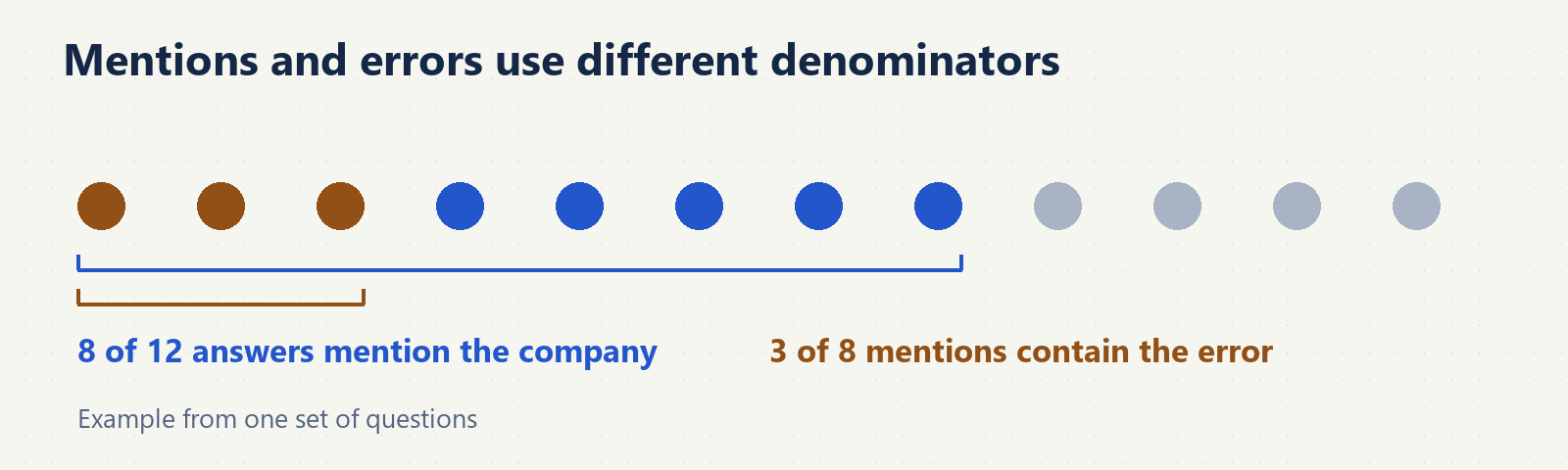
Use the same questions, platforms and search settings. Count answers that mention your company separately from mentions that still contain the error. Suppose eight of 12 answers mention the company and three of those eight name the wrong city. Your mention rate is eight out of 12. The error rate among mentions is three out of eight. These example figures describe one set of tests.
Keep the new excerpts too. If the error shows up less often but the remaining answers still cite the same directory, you have a place to investigate. A change in one answer cannot tell you whether your correction caused it. If you are running a wider AI search audit, start with one recurring claim that could cause buyers to rule your company out for the wrong reason.