Search engines help people find online content, including pages, videos and images.
Which search engines are widely used?
Google is widely used for web search across many markets. Its relevance to your audience should be assessed for the countries and devices you serve.
Search-engine traffic estimates vary by provider and measurement period. Use a consistent source when comparing audiences.
Google uses multiple ranking systems to select results. Its wider products include Maps, YouTube and Gmail.
Search engine results pages, or SERPs, can include featured snippets, related questions and knowledge panels, depending on the query.
In February 2023, Google introduced Bard, its AI assistant later renamed Gemini.
Google has faced criticism over data collection. Privacy concerns are one reason people consider alternative search services.

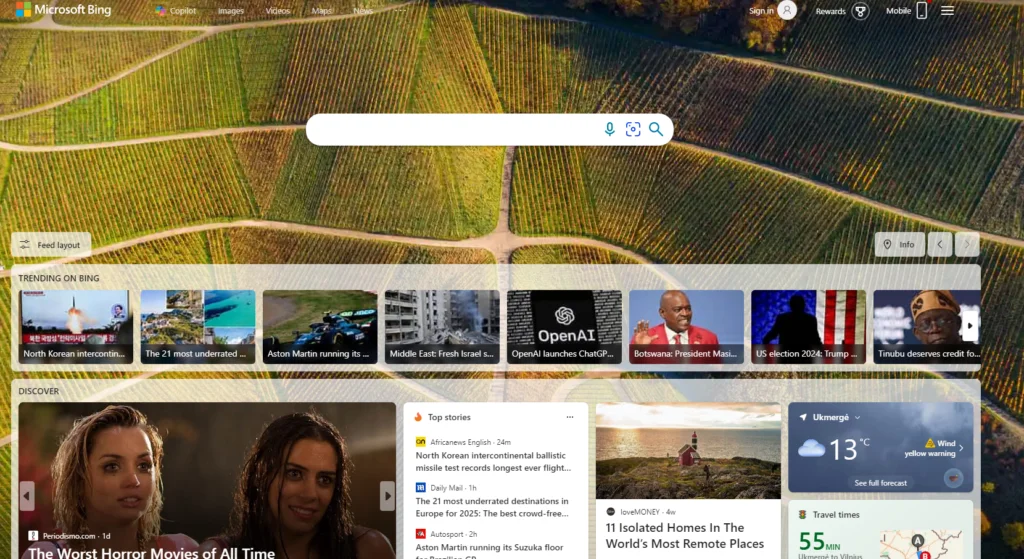
Bing
Microsoft Bing is another general-purpose search engine, with its own interface and ecosystem.
Bing includes image and video search with filters for exploring multimedia.
Microsoft Rewards can award points for eligible activity, with redemption options depending on the market and programme terms. Not every search or account necessarily qualifies.
Microsoft introduced an AI-powered Bing search experience in 2023; its assistant branding subsequently developed into Copilot.
DuckDuckGo
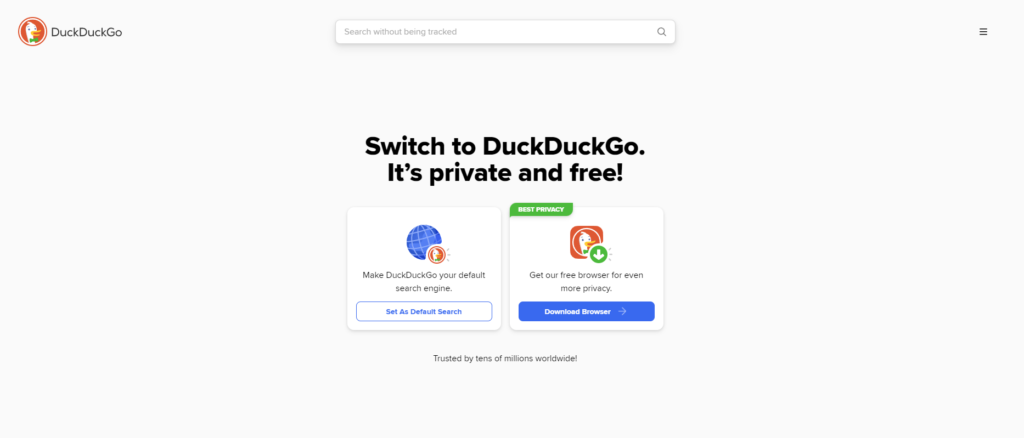
DuckDuckGo focuses on privacy and contextual search. It can still display contextual advertising.
DuckDuckGo supports operators and shortcut commands for directing searches.
For example, entering '!a family tents' redirects to Amazon results for family tents through its bang shortcut.
Results combine several sources, including DuckDuckGo's own crawlers and search partners. Providers and integrations should be checked in the service's current documentation.
Ecosia
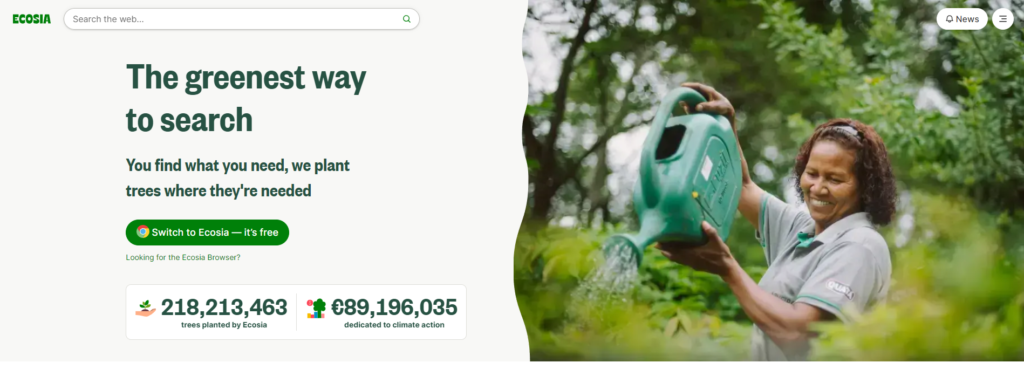
Ecosia uses search advertising revenue to support tree-planting and climate initiatives.
It publishes financial information explaining revenue and project spending. Its business structure and advertising arrangements should be distinguished from a blanket claim that every search directly plants a tree.
Ecosia has used Bing and Google search results, with availability depending on market and product configuration. Alongside web and multimedia results, shortcuts can direct queries to other websites.
Counters and impact indicators can illustrate search activity, but they should not be interpreted as a verified tree planted for each individual search.
Yahoo!
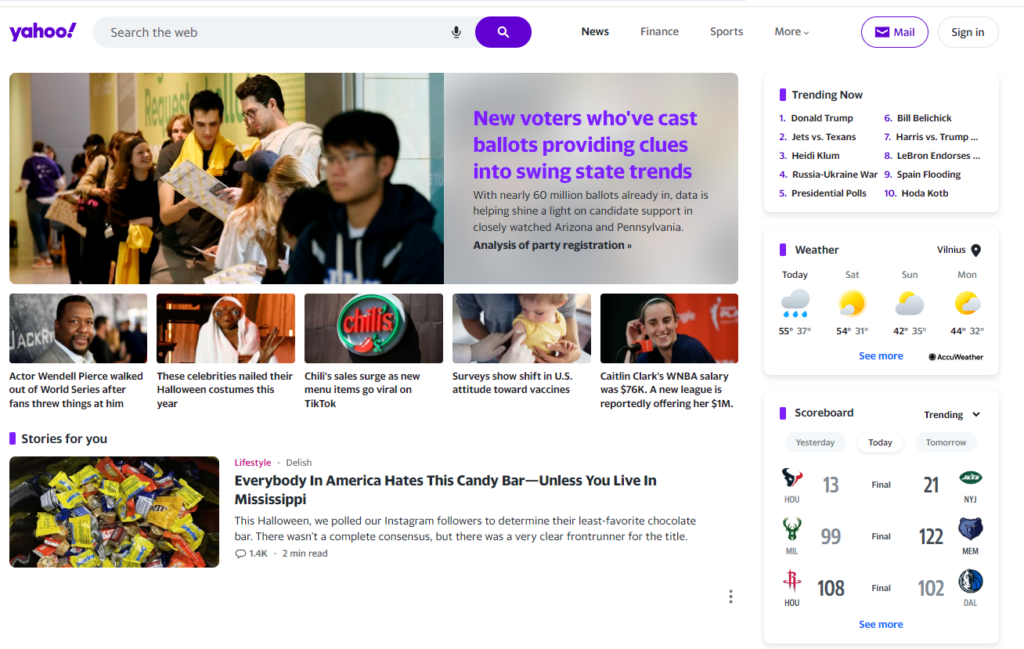
Yahoo launched in 1995 and is one of the longest-established web portals and search brands.
Its search has used Microsoft's Bing infrastructure, which can produce similarities between results.
The portal also includes news, current topics, weather and sport.
YouTube
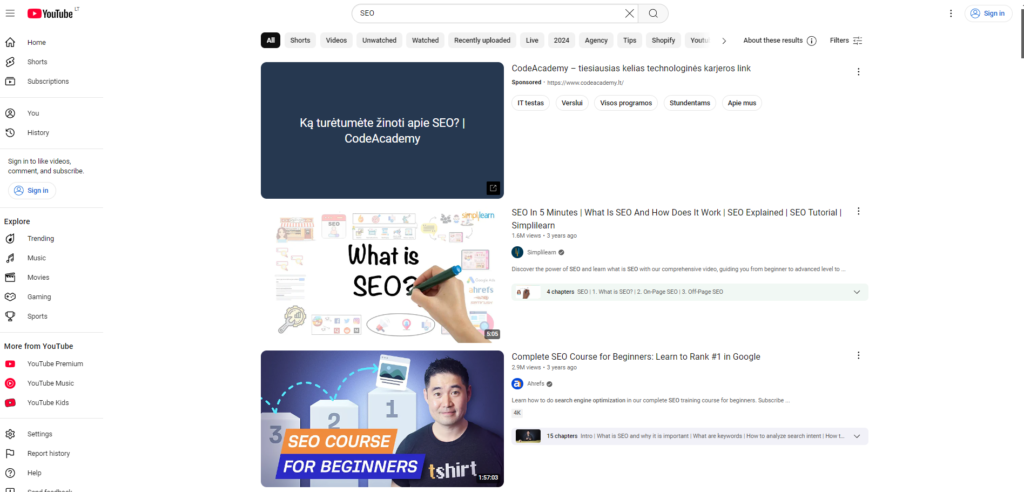
YouTube helps people discover video content, from demonstrations to entertainment. It serves a different task from a general web search engine.
Its searchable video library makes it useful for finding demonstrations, explanations and entertainment.
Use the search field to find videos.
Results can include Shorts and longer videos, with presentation depending on the query and interface.
Available filters include upload date, content type and features such as higher resolution.
TikTok
TikTok's video search can help people find demonstrations, experiences and other video-led content, alongside its recommendation feed.
Its language options and audience make it relevant to many types of video search, but usefulness depends on the viewer and topic.
Search can surface videos, accounts and live content. Recommendations also depend on engagement and viewing behaviour.

Startpage
Startpage presents itself as a privacy-focused search service, designed to avoid personal search profiles. Its current privacy policy explains how searches and technical information are handled.
It draws on larger search providers, including Google and Bing, offering an alternative interface with a different privacy approach.
The related StartMail service provides email products; search and email are separate offerings.
Baidu
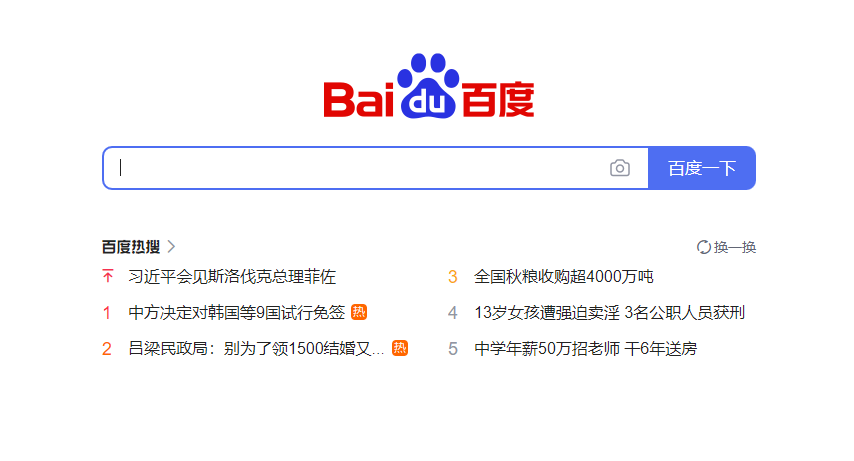
Baidu is an important search platform to consider when planning for a relevant Chinese-language audience.
Baidu also offers maps, news, encyclopaedia and cloud services.
Its search is strongly associated with Chinese-language audiences. For projects targeting China, assess local demand and actual visibility; tools such as Semrush may help where their regional coverage supports the task.
Yandex
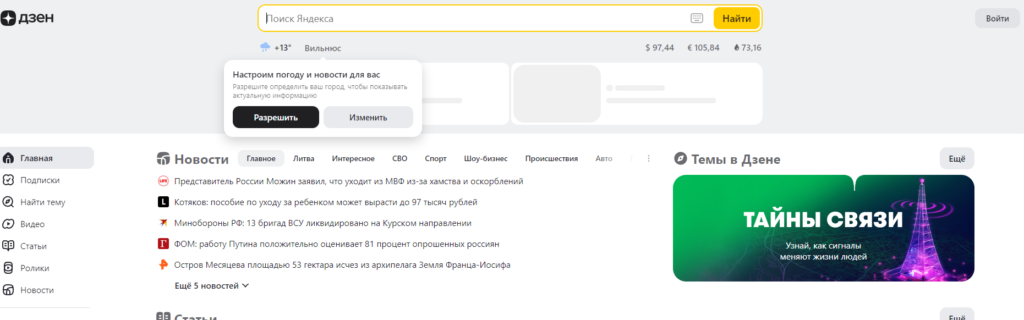
Yandex is another search platform associated with several regional markets. Check actual audience usage before deciding whether it belongs in your plan.
An English-language international service is available through yandex.com, subject to current service availability.
Other products have included maps, voice assistance, transport services, a browser and music.
Public discussions of ranking factors do not establish how every factor is currently used or weighted.