This guide examines GEO through content planning, technical access and measurement. It distinguishes useful publishing practices from claims about AI systems that cannot be verified.
Generative engine optimisation is a term used for work intended to improve how a brand or its information appears in AI-generated answers. Those appearances can include a mention or a citation; they are not the same as an endorsement or website visit.
Its value should be assessed in the context of the audience and business.
A reported success story from another company does not establish that the same acquisition pattern will apply to your offer.
Begin with your own relevant queries, referral data and verified enquiries.
GEO in context
Audience estimates for AI products change and use different definitions. Google Gemini and other services should not be compared by mixing weekly users, monthly users and search-feature exposure. Feature prevalencealso varies by query set, market and date; a single percentage is not a universal picture of search.
The practical question is whether the relevant audience encounters these answers and whether your information is represented accurately.
Is this stable enough to justify investment?
That is a reasonable question.
Define a manageable sample of relevant questions and repeat the checks before treating one answer as a trend.
Citations and wording can change between runs.
That variability does not make every observation useless.
It does mean that a repeated association between clear content and citations should not be presented as a confirmed formula for authority.
This guide explains useful tasks, their overlap with SEO and the limits of measuring visibility in AI-enabled discovery.
What the work looks like
GEO work aims to improve the foundations for accurate representation in generated answers.
For example, a person might ask a system to compare project-management tools for a small team. The answer may draw on product pages, reviews or other retrieved sources, depending on the product and request.
Appearing in such an answer is an observation to record. It does not prove that a particular optimisation caused the inclusion.
Useful work may involve several areas:
- Content strategy : publish information that answers real questions and can be understood in context;
- Brand information : maintain accurate descriptions where the business is genuinely represented;
- Technical access : make suitable public content accessible to relevant retrieval systems;
- Reputation : earn genuine references and address factual inaccuracies without manufacturing endorsements.
These tasks overlap substantially with established SEO and communications work.
How GEO overlaps with established SEO
GEO adds questions about where, how often and in what context the business appears in generated answers. Rankings, clicks and commercial outcomes remain relevant.
Comparing areas of emphasis
| Area | Established SEO | GEO |
|---|---|---|
| Common objective | Relevant organic visibility | Accurate mentions or citations in generated answers |
| Measures | Search visibility, clicks and useful visits | Sampled citations, mentions and context |
| How someone encounters the information | They may follow a search result | They may read an answer with or without following a source |
| Platforms | Google and Bing search | Google AI features, ChatGPT, Perplexity and other relevant services |
| Content work | Useful information, descriptive headings and accessible pages | Clear explanations and evidence that remain understandable when referenced |
| Credibility | Link building, relevant expertise, accurate business information and domain context, without treating a proprietary score as proof | Genuine coverage and feedback in relevant sources |
This comparison describes different measurement questions, not two isolated technical systems.
Search and AI features overlap, and practices should follow the actual audience and product.
The following sections explain practical implications.
What remains relevant
Useful SEO fundamentals remain relevant.
Serve real readers, make important content accessible, support claims and explain who is responsible for the information.
Those are sound publishing practices. They do not establish that every AI system uses the same quality or authority signals.
A coherent SEO foundation can support this work; it does not guarantee citation.
What changes
The main differences concern where information is encountered and what can be measured.
1. Where to publish
Established SEO also extends beyond an owned website through references, reputation and discovery.
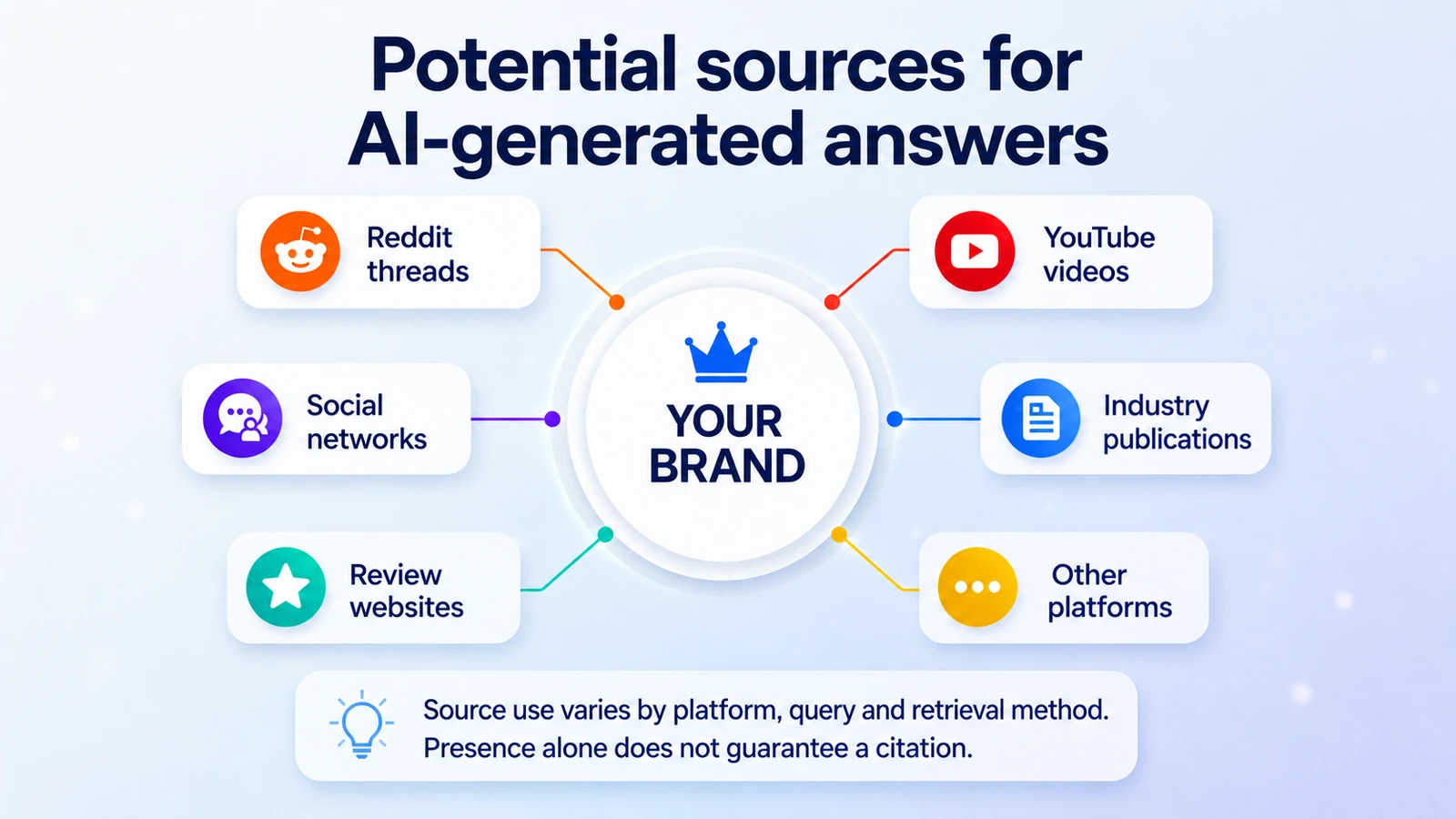
For AI-related work, investigate relevant sources rather than assume that every business must be on every platform:
- Reddit discussions where genuine audience questions arise;
- YouTube resources that demonstrate a useful task;
- specialist publications with a relevant readership;
- review platforms appropriate to the service;
- professional or social discussions connected to the subject.
2. How to present information
Retrieval systems may process passages or other page elements rather than use a whole page as one unit. Methods differ by product.
That supports clear editorial structure, not a compulsory new paragraph formula.
Definitions, figures and comparisons should include the context needed to avoid misleading someone who encounters them separately.
Useful practices include:
- descriptive headings;
- a clear answer near the beginning of a relevant section;
- an explanation organised around the reader’s task.
Both established search and AI-related work benefit from clarity and appropriate depth. Avoid an artificial distinction in which SEO requires maximum length and GEO requires short content.
3. What to measure
Rankings, clicks and engagement describe different parts of the journey.
Additional observations may include:
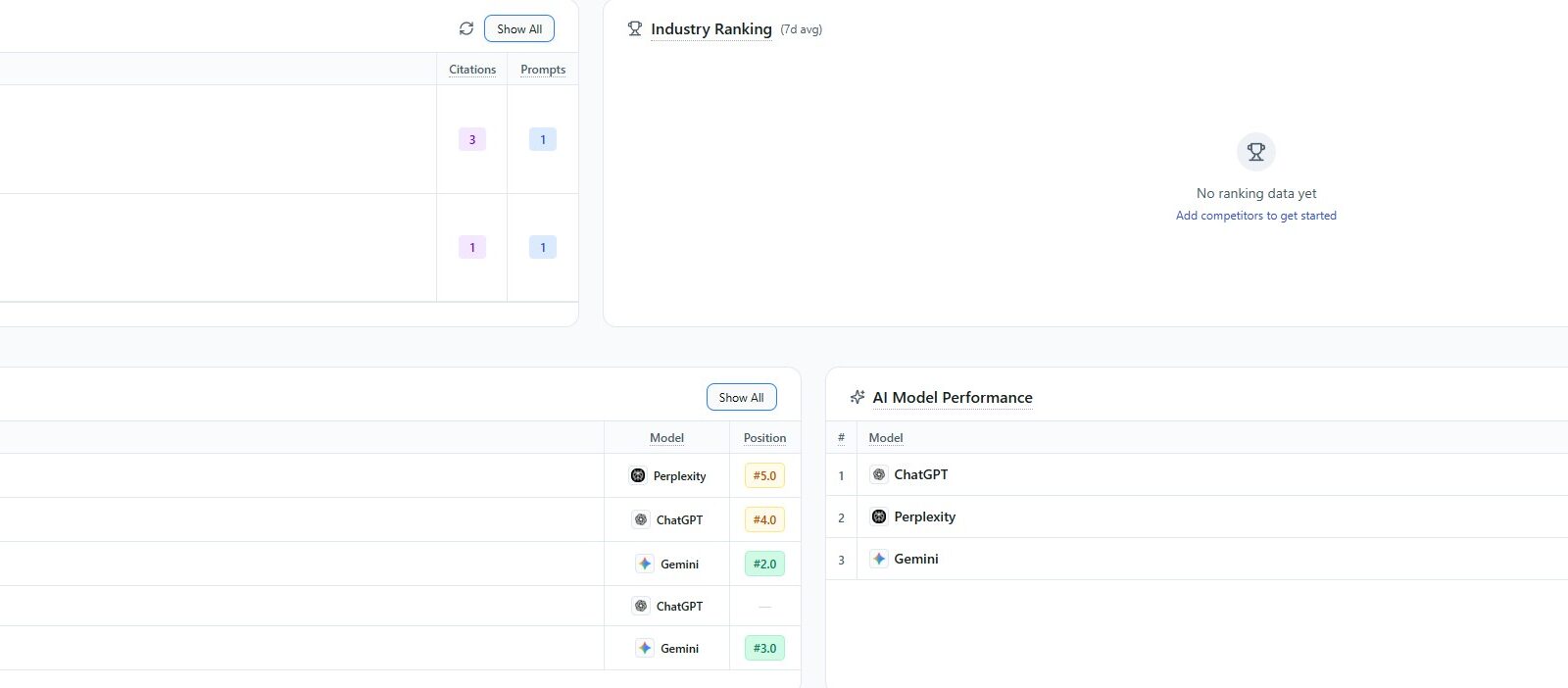
- Sampled AI visibility : whether and where the brand appears in a defined set of answers;
- Share of observed mentions : a comparison with selected competitors within the same sample;
- Sentiment : how a mention is framed, with human review where automated classification is unreliable;
- Query context : the questions and audience needs associated with an appearance.
These measures help describe representation. They do not capture all answers delivered to all users.
For a useful assessment in 2026, combine relevant search and website evidence with an explicitly bounded AI sample where it matters to the audience.
Five practical priorities for AI visibility
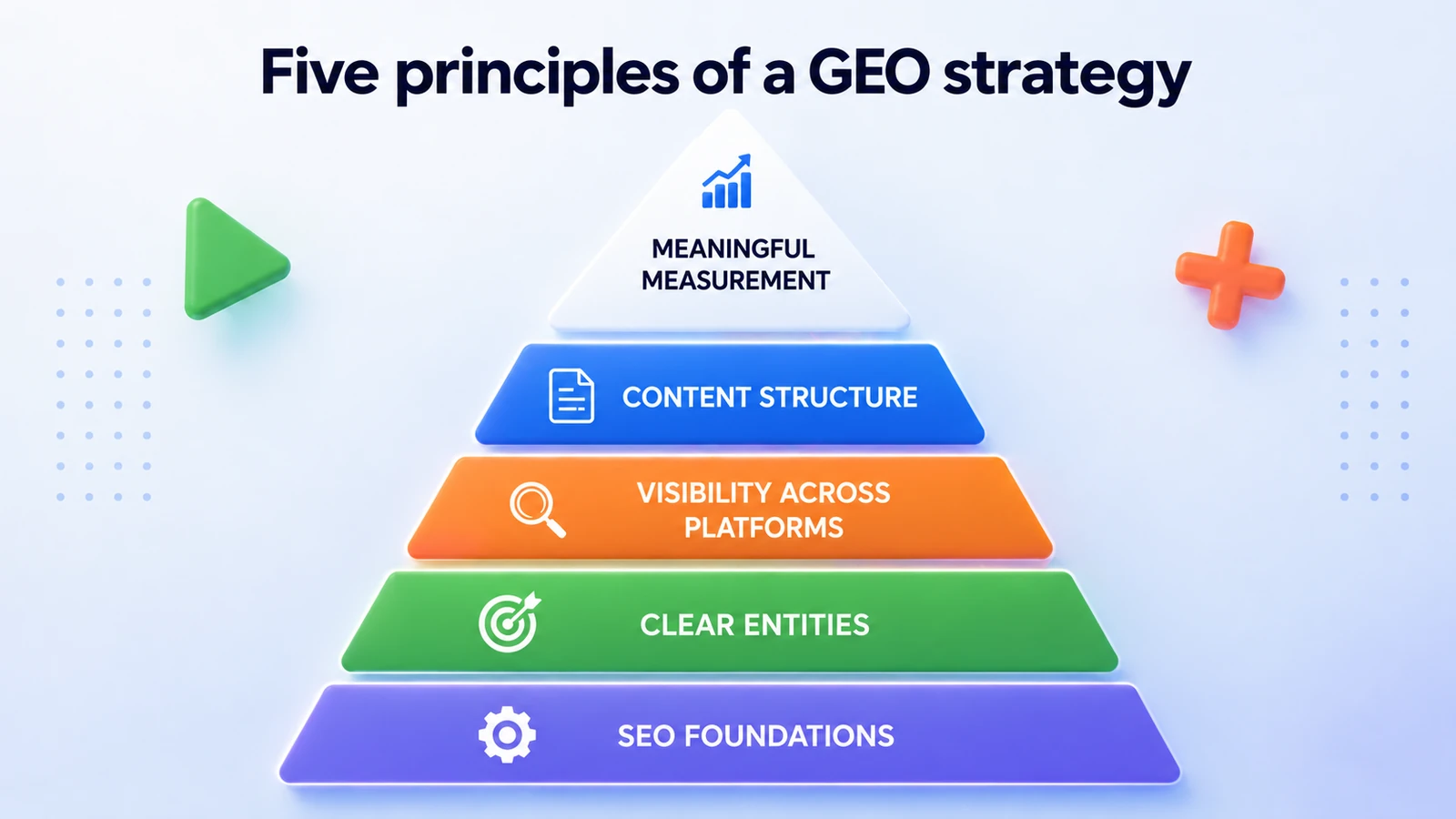
The five priorities below organise useful work. They are not confirmed universal ranking factors.
AI products and retrieval methods change over time.
State what each task is intended to improve and which outcome can actually be checked.
1. Maintain the SEO foundations
Crawlability, indexability where required and useful information remain important.
They help the appropriate retrieval system find and process a source.
Review whether relevant systems can:
- access the page;
- interpret its main information;
- identify the source and its context.
A page should make its subject and responsible organisation clear.
If access fails or the information is ambiguous, a system may not retrieve or use it as intended.
For Google AI search features, supporting links must meet the applicable indexing and snippet-eligibility requirements.
Technical access is therefore worth checking.
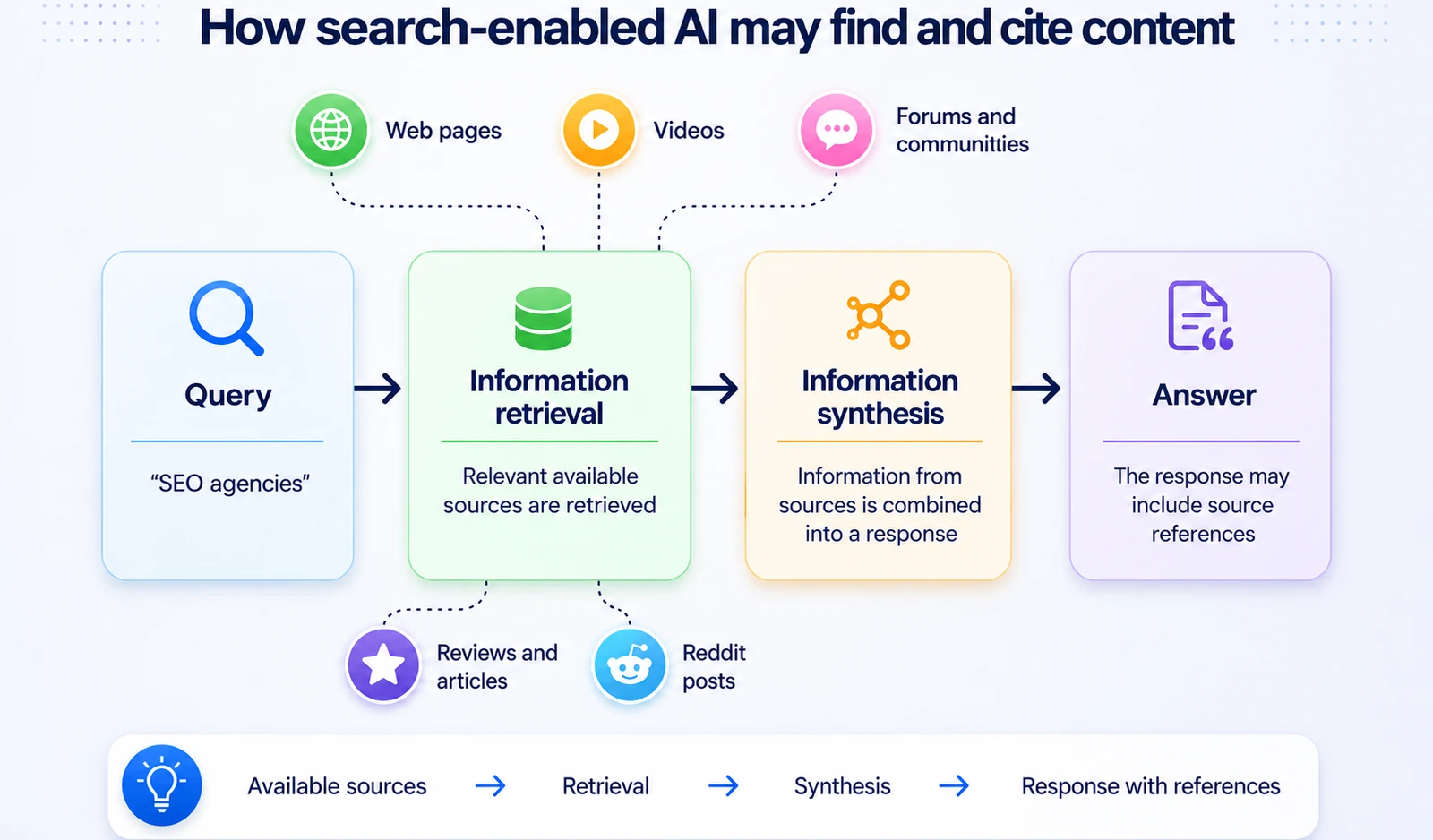
Loading failures can prevent retrieval. Performance and stability also matter to people, but a slow page should not automatically be described as less trustworthy to an AI model.
JavaScript delivery deserves particular attention.
Some crawlers have limited rendering support, so ensure that important information is available in a form the relevant crawler can process.
Content quality needs a separate review.
Explain claims, sources and relevant expertise. An author name by itself does not make information reliable.
Google’s E-E-A-T guidance helps frame questions about trust and quality, but is not a shared numerical score used by every AI product.
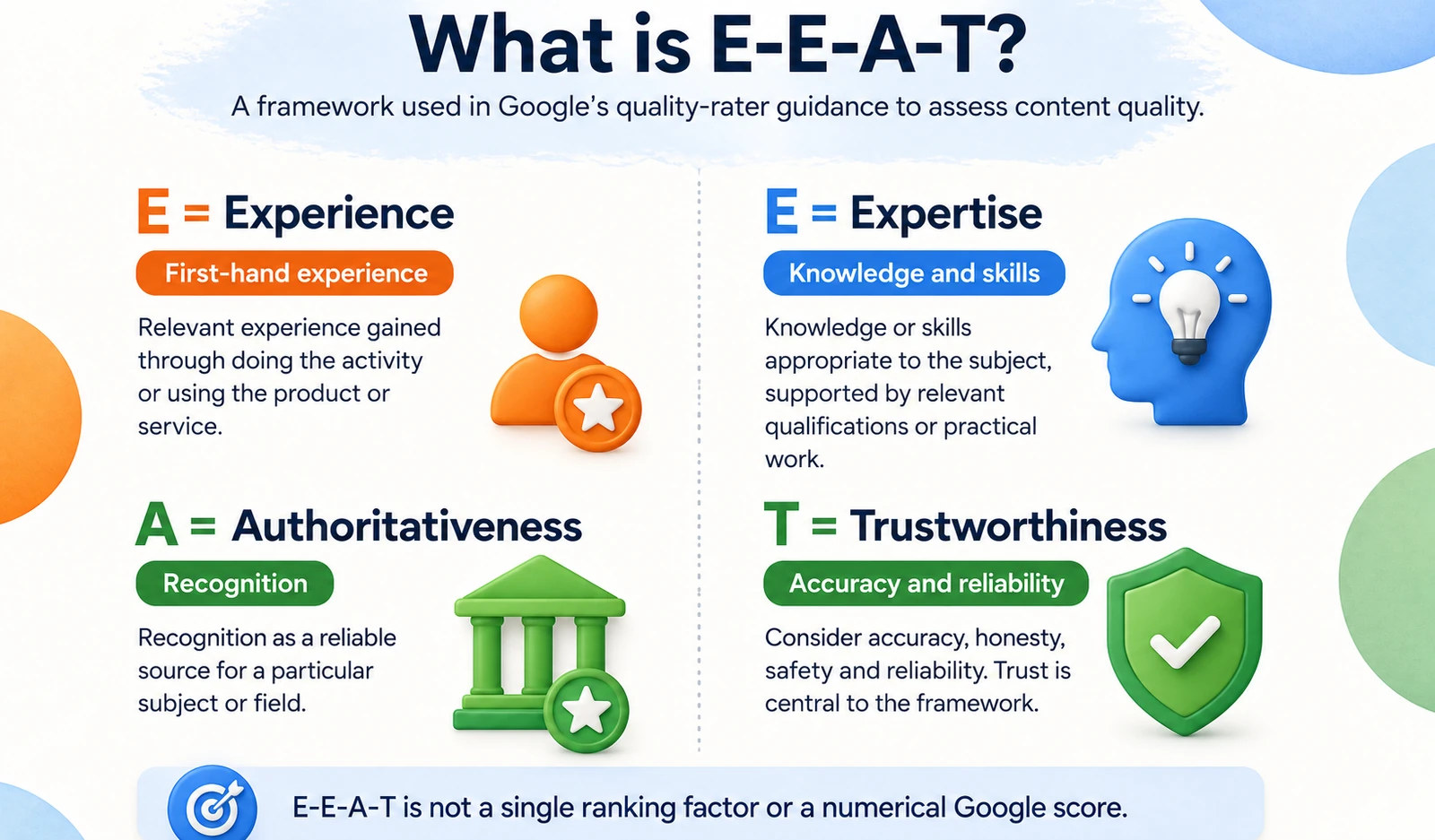
SEO supports discovery and information quality; it is not an infrastructure that guarantees visibility in every AI environment.
2. Describe entities clearly
A business, person or product can be confused with another entity with a similar name. Clear facts help readers and systems distinguish them.
Useful descriptions need more than repeated keywords.
Make these points understandable:
- who the business is;
- its relevant category;
- what it offers;
- where its expertise is supported.
Start with clear visible content.
Conflicting statements about the offer, identity or availability can mislead readers.
For example, a fictional tool named “Monday” needs enough context to distinguish the product from the day of the week. This is an illustration of ambiguity, not a reference to an invented Lithuanian platform.
Category descriptions matter too.
A pet-food company should accurately describe its products rather than mix unrelated categories.
That clarity helps a comparison make sense, but does not guarantee that an answer will recommend the brand.
Useful product information includes:
- name;
- description;
- price;
- relevant features;
- availability;
- variants.
Publish these facts clearly on the page.
Appropriate structured data can describe the same visible facts in a machine-readable form, often JSON-LD. Keep product feeds and other representations consistent too.
Accurate information is the objective; a markup format is only one implementation tool.
The effect of a particular schema type on a proprietary model’s answer is not fully public.
Avoid claiming that a special GEO schema is required.
Different systems can retrieve different sources and formats.
The public brand description LinkedIn should agree with the website on material facts. Relevant directory or review profiles should not contradict the business’s identity or service scope.
Consistency reduces confusion. It is not a quantified citation-confidence signal that a publisher can directly control.
Entity work therefore combines editorial accuracy, coherent public information and suitable technical representation.
3. Make important explanations understandable
Information that makes sense outside a long narrative is easier for a reader to assess when quoted or linked.
This is relevant to passage-level retrieval.
Some systems select passages or other fragments from retrieved sources and use them as context for an answer.
A simplified example is:
the retrieval system identifies relevant material, which may be represented and compared computationally;
the selected material is supplied as context to the answer-generation process.
The practical consequence is a need for clear context.
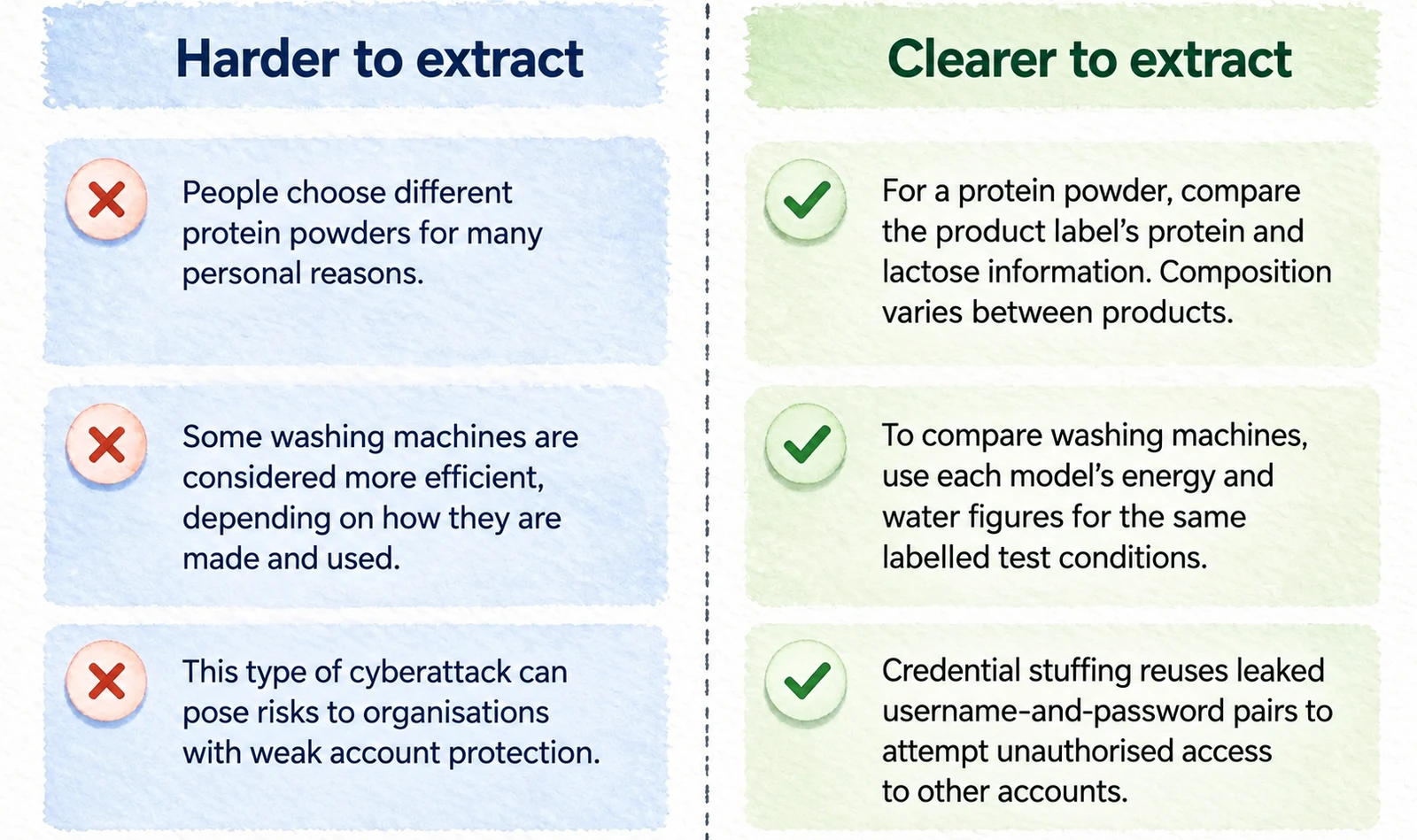
A definition that says what is being defined is more useful than a passage full of unexplained references to earlier sections.
This does not mean that every paragraph must repeat the whole topic.
It means that key definitions, comparisons and facts should carry the qualifications needed to interpret them correctly.
Elements that help comprehension
- Focused paragraphs : one clear point, with the context necessary to understand it;
- Specific evidence : figures with dates, units, sources and relevant limitations;
- Descriptive headings : a clear indication of the section’s question;
- An answer-first structure where appropriate : the important point is easy to locate before supporting detail.
Keep one distinction clear:
these practices concern accessible information and supported retrieval workflows.
They do not guarantee that a page will be included in training data or change a model’s stored knowledge.
For an example:
Unclear: “There are several reasons this method works. People often see a better result, so professionals use it.”
Clearer: “For this illustrative checkout test, 40 of 200 sessions completed an order: a 20% session completion rate. This is not a benchmark for other shops.”
The second version states the subject, denominator and meaning. Its usefulness comes from clarity, not from an assumed preference for a particular paragraph length.
Good structure supports accurate interpretation. Continue to test how relevant answers represent the information instead of promising a citation increase.
4. Consider information beyond the website
AI services may retrieve public discussions, videos, reviews or publications, depending on their access and the request.
Distinguish two areas of work.
Owned publishing
This is material the business publishes on its own accounts or channels.
- A useful YouTube demonstration may serve an audience that prefers video.
- A relevant discussion contribution can answer a genuine question.
- A LinkedIn resource may reach a professional audience.
- A webinar or presentation can provide a detailed explanation.
These channels should be selected for their audience and purpose.
A platform’s popularity in a citation study depends on the sample, date and service tested.
More publishing creates more material, but not necessarily more useful exposure.
Prioritise accuracy and audience value over volume.
Earned references
These are independent references that the business does not control.
- Genuine customer feedback can describe an actual experience.
- Editorial reporting can provide independent information.
- Public discussions may contain useful observations as well as mistakes.
Evaluate the source and context rather than assume that several mentions prove authority.
The wording matters too. A mention can be critical, neutral, mistaken or unrelated to the intended subject.
Why both can matter
Owned information and independent reporting serve different roles.
Your resources explain the offer; independent sources can provide another perspective.
Neither should be manufactured to imitate validation.
Do not assume that publishing in either category guarantees future inclusion in model training or lasting visibility.
5. Measure the right outcome
Traditional search reporting also has attribution limits. A recorded visit or conversion does not automatically establish causation.
Analytics can record parts of a journey, but consent choices, devices and other influences can leave gaps.
AI answers add further gaps when the person never follows a source link.
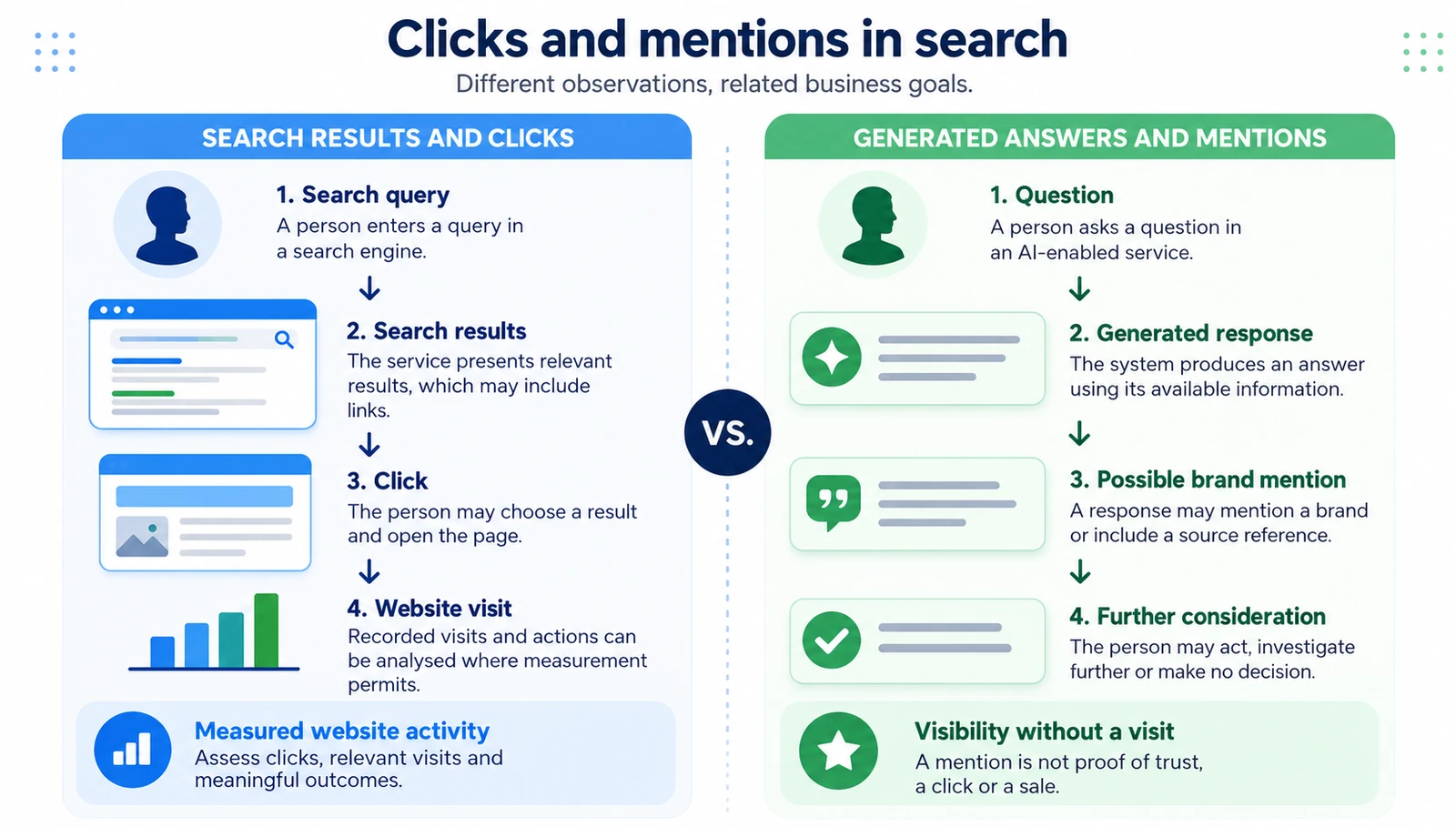
A person may see a recommendation, later search for the brand and enquire through another route. Standard analytics may not connect those events.
That makes the relationship between an observed answer and a sale difficult to establish.
A mention can be useful, harmful or commercially irrelevant; assess the context.
Use a measurement framework with explicit boundaries.
Potential GEO measures
- Citation frequency : source-link appearances in the defined answer sample, distinguished from unlinked brand mentions;
- Share of observed mentions a comparable share of mentions among selected competitors, using the same queries and dates;
- Context analysis : the subjects in which the business appears or is absent;
- Sentiment a reviewed classification of positive, neutral or negative framing.
Analytics measures recorded website activity; Search Console also reports search impressions and clicks. Neither is a complete log of every AI mention, and it is incorrect to say that Search Console sees only post-click activity.
A brand can therefore appear in answers without that appearance being separately identifiable in the usual reports.
Specialist monitoring tools can collect additional samples, within their access and coverage limits.
They may help assess:
- observed appearances;
- selected competitor comparisons;
- the framing of those mentions.
They can also suggest questions where the information is missing or inaccurate.
A useful strategy can therefore review:
- search and website outcomes;
- sampled representation in AI answers.
Even together, these provide a partial view rather than the whole internet.
What the approach cannot guarantee
None of these practices guarantees inclusion in an AI answer.
Results can vary between runs even when the website has not changed.
Platform version, user context, query wording and available sources can all affect the output.
Treat the work as an evidence-led publishing and measurement process.
There is no universal equivalent of a stable “number one” position across generated answers.
Consistency in public facts and useful content is controllable; exact output is not.
Continue only with work that has a clear purpose and a proportionate cost. Variation is a reason for better sampling, not an excuse for untestable promises.