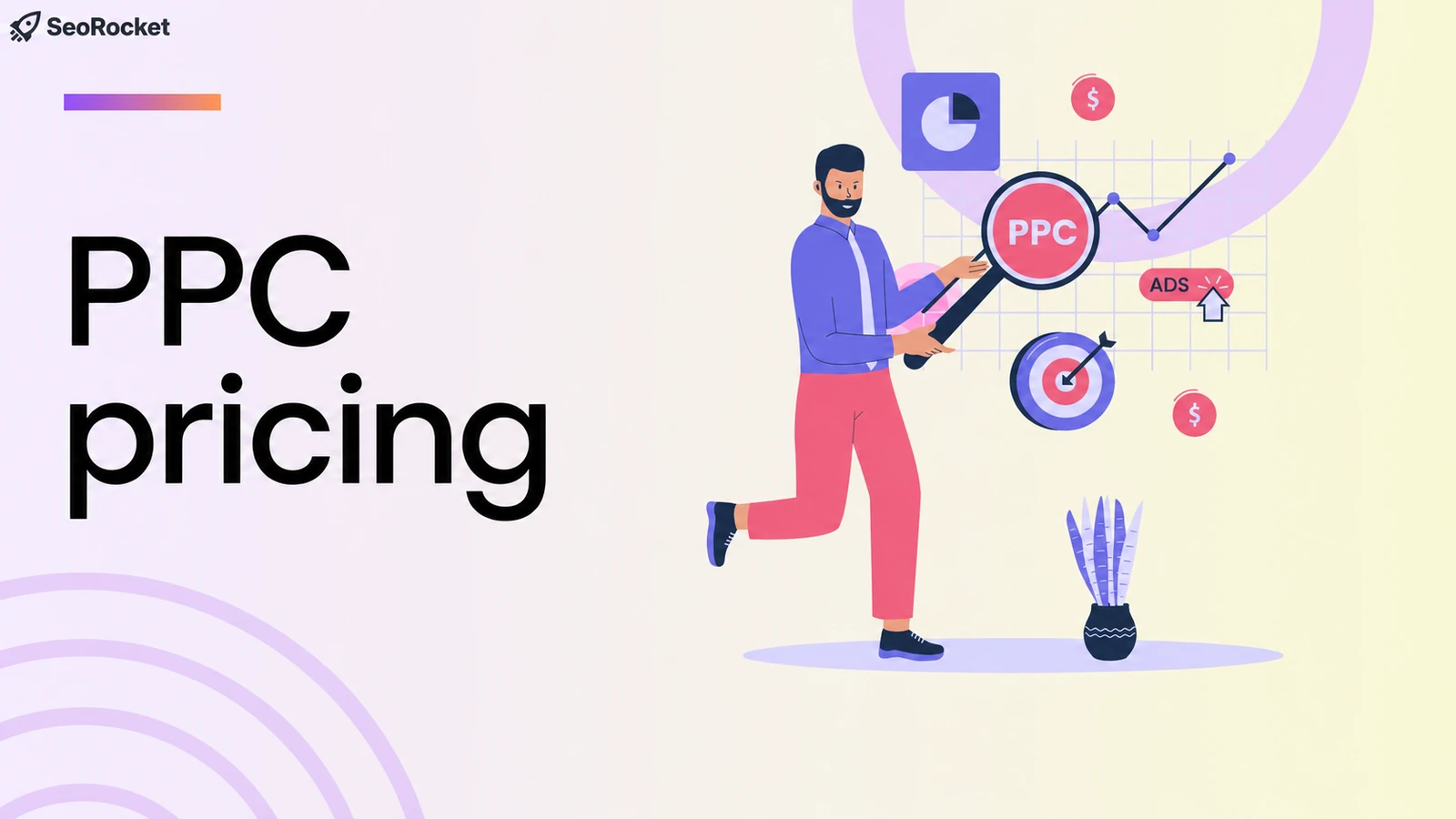
PPC advertising helps businesses reach relevant audiences through paid clicks. Costs depend on factors such as the sector, target keywords and ad quality. A well-planned campaign offers control over spending, but its return depends on conversions, margins and other business factors.
What is PPC?
PPC, or pay per click, is a digital advertising payment model. Ads can appear in search engines, social networks and other websites. The advertiser pays when someone clicks, with the actual charge determined by the platform and the campaign's bidding arrangements rather than necessarily a fixed fee set in advance.
Paying for clicks allows businesses to allocate a budget to attracting visitors while also gaining exposure. PPC is available on several platforms; search advertising, including Google Ads, is a familiar example.
The main elements of a PPC campaign
Campaign planning starts with a clear objective and an understanding of the audience. For keyword-based search campaigns, identify terms related to your products or services, then choose an appropriate budget and bidding strategy.
You can set bids manually or use an automated strategy, depending on the campaign. Competitors' bids are not normally visible. Delivery also depends on auction-time quality, context and eligibility, so raising a bid is not the only way to improve performance.
Steps that affect PPC costs
When planning a PPC campaign, consider the following elements:
- Define the target audienceso you know whom the ad should reach.
- Set an objective, such as generating qualified enquiries or attracting relevant website visitors.
- Research keywords and check that they match the audience's intent and the subject of the search.
- Prepare the ad and choose an appropriate platform, such as Google or a relevant publisher.
- Choose a bidding strategy and suitable spending limits.
- Monitor delivery, clicks and the actions people take after visiting.
- Test messages, bidding approaches and platforms with a clear objective and enough data to assess the outcome.
Factors influencing PPC pricing
Expected costs vary with competition, ad quality, target queries and other campaign conditions. Consider the following when preparing a budget:
Industry
Competitive markets, including parts of finance, insurance, retail and e-commerce, can have higher click costs. However, the actual auction depends on the specific product, query, location and audience.
Keyword selection
Search intent matters. Queries that suggest an immediate purchase may attract strong competition. For a term such as “face cleanser”, ad rank depends on several auction factors, including the bid, auction-time quality and search context.
Quality Score
Quality Score is a diagnostic measure based on expected click-through rate, ad relevance and landing page experience. It helps identify areas to improve; the displayed score itself is not an input to the ad auction.
Landing page
A relevant, useful landing page contributes to the quality of the ad experience. Improving that experience can support performance, but does not guarantee a particular click price.
Expected click-through rate (CTR)
Expected CTR estimates how likely an ad is to be clicked when shown. It is one component of the diagnostic Quality Score, rather than simply the campaign's observed percentage of impressions that became clicks.
Google Ads account history
Historical performance can help inform campaign decisions. However, account longevity or following recommendations is not a separate listed Quality Score component. Investigate the actual components and current auction conditions.
How much does PPC advertising cost?
The appropriate PPC budget depends on the business model, available marketing funds, conversion economics and account management. Assess likely acquisition costs and the value of the resulting customers, rather than choosing a budget from an industry headline alone.
Planning a PPC budget
Separate media spending from management and production costs. For a useful estimate, define the target market, campaign objective and expected conversion economics, then assess the following:
- Cost per click: use current forecasts for relevant queries and compare them with actual account data when available.
- Cost per 1,000 impressions (CPM): use this to assess impression-based buying; it does not tell you the cost of a sale.
- Monthly media spending: set a budget that can support meaningful evaluation within your financial limits.
- Agency fees: check the agreed scope, reporting, implementation and any minimum charge.
- Freelance support: clarify the specialist's responsibilities, availability and deliverables.
- Total investment: include media, management, creative work and landing-page improvements where needed.
- Start-up budgets: prioritise a defined audience and offer rather than spreading limited spending across too many campaigns.
- Small-business budgets: relate the proposed acquisition cost to your margins and capacity to handle enquiries.
- Growing businesses: increase spending where the additional customers remain commercially worthwhile.
- Larger accounts: assess returns by market, product and campaign instead of assuming company size determines the right budget.
Other PPC-related costs
Platform pricing varies. Microsoft Ads and Google Ads have different auctions and audiences, so do not assume a fixed relationship between their click prices. Use current forecasts and account data for the intended market.
If an agency manages the campaigns, budget for its fee as well as media spending. Agreements may use a fixed fee, a percentage of spend or another model. Compare the scope and minimum charges, not the percentage alone.
In-house management may require paid tools and software as well as staff time. Budget for the tools you actually need and distinguish these costs from advertising spend.