
Businesses can consider both how their information is discovered in ChatGPT search and how AI tools assist their SEO work. These are different tasks. Search visibility requires useful, accessible sources; using ChatGPT for research or drafting still requires verification and editorial judgement.
Helping relevant content become discoverable in ChatGPT
The following steps support discoverability and accurate information. They do not guarantee a mention, citation or placement in an answer.
1. Maintain sound SEO foundations
Established SEO foundations remain useful for search-based discovery. OpenAI states that eligibility for its search results requires allowing OAI-Searchbot and relevant published crawler traffic. Search can also involve third-party search providers; it should not be assumed to reproduce Bing's rankings.
Relevant priorities include:
- Making intended public content accessible to the relevant crawlers
- Publishing original, reliable and understandable information
- Providing a usable website with clear structure and appropriate loading performance
- Developing genuine references and mentions from relevant sources
A business can begin with an SEO auditto assess access, content and the site's current search presence. Use the findings to prioritise actual gaps rather than buy an assumed formula for ChatGPT citations.
2. Review visibility beyond Google
The relationship between “Microsoft” and OpenAIdoes not establish that ChatGPT citations follow a particular Bing position. Search products, providers and result selection can change.
Google and Bing use different search systems. Their search engines results are not identical, which is a reason to consider relevant multi-platform SEO strategies. The objective is a useful presence where the audience searches, not a guarantee that optimising for one system controls another.
Compare the actual results for relevant questions. Different systems may prefer different page types or sources, so a single example is not a stable model for future answers.
Do not assume that improving Bing visibility requires sacrificing Google performance. Assess proposed changes on their merits and monitor the platforms relevant to your audience, rather than relying on an undated market-share comparison.
Practical checks for Bing include:
- Setting up the appropriate Bing Webmaster Tools property
- Maintaining an eligible Bing Places profile where the service is available and relevant
- Addressing on-page, off-page and technical SEO issues according to the evidence
A broader guide to SEO foundations can help organise this work.
3. Develop relevant editorial references
People may use ChatGPT for recommendations that reflect particular preferences, such as where to eat during a trip or which appliance fits a task. Useful information therefore needs to explain context and suitability, not merely call a product “the best”.
Potentially useful sources of independent discovery include:
- Relevant partner or industry publications
- News and specialist publishers
For example, a question about an SEO agencymay draw on current service information or independent references. An answer's sources can vary, so no fixed inclusion list guarantees a recommendation:
- Ebiz.lt
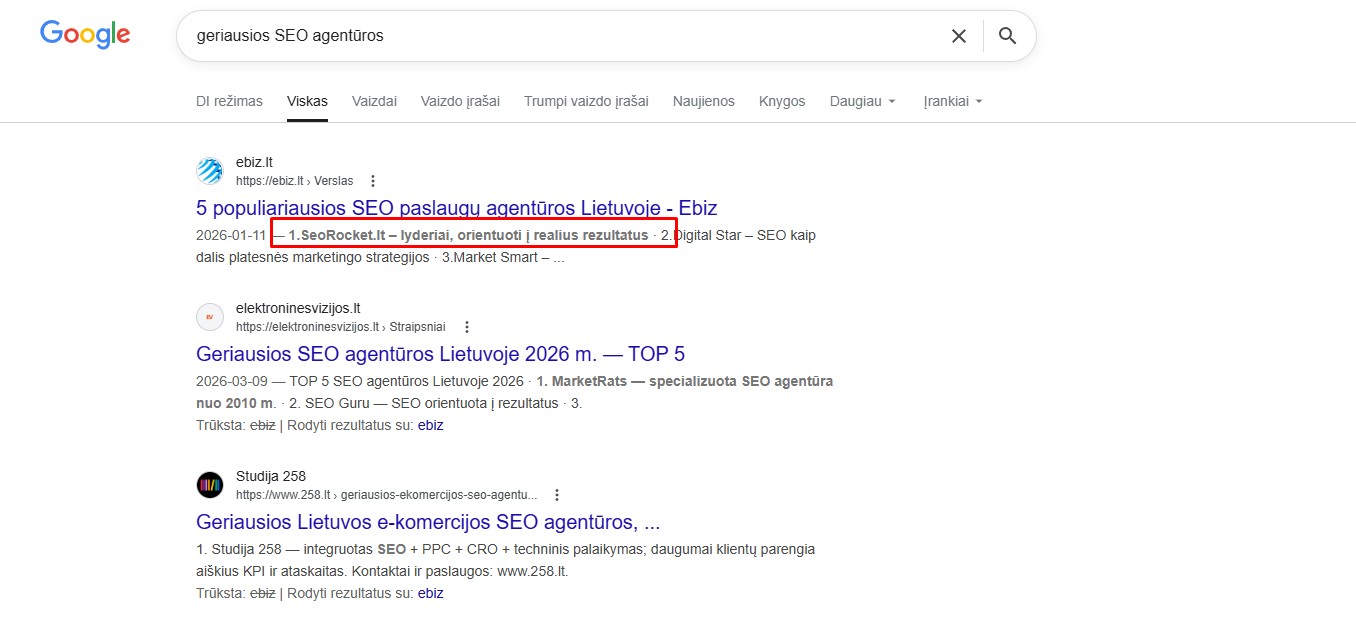
Some information can be maintained through an eligible business profile. Editorial coverage requires a relevant story or contribution. If a product sample, experience or payment is involved, make the commercial relationship transparent rather than trading undisclosed benefits for favourable coverage.
For a non-local question, such as choosing software for a small team, accurate product information and relevant specialist sources may matter more to the task than local business listings.
This overlaps with responsible content promotion and public relations.
A business can develop its backlinks presence by contributing useful evidence and expertise to relevant audiences. Coverage should not be treated as a purchased guarantee of citation or endorsement.
4. Make the content clear and well organised
Clear headings, suitable lists and useful tables make information easier to understand. They help describe the subject and support readers, but do not establish a specific citation-ranking mechanism.
An organised explanation can answer the question directly and provide further detail where needed. For a recipe, for example, readers need workable ingredients and instructions. A particular site's appearance in one answer is not a repeatable promise of selection.
5. Support claims with genuine expertise and evidence
Use genuine information that helps people assess reliability, such as:
- Relevant credentials
- First-hand evidence
- Appropriate source references
- Actual awards, with context
- Accurate author information
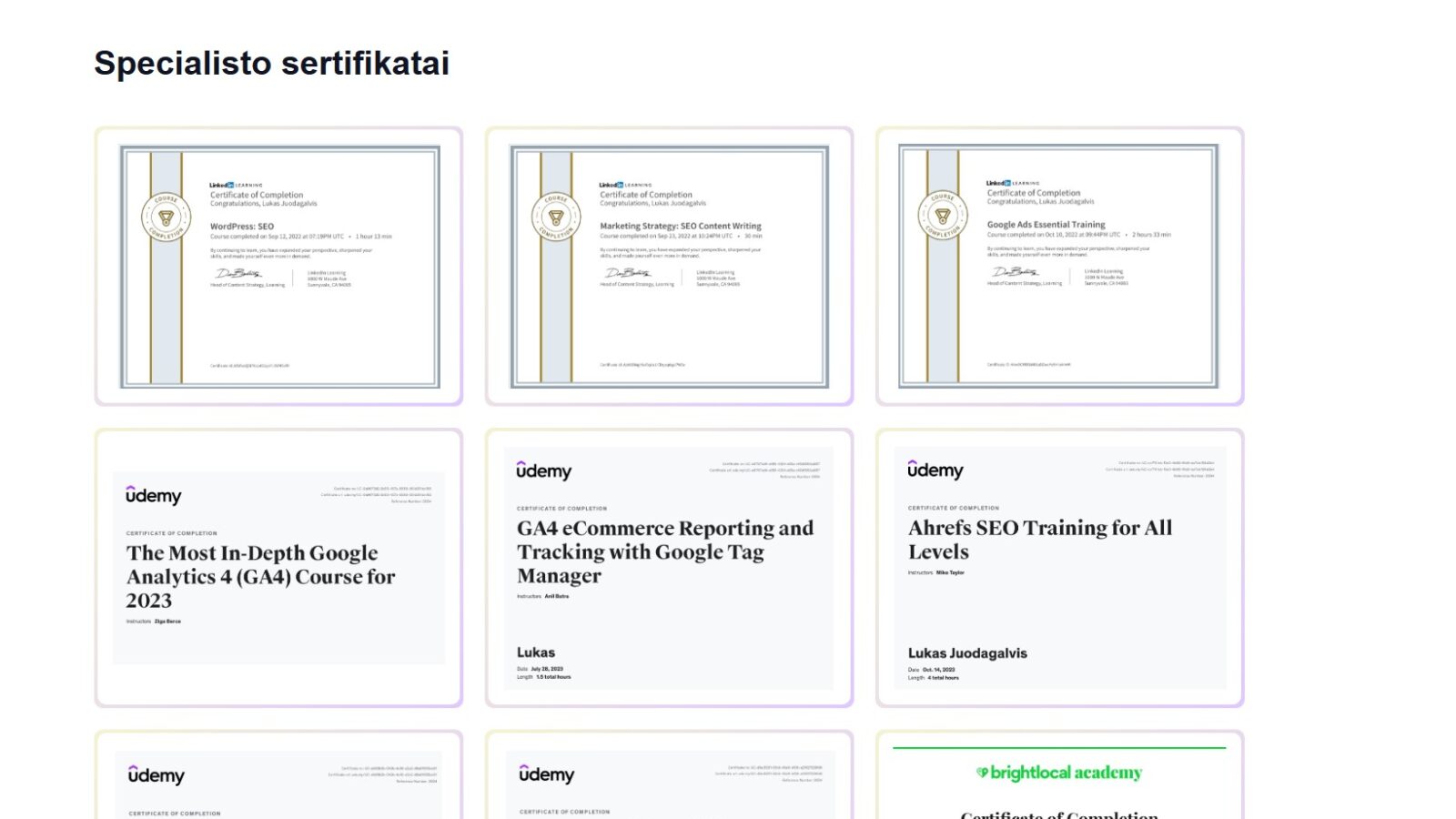
People often need advice for a specific situation rather than a general popularity ranking. An accounting tool suitable for one type of small business may not fit another sector, turnover or workflow.
Explain the conditions under which a recommendation applies and support it with evidence. Do not invent first-hand experience to make a page sound authoritative, and do not assume that an AI-written answer has verified its own facts.
6. Use visuals when they help explain the subject
Some ChatGPT search results can include visual information.
Original photography, diagrams or demonstrations can help answer questions that need a visual explanation. Their value comes from usefulness and accuracy, not a guaranteed increase in citations.
Sources such as image and video platforms may appear for visual questions. Selection varies, so choose the format around what the audience needs to see.
AI-generated media may suit an illustration, but should not replace evidence where people expect actual work. Someone assessing a florist, for example, needs genuine examples of arrangements the business has produced.
7. Maintain relevant local listings
Local search tasks may include finding:
- A nearby restaurant
- A place to visit on a trip
- A suitable meeting venue
Local results can use location context and information from third-party services. Accurate addresses, opening hours, telephone details and relevant reviews help people assess a place, although no particular listing guarantees a ChatGPT recommendation.
Consider relevant, eligible listings such as:
- Bing Places
- Yelp
- Google Business Profile
- Apple Maps
For eligible businesses, it is also useful to maintain “Google Business Profile”. Accurate information supports people using Google and publishers researching the business, without implying that this profile directly controls ChatGPT results.
Related local SEO work includes publishing accurate business and service-area information on your own website. Show public contact details where useful without exposing private addresses unnecessarily.