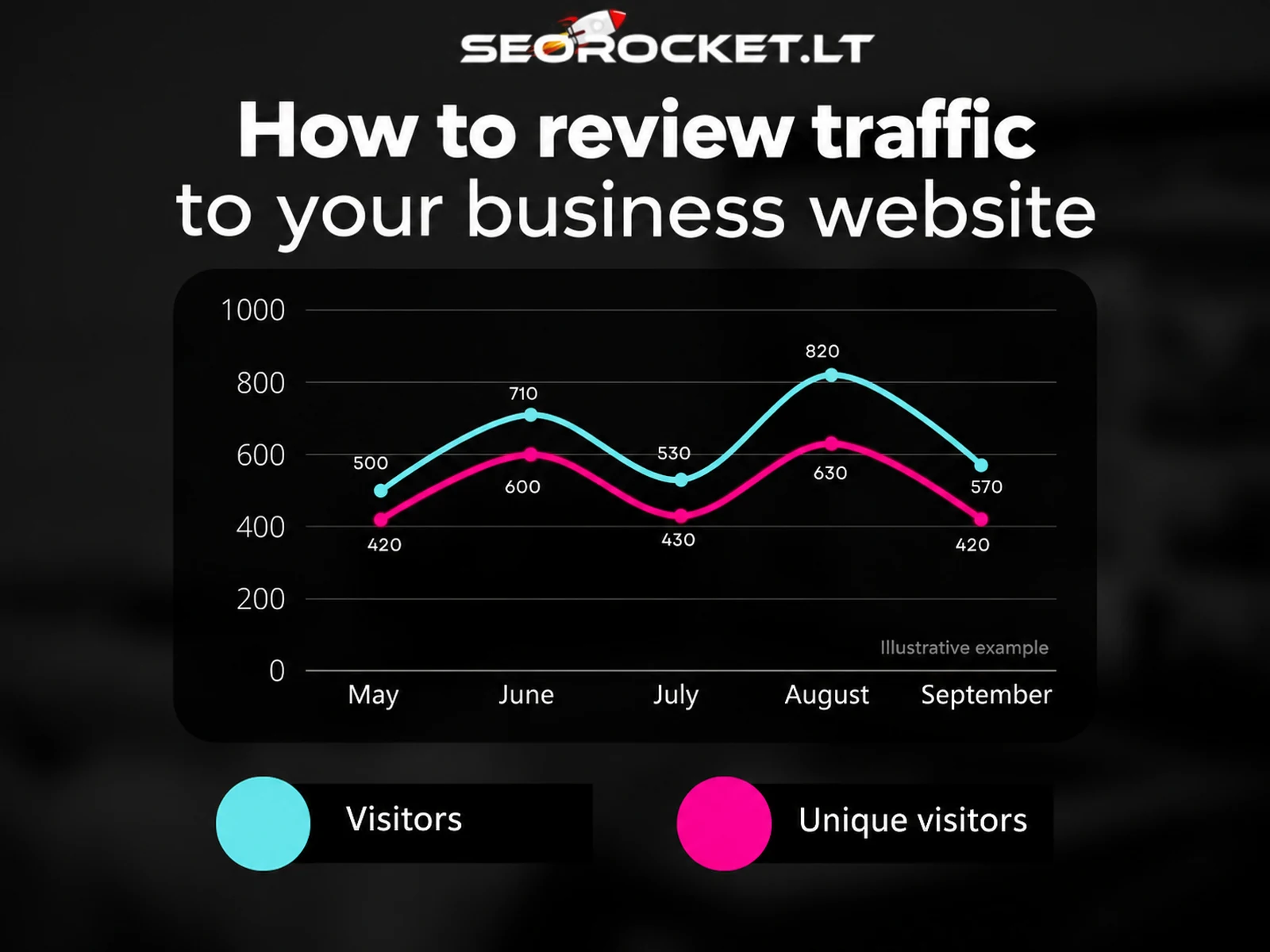
Traffic data helps you understand how people reach and use the website. First-party tools show recorded activity on your own site, while competitor research provides estimates and public observations. Combining evidence can inform your SEO and wider marketing plan.
What is website traffic?
Website traffic describes visits or users, depending on the chosen metric. People may arrive through search engines, a typed address, another website, a social post or an email. The source helps explain discovery; visit quality requires separate measures of behaviour and outcomes.
Traffic sources and what they mean
- Organic search: visits attributed to unpaid search results.
- Direct traffic: visits for which the system has no usable source information. Typed addresses and bookmarks are examples, but missing attribution can also be classified as direct.
- Referral traffic: visits attributed to links from other websites, subject to the analytics system's rules.
- Paid search: visits attributed to search advertising.
- Social traffic: visits attributed to social platforms, with paid and organic activity distinguished where correctly tagged.
- Email traffic: visits attributed to appropriately tagged links in newsletters or other emails.
Ways to check and analyse your traffic
Understanding sources helps assess the role of current marketing. These four approaches provide different kinds of evidence:
Website platform reports
Many content management systems and website development platforms provide basic statistics, such as page views, users and popular content. Check how the platform defines and collects each measure before comparing it with another system.
Web analytics platforms
Website analytics systems usually collect events through configured tracking. They can report recorded users, sources, page activity and actions leading towards conversion. Features may include real-time views, segments and conversion reporting. Collection is affected by implementation, consent, blocking and the tool's definitions, so it is not a complete observation of every visitor.
Search performance tools
Tools such as Search Console report search impressions, clicks, CTR and average position, with query and page information subject to reporting limits. Review low CTR alongside position, intent, country, device and the actual results page before changing titles or descriptions. Combine this with website analytics rather than expecting identical totals.
Quick traffic estimates
Some public tools provide estimated traffic trends without access to the website's analytics. They can support initial research but should not be treated as exact competitor traffic or a replacement for your own first-party evidence.
How to use the findings
- Assess advertising: compare spending with recorded conversions and their business value.
- Plan content: use relevant queries and page performance to identify questions worth answering.
- Assess location opportunities: investigate whether visits from a particular area represent demand for the services you genuinely provide, then consider your local SEO strategy.
- Plan publishing: examine useful audience behaviour patterns when scheduling newsletters or posts.
- Refine the target audienceby investigating who uses important pages or buys relevant services, without assuming a page view alone identifies a customer segment.
- Review declining pages: diagnose demand, competition and technical changes before assuming that the text needs rewriting.
- Investigate usability: unusual mobile engagement can prompt a performance or navigation check, but a high bounce rate alone does not identify the cause.
- Review landing pages: assess recorded conversions and test changes with suitable methods.
- Use consistent UTM tags on appropriate external campaign links. Do not use campaign tagging for ordinary internal navigation, and remember that attribution is still incomplete.
- Segment the data by relevant dimensions such as device, channel, location and new or returning users.
Practical steps for more reliable measurement
- Implement and test tracking on relevant pages and actions, including confirmed completions, without exposing sensitive information.
- Define and test suitable internal-traffic exclusions before applying permanent filters.
- Define meaningful actions such as purchases, form completions or call clicks. Keep a click or form event distinct from a confirmed sale or qualified enquiry.
- Record significant changes, including redesigns, pricing, campaigns and tracking configuration, to support later interpretation.
- Respect applicable privacy requirements, provide appropriate choices and avoid collecting unnecessary data.
- Assess reliability: use first-party evidence for your own performance and clearly label third-party estimates.
Competitor research with clear limits
For competitor research, examine relevant rankings, page types and public references. You do not need to claim their exact traffic to learn from their content or positioning. Public observations such as rankings, backlinksand publishing patterns can reveal questions worth investigating, but do not expose private performance data.
Conclusion
Traffic analysis is a cycle of measurement, interpretation and improvement. Define the business questions, check collection and compare appropriate segments and periods. A specialist can help investigate uncertainties, but the data should support decisions rather than promises of automatic growth or lower advertising costs.