In search marketing, keywords are the terms you want a website or ad to appear for in search engines such as Google. Relevant visibility can help attract people to your website or business location.
This definition covers two related uses:
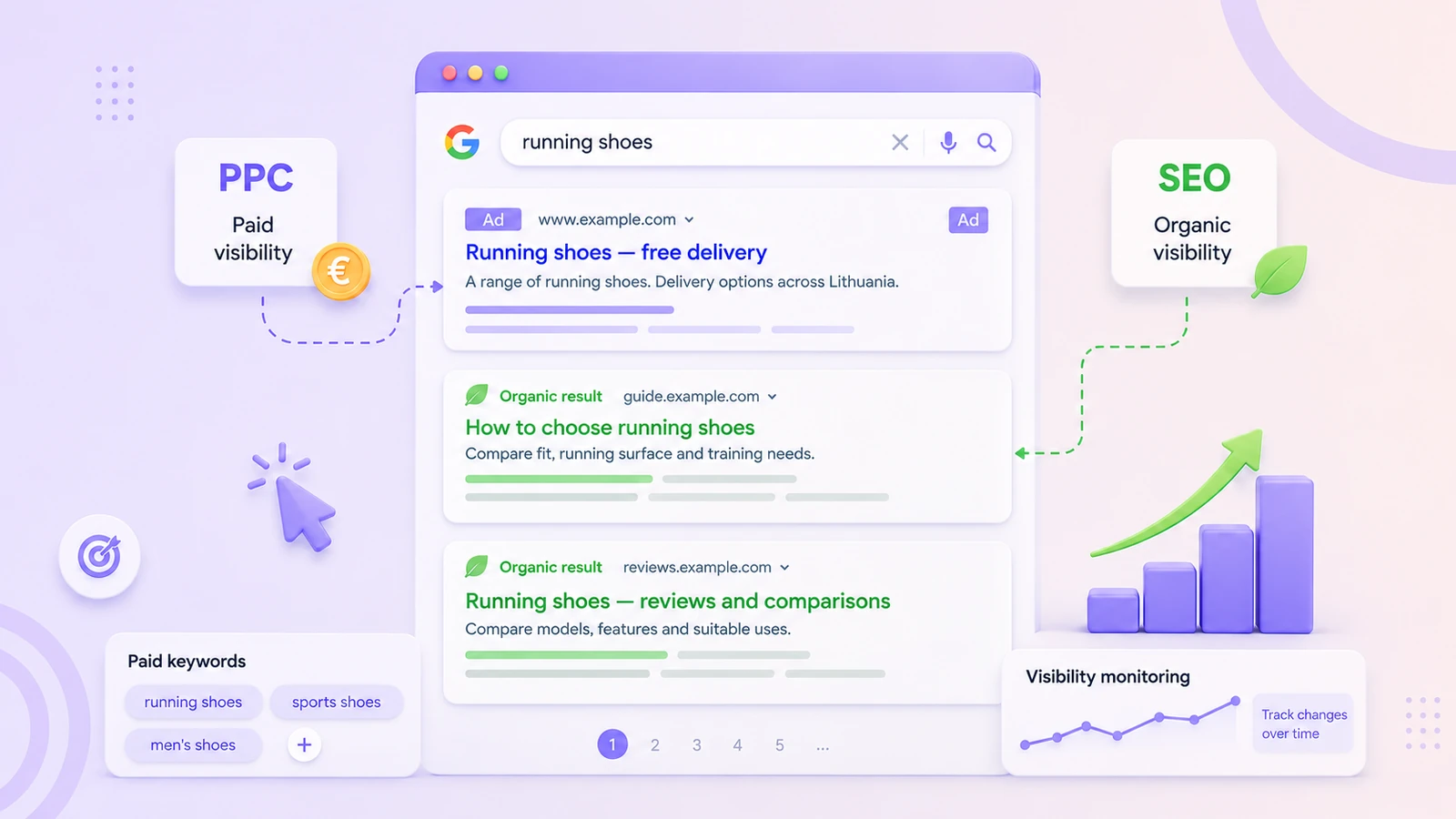
- SEO keywords: terms you target through search engine optimisation, aiming to appear in unpaid organic results.
- PPC keywords: terms used to target pay-per-click search campaigns, including Google advertising . The aim is to appear in paid results.
For example, a jeweller might target “bespoke engagement rings” because it sells that product and wants people searching for it to find the business.
Why are keywords important?
Keywords matter because search engines use words and their meaning to identify relevant content for a search.
Using a term such as “SEO services ” in an appropriate page or advertising campaign can help communicate relevance. Using the phrase alone does not guarantee a high position: the content, search intent and many other factors also matter.
Visibility matters because people are generally more likely to notice and click prominent results. The distribution of clicks depends on the query and the features shown on the results page:
In addition, researching search terms , the process of finding and assessing search terms, helps identify topics that people search for.
You can then create content and ads that address the needs of your target audience .
How do you find relevant keywords?
Start with ideas from your business, customer questions, search results and competitor websites.
Keyword research tools can help expand and assess those ideas.
Their databases make it easier to find related terms and investigate opportunities you might otherwise overlook.
They also provide metrics that can support your decisions.
Understanding keyword metrics
Keyword metrics describe aspects of a search term and its search results. They help you compare opportunities in the context of your business.
Availability and accuracy vary by tool, market and data source.
The following metrics are particularly useful to understand.
Search intent
When you identify a relevant keyword, investigate what people expect to find when they search for it.
For example, “marketing specialist” might indicate a job search, a search for a service provider or a request for information about the role. Check the actual results in the target market before deciding.
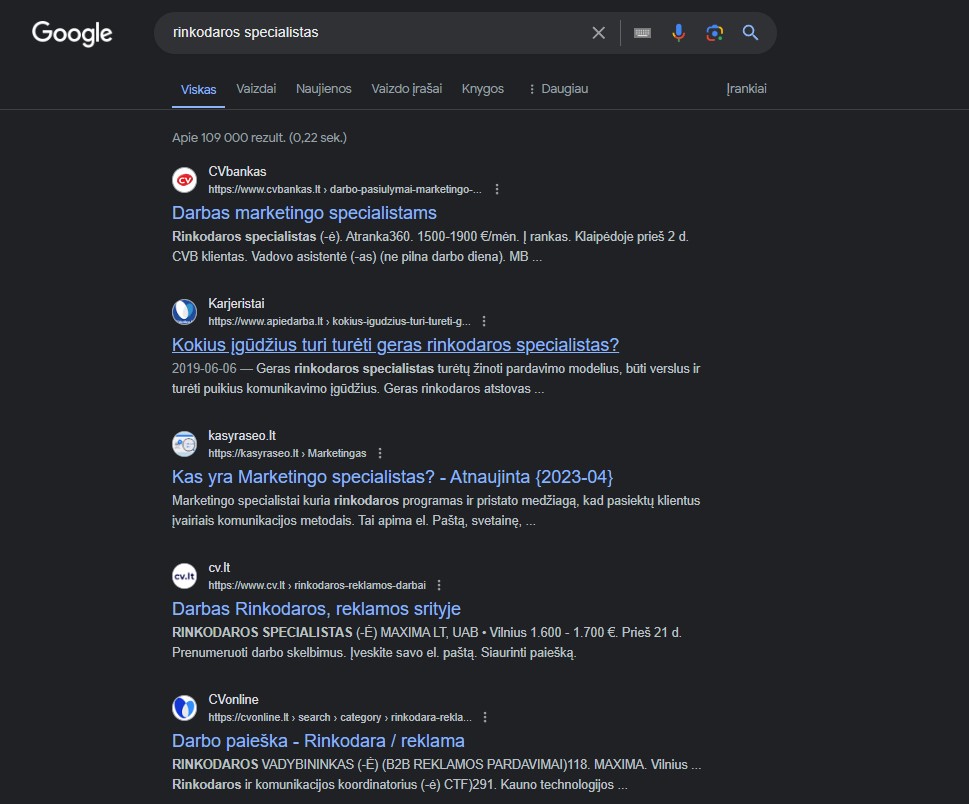
Some queries have mixed intent, with substantial groups of searchers looking for different things.
For example, results for “SEO” may include informational guides, such as those published by Semrush, as well as service pages. The mix can vary by market and time.
Keyword search volume
Search volume usually estimates the average number of monthly searches for a term. It indicates potential demand, not the number of visits a particular page will receive.
For example, research the phrase “Google ads reklama” (“Google Ads advertising”) in the Lithuanian market. Check the estimated monthly demand and seasonal pattern using a defined period, rather than treating a single estimate as a permanent value.
Google advertising agencies could use verified seasonal demand to plan campaigns. Check the latest data before allocating next year's budget.
Keyword difficulty
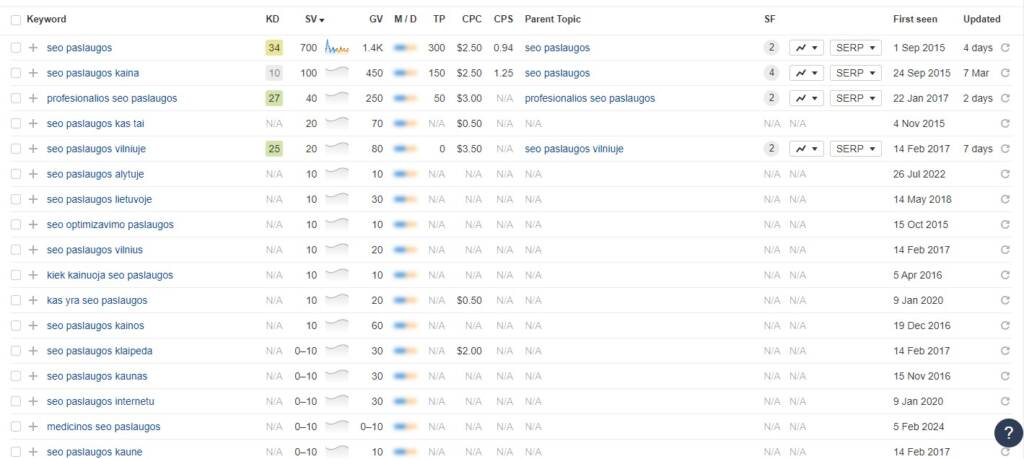
Ahrefs provides a keyword difficulty score, KD, on a tool-specific 0–100 scale. It is not a percentage probability of ranking or a Google metric.
Difficulty can help you prioritise SEO research, but it should not decide the strategy alone. Consider relevance, commercial value and what the actual results show.
The source gives the following illustrative keyword examples:
For “SEO paslaugos” (“SEO services”), compare the tool's estimate with the pages actually ranking in the target market. A difficulty score does not establish that every website faces the same challenge.
For “profesionalios SEO paslaugos” (“professional SEO services”), also check the intent and competing pages. A lower score than another term does not prove that ranking will be easy or commercially valuable.
Keyword cost per click
Cost per click, or CPC, is the amount charged for an ad click. It is an important measure in pay-per-click advertising.
Ahrefs provides CPC estimates within its keyword research tools.
For “SEO paslaugos”, an estimated CPC is an indication from a tool's data snapshot, not a fixed price. The actual charge depends on the live auction and campaign conditions.
Actual CPC is influenced by the ad auction and campaign conditions. Higher bids can reflect competitive demand, but do not establish a higher conversion rate or a larger average order value.
Advertisers have different margins, objectives and conversion performance, so their willingness to pay cannot establish profitability for another business.
Monitor your own PPC results and adapt the strategy to your costs and commercial outcomes.
A keyword with a high paid-search CPC may also be worth researching for SEO, provided it is relevant to the business and the organic search opportunity is realistic.