Banner advertising uses visual messages to present an offer or brand. Its usefulness depends on the placement, audience, creative and purpose, rather than the format being inherently effective.
In a crowded media environment, advertising can help a business reach a relevant target audience. Banners are an established option, with static, animated and responsive approaches available in different systems.
How banner advertising works
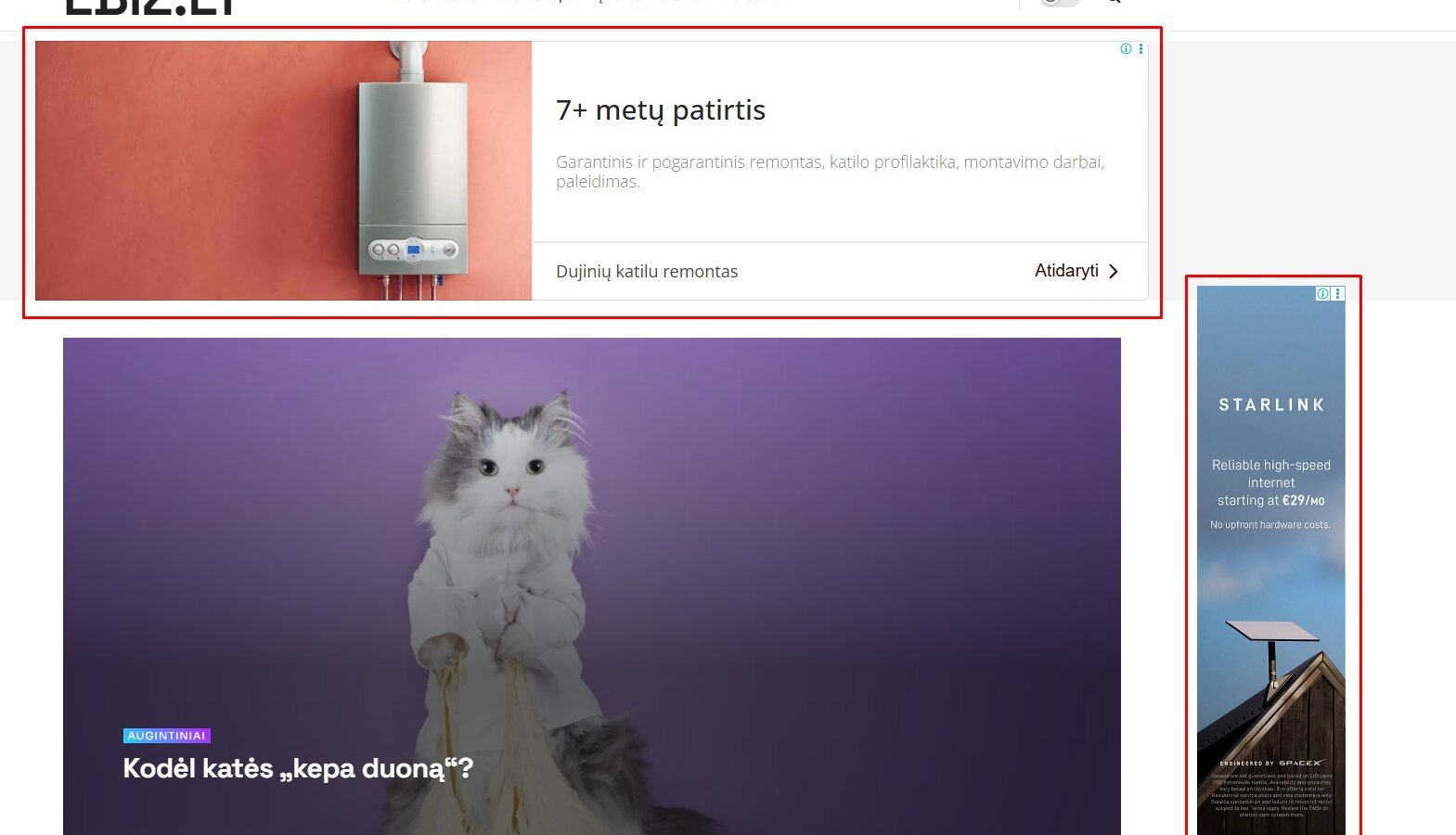
A banner is a visual advertising unit shown in an eligible placement, such as a publisher's website or app. It is distinct from an ordinary text search ad, although an advertising platform may offer both. The available formats and delivery rules depend on the platform or publisher.
Two common buying routes
An advertiser can arrange placements through:
- An advertising platformsuch as Google Ads. The advertiser supplies suitable assets, chooses relevant settings and a budget, and competes for eligible inventory. Settings do not guarantee a particular website or placement unless the product explicitly offers that arrangement.
- A publisher or website owner. The advertiser agrees the placement, dates, creative specifications, reporting and price directly. Confirm what delivery and visibility the agreement actually covers.
Potential advantages
A visual format can introduce an unfamiliar brand or explain an offer quickly. Whether it is noticed depends on viewability, page position, competing material and the creative; an impression is not proof of attention.
Available targeting may help narrow delivery to relevant contexts or audiences. Its precision depends on the platform, permissions and data, and some categories have restrictions. Avoid assuming that every demographic or interest option is appropriate for the campaign.
A campaign can be planned at different spending levels, but a small budget still needs enough relevant delivery to answer a useful question. Include creative production and management costs in the assessment.
Pricing and bidding models
Pricing needs to be distinguished from an optimisation target. Common terms include:
- Cost per thousand impressions (CPM) — a rate expressed for 1,000 impressions. Viewable CPM uses defined viewability criteria, which are different from simply counting an ad served and do not prove a person paid attention.
- Cost per click (CPC) — a charge based on clicks. A click does not guarantee a successful website visit or a useful business outcome.
- Cost per action (CPA) — a cost measured against a defined action. In some arrangements billing can be conversion-based, but a target CPA bidding strategy is not automatically a promise that you pay only after a sale. Check the actual billing setup.
- Flat-rate placement — an agreed fee, for example for a specified placement and time period. The contract should define any delivery commitment, not leave it implied by the label.
- Hybrid arrangements — a combination of agreed charging components. Document how each is calculated and what triggers a charge.
Automated buying may use auctions to allocate inventory, while direct agreements can use other arrangements. The bidding strategy, optimisation goal and billing basis are separate questions. Confirm all three rather than assuming the highest bid wins or that every platform charges identically.
Limitations and common problems
Banner campaigns also have practical limitations that need to be included in planning.
One concern may be a low conversions . The cause could involve relevance, targeting, the offer, the destination or measurement. Static artwork alone does not explain every weak result, and awareness activity should still have a meaningful way to assess its purpose.
Unsuitable placements, misleading creatives or malicious advertising can undermine trust. Review inventory and partners, and monitor where the campaign actually appears.
Other considerations include:
- Platform and publisher restrictions. Ads may be limited by policies, format requirements or inventory eligibility. This is different from a general claim that search-engine spam filters block banners.
- Ad blockers. Some users block advertising resources, affecting delivery and what can be measured.
- Competition for attention. Other page content and repeated exposure can reduce attention. Review frequency and creative usefulness rather than relying only on reach.
A practical creative brief for banner ads
Give the designer a clear brief: audience, offer, action, placement specifications, brand assets and any necessary terms. A visually polished file can still be unsuitable if it omits the important message.
- Clarity — keep the main message readable at the actual display size. Do not assume every viewer will spend several seconds studying small text.
- Colour — use the brand system and sufficient contrast. Brightness alone is not evidence of a better-performing design.
- Mobile — check the required formats and whether the message remains legible on small screens.
- Imagery — use relevant, rights-cleared visuals that make the offer understandable. Avoid images that imply features or results the product does not provide.
- Next action — make the intended step clear and ensure that the landing page fulfils the ad's promise.
- Testing — compare a defined creative change against an appropriate outcome where the delivery and sample allow it. Check cropping, text, links and destination behaviour before launch. A designer can improve execution, while campaign effectiveness still needs measurement.