Google Ads is a paid advertising platform that can reach people in Google Search and other advertising channels. Search advertising may appear when someone looks for your product or service. Other campaign types can reach people while they browse, watch content or consider a purchase.
Performance depends on more than the ad. The offer, landing page, budget and reliable measurement of enquiries or purchases all matter. This guide explains the principles and the checks to make before launching.
Where can Google Ads appear?
Available placements and formats depend on the campaign type and settings. Start with the customer journey: is someone already seeking a solution, or still learning about the need?
- Search. Ads in search results when a query matches the campaign's targeting. This can help reach existing demand for a product or service.
- Shopping. Product ads display product information. An online shop needs suitable product data maintained in Merchant Center.
- Display. Visual ads appear across advertising inventory. Plan audiences, placements and creative materials carefully.
- YouTube. Ads in video environments require suitable creative assets.
- Performance Max. A campaign type that works towards conversion goals across several Google channels. Reliable objectives and measurement are particularly important.
Paid advertising and organic results
Search results may include both ads and organic listings. Ads are labelled, while organic positions depend on the search engine's assessment.
The ad presents a service and invites you to visit the website.
Shown through Google Ads Organic result Relevant website A page answering your queryThe title and description help explain what the page contains.
Google Ads does not charge for the organic clickDisplay advertising on a website
Banners can reach people while they read content. Placement and size depend on the website and device.
Advertising in a YouTube video
A video ad may appear before or during selected content. Format and skip options vary.
How does Google decide which ad to show?
An auction determines ad eligibility and placement. Ad Rank considers the bid, ad and landing-page quality, thresholds, competition, search context and the expected effect of assets. The highest bid alone does not guarantee the highest position. See Google's explanation of Ad Rank.
Is Quality Score part of the auction formula?
No. The 1–10 Quality Score shown in the account is a diagnostic measure. It helps assess expected click-through rate, ad relevance and landing-page experience. That displayed score is not an auction input, so “bid × Quality Score” is not an accurate explanation of placement. See the official Quality Score documentation.
What do you pay for, and how should you plan the budget?
Search campaigns often use cost per click, or CPC. The whole Google Ads platform cannot be described as charging only for clicks: payment and bidding arrangements vary by campaign. An optimisation objective is also different from the event used for charging.
The total plan includes media spend, management fees and any agreed additional work. We explain these separately in our guide to Google Ads costs and budgeting. There is no universal CPC that applies to every business.
What should you prepare before launch?
- The offer and audience. Define what you advertise, where you serve customers and why they should choose you.
- The landing page. It should match the advertised product or service, explain the offer and provide a working enquiry or purchase process.
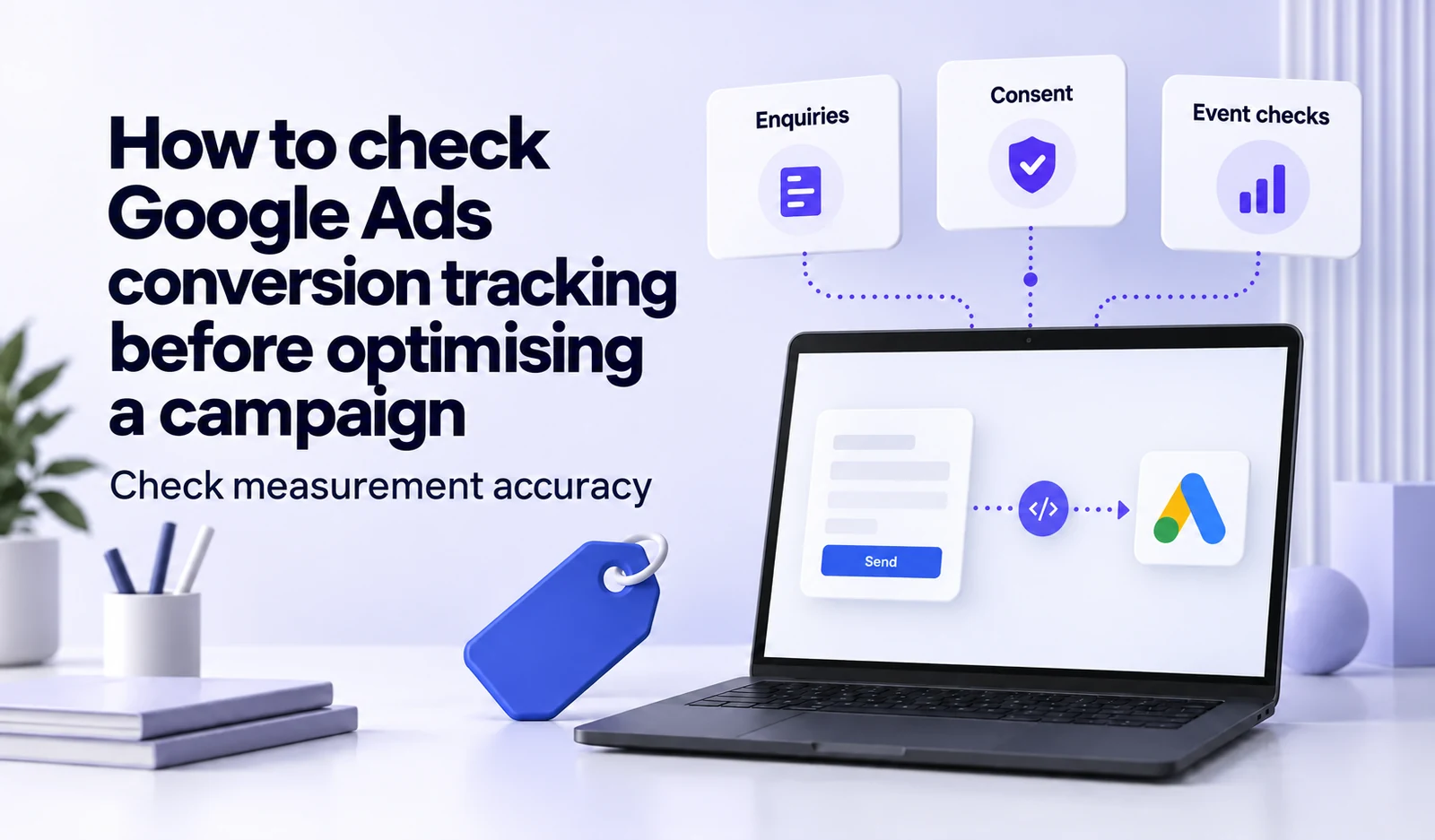
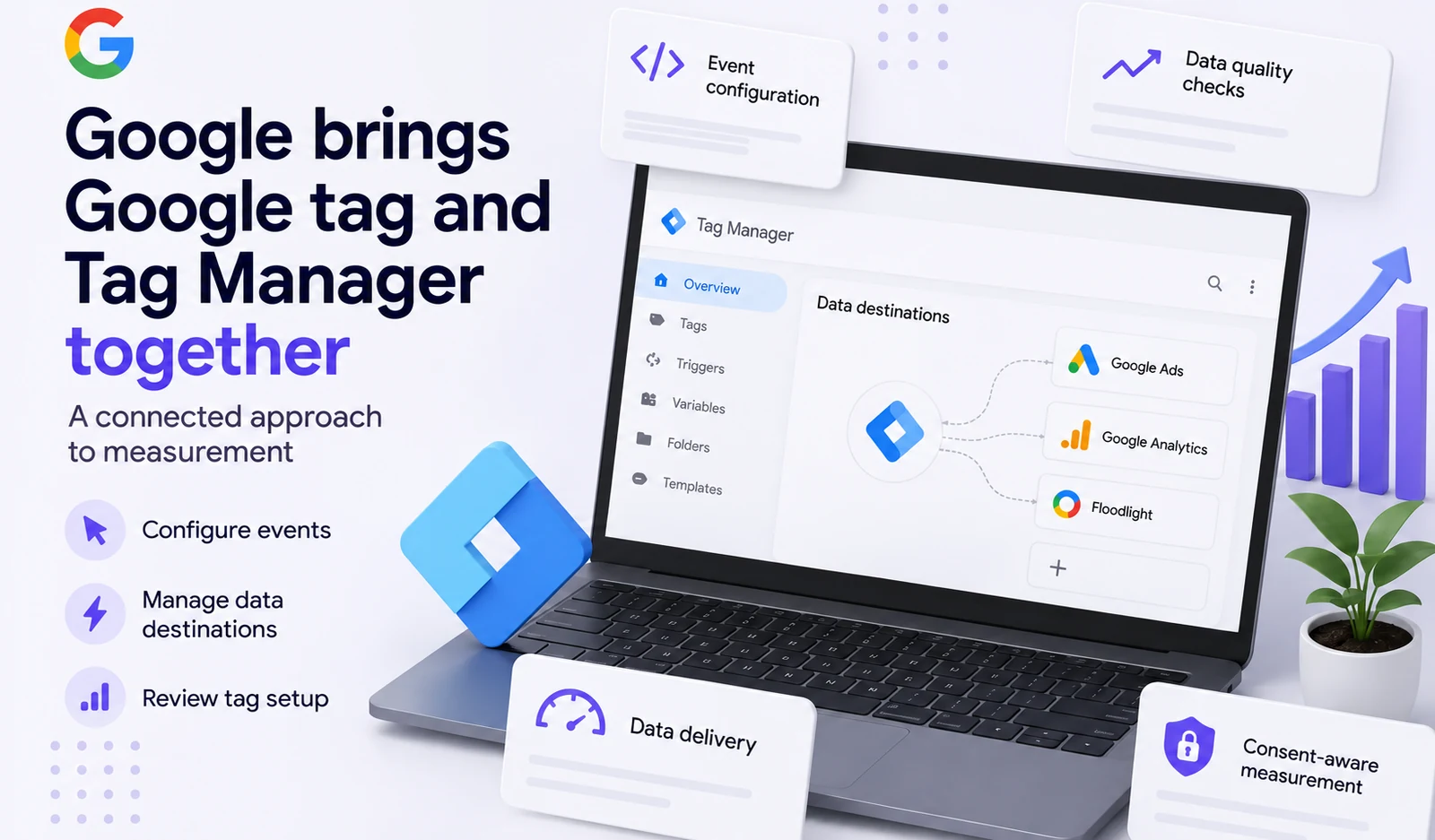
- Conversion measurement. Check that genuine purchases, form submissions or other agreed actions are recorded without duplication.
- The test boundaries. Agree budget, evaluation period and decision criteria. Allow enough evidence to assess performance.
- Responsibilities. Establish who approves ads, changes the website and checks enquiry quality.
How can you tell whether the ads are working?
Clicks and impressions show delivery, but not business value on their own. A service business should examine relevant enquiries, their cost and progression into customers. An online shop should assess purchases, revenue and return on ad spend alongside product margins.
ROAS compares attributed revenue with advertising spend. It does not show net profit or automatically include management fees, product costs or delivery. Missing data and different attribution settings can also affect reported results.
When should you start with an audit or a new campaign?
If ads are already running, review measurement, search terms, structure and spending before making major changes. A Google Ads auditcan support that work. A new account needs campaign and measurement setup. SeoRocket's Google Ads management service sets out the scope and pricing.
Before choosing an automated campaign, review Google's explanation of Performance Max. Select the campaign type according to the objective and available inputs, rather than popularity alone.