A business may sell products or services to other organisations, using a business-to-business model ( B2B), or serve individual consumers. Some companies do both, with different offers or purchase processes for each audience.
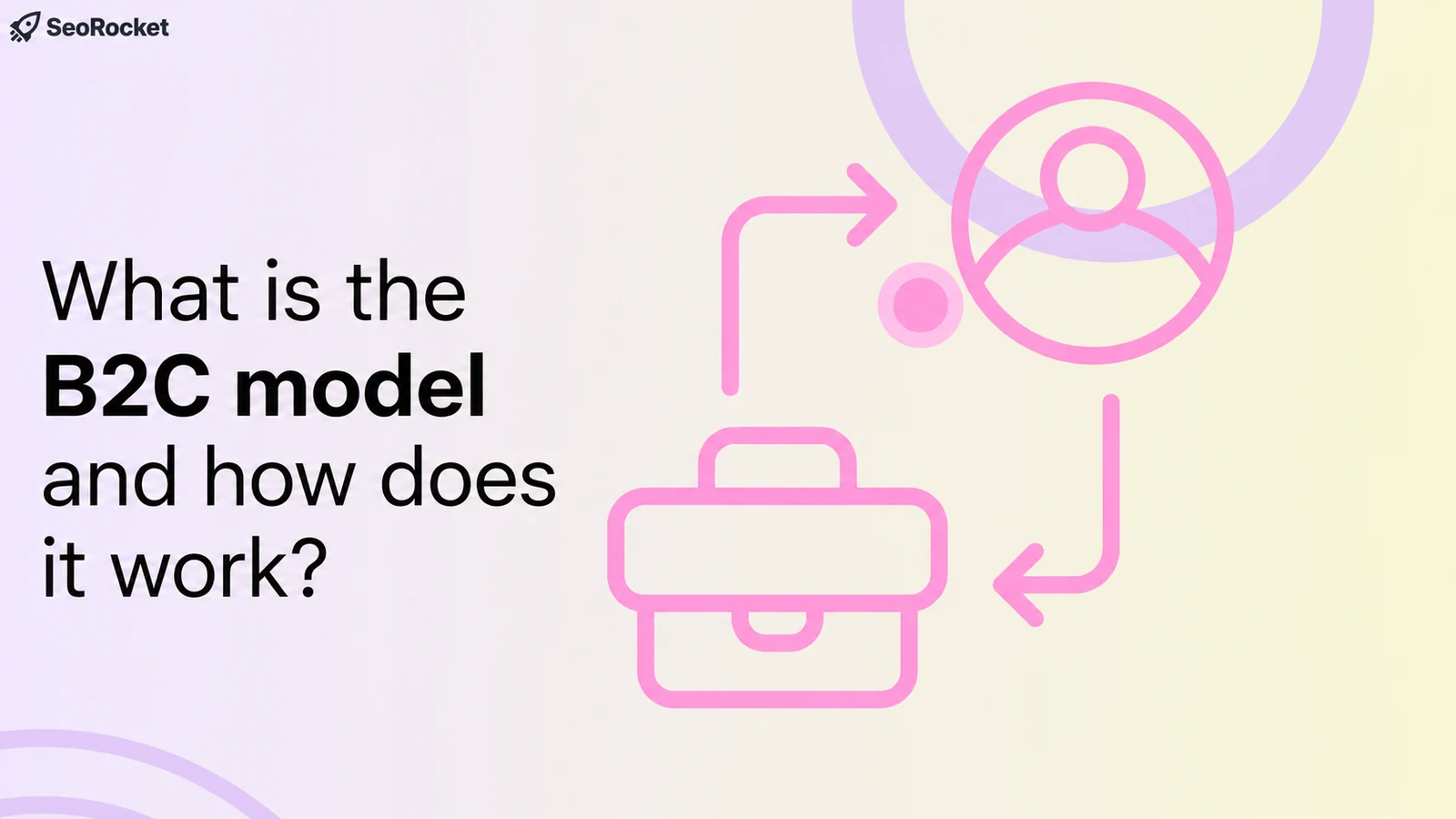
If your target audience consists of individual consumers buying for personal use, that part of the business is B2C. The following sections explain the model and common ways to deliver it online.
What does B2C mean?
B2C stands for business-to-consumer: a business sells goods or services to an individual consumer. Examples include shopping in a clothing store or paying for a restaurant meal.
B2C can operate online or in person. In ecommerce discussions, it is often compared with B2B, C2B and C2C, which describe different parties to a transaction. A personal purchase from a company is B2C; a purchase from another private individual may instead be C2C.
How online B2C developed
As the web became established, businesses began using domainsto reach customers and sell remotely. Payment and security technology developed alongside these services; the history should not be reduced to an unsupported domain-registration count or a single growth period. SSL and its modern successor TLS support encrypted HTTPS connections. Encryption helps protect data in transit, but a certificate does not certify a retailer's honesty, product quality or ability to fulfil an order.
Lithuanian shoppers are familiar with businesses such as Pigu.lt and Varle.lt, alongside specialist retailers. An online shop can extend a small firm's reach, but physical premises, stock and fulfilment may still be necessary. Ecommerce does not remove those costs automatically.
Different ways to fulfil consumer demand
Third-party fulfilment or supplier-direct shipping can change how stock and delivery are managed. They do not remove the seller's need to understand responsibilities, customer expectations and the terms of the arrangement.
Common online B2C business models
The following five categories describe common online approaches. A business may combine more than one.
1. Direct selling
A retailer or service provider sells directly to the consumer. For physical goods, it may hold stock itself or use a fulfilment arrangement.
An established retailer may add an online shop alongside physical locations. The customer experience depends on clear availability, pricing and delivery information, and an appropriate connection with stock management.
2. Intermediaries and marketplaces
An intermediary helps connect consumers with sellers. A travel platform, for example, may present options from several providers, while the actual contract and support responsibilities depend on its terms.
Marketplaces can bring several sellers into one interface. Pigu.lt and Etsy provide familiar examples in different markets, but the role of the platform and individual seller should be checked for each purchase.
3. Advertising-supported services
A publisher or platform may offer material to consumers without charging them directly and earn revenue from advertisers. That combines a consumer audience with a business-to-business advertising relationship.
The economics depend on audience relevance, advertising demand and operating costs. Growth in audience size alone does not guarantee a sustainable business.
News and specialist-content sites may use advertising alongside subscriptions, memberships or other revenue sources. Avoid assuming that a named publication relies on advertising alone.
4. Community-based services
A platform built around a shared interest may support advertising, memberships or other services. Its commercial model depends on how it serves both participants and paying customers.
For example, an outdoor-products company might reach a relevant audience through a travel community. Use of audience data and advertising targeting depends on permissions and the platform's rules, not an unrestricted right to analyse every participant.
5. Subscription and access fees
A business may charge for ongoing access or recurring deliveries. Plans can vary in scope and price; explain renewal, cancellation and what is included rather than relying only on a headline monthly charge.
Streaming subscriptions are one example. Current providers and brand names change, but the underlying model is recurring payment for defined access, not proof that one service invented the category.
Meal-kit subscriptions provide another example, with recurring deliveries rather than digital access. Product, delivery and cancellation terms still need to be clear.
Challenges for a B2C business
A B2C business needs to connect an understandable offer with reliable delivery and support. The following areas deserve attention when operating online.
1. A usable website
A website can help consumers understand and purchase an offer. It need not be elaborate, but the important information and actions should work reliably for the audience.
Useful design checks include:
- Monitor relevant competitors: examine how other sites explain similar offers and identify useful approaches without copying their material.
- Accessibility: test content and controls for people with different access needs, including keyboard and assistive-technology use.
- Mobile use: check navigation, reading and checkout on small screens. A mobile layout alone does not guarantee improved rankings or more visits.
2. Relevant search visibility
Search engine optimisation (SEO) can help suitable pages appear for relevant queries. It is one possible acquisition approach, not a universal requirement for every B2C business or a guarantee of revenue.
Priorities may include:
- Suitable SEO expertise: use specialist help where the team needs investigation or implementation capacity.
- Content planning: maintain useful, accurate information and relevant internal links, earn appropriate backlinks and assess outcomes with suitable analytics rather than treating traffic as equivalent to sales.
- Paid search advertising: paid placements are separate from organic rankings. Evaluate their cost and contribution to margin rather than assuming every campaign reduces profitability.
3. Reliable payments
Choose payment methods suited to the audience and a reputable provider. Clarify which party handles card data and what security and PCI responsibilities apply to your setup. A provider integration does not remove every merchant obligation; confirm the relevant scope with the provider or acquirer.