An SSL certificate is a digital certificate used to authenticate a website's server and establish an encrypted connection. SSL stands for Secure Sockets Layer, an older protocol name still commonly used when referring to certificates. Modern HTTPS connections use its successor, Transport Layer Security, or TLS.
Businesses should use HTTPS with a valid certificate to protect information in transit, including form submissions and online transactions.
In short, TLS encrypts communication and helps protect it against interception or alteration in transit. A connection indicator next to the URL in the browser provides information about that connection; it does not prove that the website or its owner is trustworthy.
SSL went through several versions before being replaced by TLS. Older SSL protocols have known security weaknesses and should not be used. The familiar term “SSL certificate” remains common even though current secure connections use TLS.
How does an SSL certificate work?
TLS encrypts data sent between a browser and a server so that an observer on the network cannot normally read or modify it. The information might include names, addresses, payment details or other sensitive data. This protection applies to the connection; it does not replace security on the user's device or the server.
When a browser connects over HTTPS, the server presents its certificate during the TLS handshake. The browser checks matters such as the certificate's validity, trusted issuer and match to the requested hostname. The parties establish cryptographic keys for the session and exchange encrypted data. The exact handshake depends on the TLS version and configuration, and normally completes quickly.
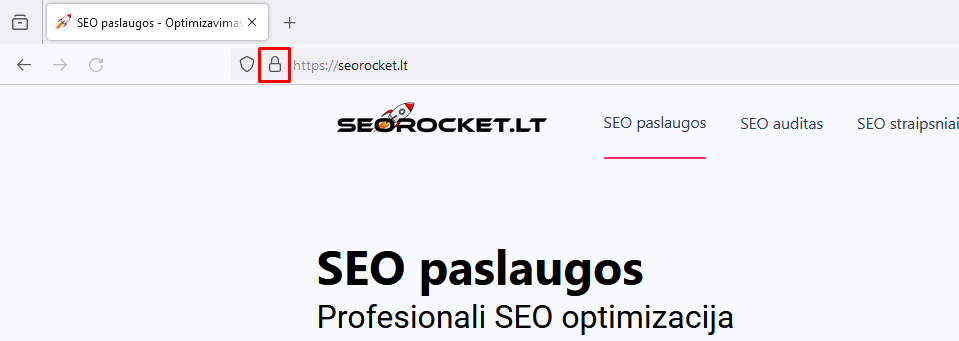
A properly configured secure website uses HTTPS in its URL. Browsers show connection information through an icon or site controls, with the interface varying by browser. HTTPS indicates protection for data in transit, not a guarantee that the site's content or business is legitimate.
You can inspect certificate details through the browser's connection or site information controls. A certificate normally contains information such as:
- The domain name covered by the certificate
- Subject details, depending on the certificate type
- The issuing certificate authority
- The issuer's digital signature
- Additional covered hostnames or subdomains
- The date from which the certificate is valid
- The certificate's expiry date
- The public key
Why use an SSL certificate?
A valid certificate supports encrypted communication and server authentication. These are important safeguards, but a certificate alone cannot prevent every intrusion or prove the legal identity of a business.
When a website asks people to log in, provide personal details or view confidential information, it should protect the connection. HTTPS helps keep that exchange private in transit. The application must still handle, store and access the information securely.
HTTPS is the secure form of HTTP, using TLS to protect traffic. Many browsers warn about unencrypted HTTP pages, especially when sensitive information is involved. A business website should use valid, correctly configured HTTPS throughout rather than only on selected forms.
An encrypted connection helps protect information in transit, including:
- Login details
- Payment transactions and banking information
- Personal information such as names, addresses, dates of birth and telephone numbers
- Legal documents and contracts
- Proprietary business information