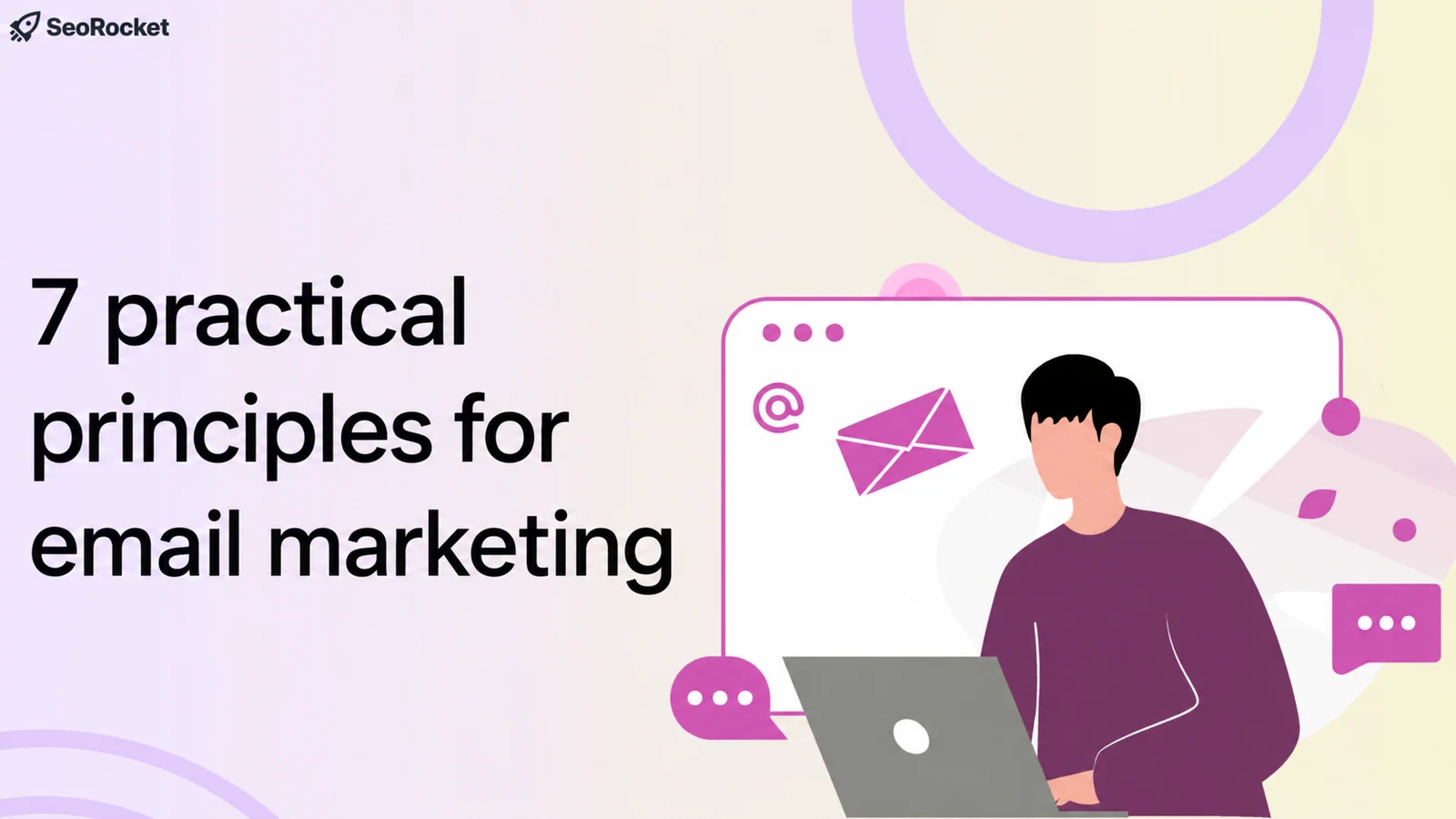
Email marketing takes different forms in different organisations, but several principles apply across campaigns. They concern the audience, the purpose of each message and the way results are assessed. These seven considerations provide a practical starting point.
What is email marketing?
Email marketing is the planned use of messages to inform an audience, maintain a relationship and support a relevant next step. It can complement organic search: someone who finds useful content may choose to subscribe and hear more. The relationship depends on a valid basis for sending messages and a clear expectation about what they will receive.
7 core email marketing principles
1. Prioritise list quality
A large subscriber count is of limited value if recipients did not ask for the messages or no longer find them relevant. An engaged, appropriately collected list gives you a better basis for evaluating clicks and conversions . Deliverability also depends on factors such as authentication, complaints and sending practices; list size alone does not establish a good reputation.
Review invalid addresses, repeated bounces and genuine inactivity. Consider a suitable re-engagement process, then stop sending where appropriate. Do not define inactivity solely by recorded opens, because privacy features can make those measurements unreliable. Retain suppression information where needed to honour opt-outs.
2. Meet the subscriber's expectations
People subscribe for a reason, such as advice, offers or product news. Check that each message delivers what you promised. Ask whether its timing and content help the recipient, rather than simply filling your campaign calendar.
An educational organisation might send short learning tips; a charity could share a monthly progress update. The purpose should be clear even when a message does not ask for a purchase or donation.
3. Use relevant automated sequences
An automated sequence sends messages after a defined event or according to an agreed schedule. It can make follow-up more timely, provided the trigger, content and data use match what the recipient expects.
Depending on relevance and permissions, useful inputs can include:
- Location, such as country or city
- Interactions, such as a requested download or relevant page visit where tracking is permitted
- Purchase history, such as a product category
- Relationship history, such as how long someone has been a customer or subscriber
Simple sequences can be useful without extensive profiling. A pet supplies shop might send a pet's birthday message if the owner volunteered that information for the purpose. Test whether recipients value the message rather than assuming that personalisation creates loyalty.
4. Make the message easy to read
Good information is easy to miss in a dense email. Use a clear hierarchy so readers can identify the main point and decide whether to explore further.
- Keep paragraphs short, while allowing for different screen widths rather than enforcing a fixed line count.
- Use descriptive headings and lists where they make the information easier to follow.
- Use relevant images, with text alternatives where needed, or link to a video rather than relying on unsupported embedded playback.
- Check spelling, wording and factual details before sending.
- Test the message on mobile as well as desktop.
Review newsletters you find useful and identify the specific choices that make them readable. Adapt the principle to your audience rather than copying their design.
5. Deliver what the subject line promises
A subject line should attract the right attention and accurately describe the message. Misleading urgency or a promise the email does not fulfil can disappoint recipients. The subject and preview text should help people decide whether the message is relevant.
Ask a colleague to read the subject and message together. Does the content provide what the subject led them to expect?
6. Make the next action clear
Give each message a clear purpose and, where action is needed, a prominent primary next step. Examples include viewing an offer or registering for an event. The link or button should explain what happens after the click.
- Use short, specific wording.
- Prioritise one main action while retaining necessary supporting and unsubscribe links.
- Make links and buttons usable on mobile.
7. Learn from results and mistakes
Some campaigns will fall short, and occasional errors need correcting. Record what happened and improve the process, whether that means clearer review steps, revised content guidance or changes to automation triggers.
- Test a defined change, such as subject wording, send time or layout, when the audience and sample size support a useful comparison.
- Review clicks, relevant conversions, unsubscribes and complaints. Treat open rates cautiously because privacy protections and automated loading affect them.
- Repeat approaches supported by useful evidence and reconsider those that do not serve the audience or the goal.
A mistake is only useful as a lesson when it leads to a specific improvement; another campaign is not automatically a better one.
Getting more value from email
Start with an appropriately collected list, a clear promise and useful messages. Add automation where it solves a real follow-up need, make the emails readable and evaluate the outcome with suitable measures. This provides a more dependable basis than pursuing opens or subscriber numbers in isolation.