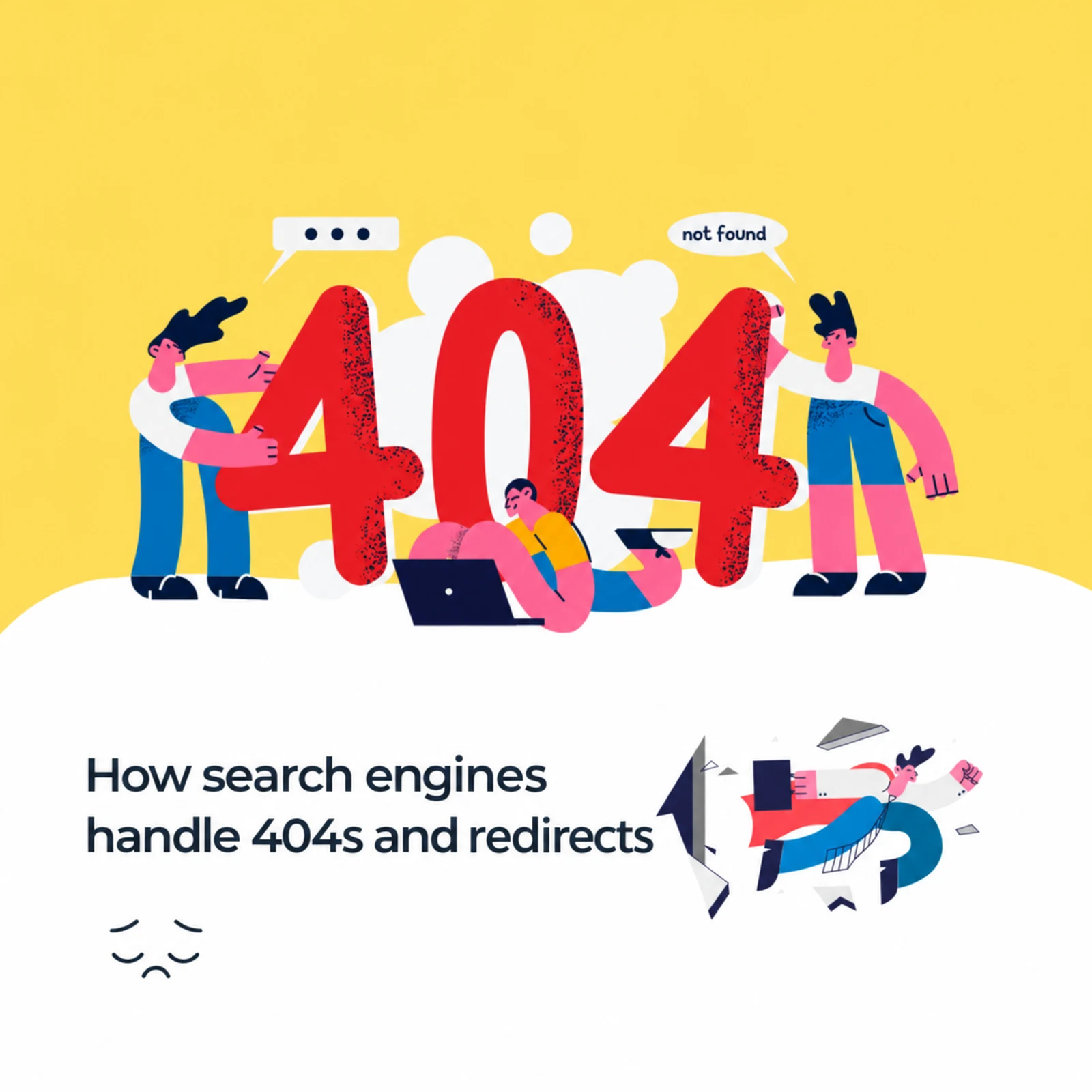
Understanding missing pages, migration redirects and validation reports
After a migration, Search Console may continue to report 404 errors and redirects while Google processes the changes. The report needs to be read alongside the intended URL behaviour.
Key distinctions
A useful migration check includes:
- fixing unintended technical faults;
- redirecting moved pages to relevant URL.
- and reviewing the corresponding Search Console statuses.
A failed or unfinished validation is not by itself proof that every redirect is broken. Inspect the sample URLs and current responses to understand what the report is detecting.
Separate the live website behaviour from the report's processing status.
What validation does
Validation tracks whether Google continues to encounter a reported issue. It is not a mechanism for forcing every migration change to be processed immediately.
Use it to monitor a fix, not as a substitute for checking the affected URLs.
A 404 needs correction when the page should exist. If content has intentionally been removed without a suitable replacement, a 404 or 410 can be the correct response.
An intentional missing page does not always need a redirect.
Practical checks
1. Redirects and content:
- Configure direct redirects to appropriate destinations.
- Ensure the intended new page is accessible and returns a suitable 200 response.
- Update internal links and sitemap entries, using accurate last-modified dates where appropriate.
2. Processing time:
- Do not assume every recent change will be processed within a few days.
- Monitor the affected URLs and report updates; scale, crawl patterns and the nature of the changes can affect timing.
3. Missing pages:
- If the content is intentionally gone and has no relevant replacement, returning 404 is appropriate.
- Remove broken internal links to such URLs, but do not redirect everything merely to make a report count smaller.
Why this matters
Website migration can temporarily affect search visibility. Search Console helps monitor processing, while direct HTTP and crawl checks establish whether the implementation behaves as intended. Use both kinds of evidence.