Many GEO claims focus on small technical changes without establishing what problem they solve. Accurate positioning and public information deserve attention too, but there is no evidence for treating reputation as the sole universal driver of AI visibility.
GEO should not be reduced to a technical checklist.
A brief look at professional discussions LinkedIn or X can reveal new tactics presented as shortcuts.
One suggestion is a dedicated information page for models.
Another is to publish Markdown in the expectation of a large visibility increase.
A further suggestion is to automate a robots review and generate llms.txt.
These may serve particular purposes, but none reveals exactly how large language models select brands for recommendations.
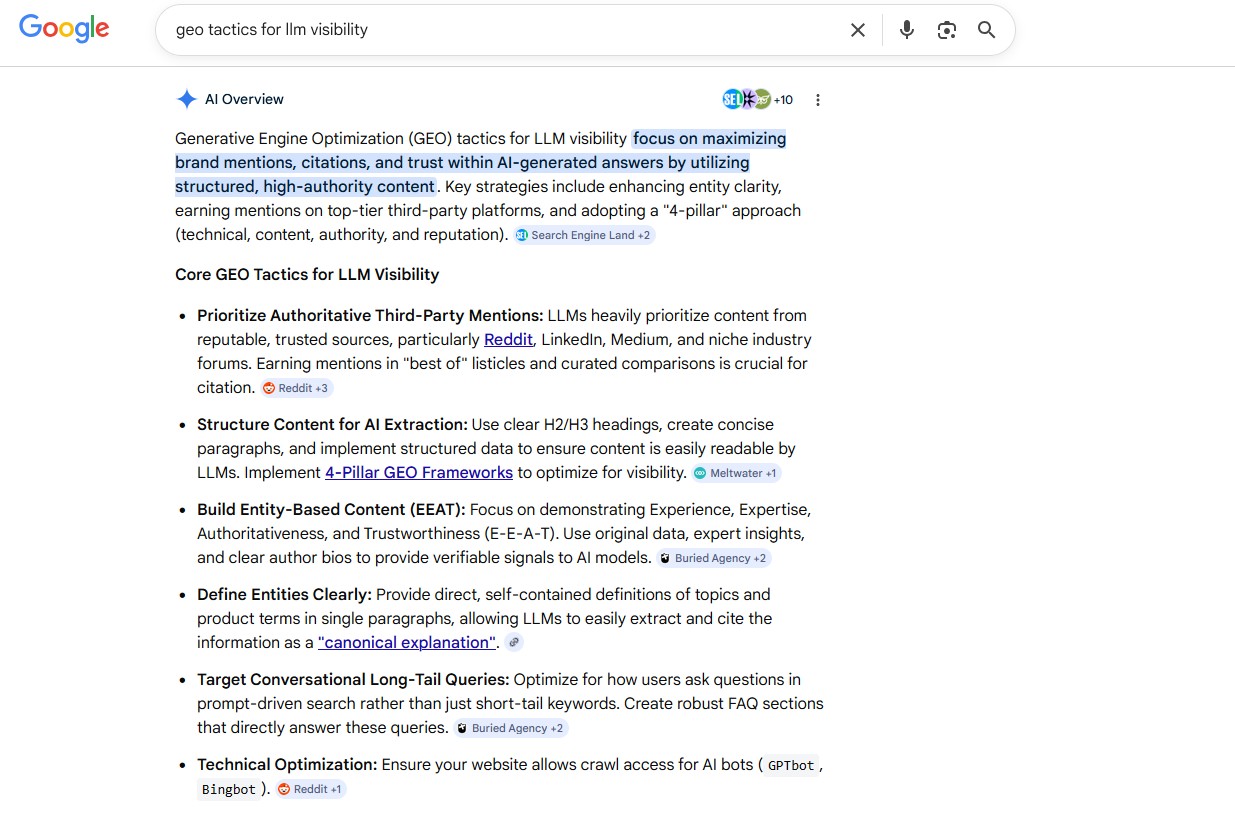
Google explicitly says that its AI search features do not need special AI files or markup. Evaluate each proposed change against a real access or information problem.
Why isolated GEO tactics can disappoint
Clear identity, category and independent evidence can help readers assess a business. Their precise effect on each AI service’s output remains uncertain.
Do not judge a tactic by how often it appears in a discussion.
Basic editorial improvements can be useful; the problem is presenting them as guaranteed AI mechanisms or applying them without regard to the page.
Unhelpful FAQ additions
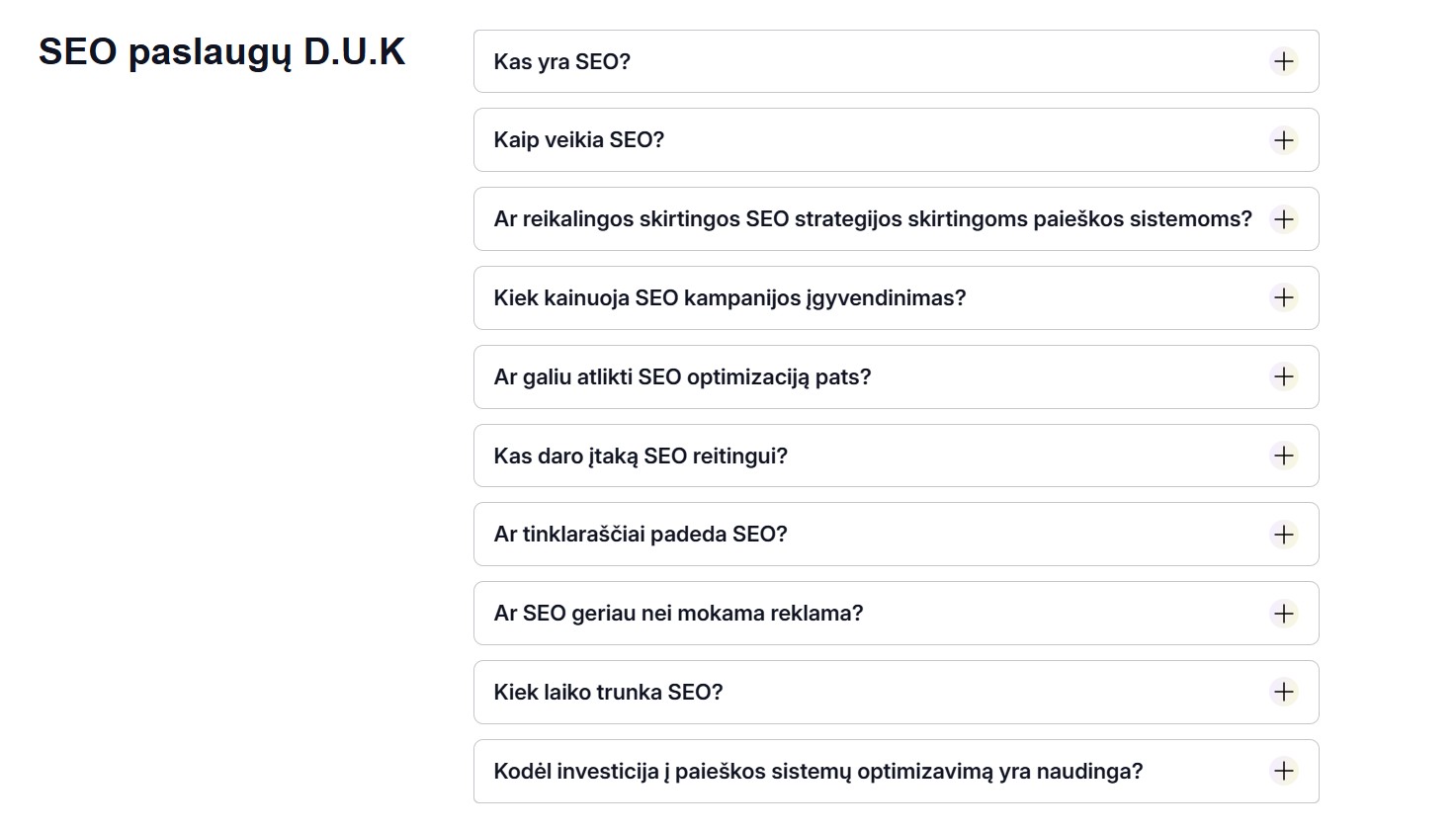
Review whether questions answer a genuine need before considering FAQ markup.
Do not add irrelevant questions merely to make a page look “AI optimised”.
A question repeated from the main text may add no value.
Keep the answer accessible and appropriate to the reader.
A key-takeaways box on every article
A summary can help a reader decide what matters. Its usefulness does not establish a special citation advantage, and not every page needs one.
Formatting everything for a model
Forcing every page into questions, lists and tables can weaken the explanation.
Use structure to make the subject easier to understand. Breaking a narrative into tiny fragments may remove context rather than improve retrieval.
Overinvesting in Reddit
A platform appearing in citation research is not a reason to flood it with promotion.
Relevant commentary, including work by Eli Schwartz, raises concerns about that behaviour. Evaluate the argument and platform rules rather than use the attribution as proof.
Genuine participation serves a community need. Undisclosed promotion, invented users and manufactured endorsements can harm trust.
Customers use several information sources
Customers may consult several sources, so consider the information they are likely to encounter.
Brand positioning
This is a broader communication question alongside the operational SEO work.
The useful mix can include technical access, accurate positioning and genuine evidence. Do not assume that one always produces the greatest return.
An SEO team usually controls only part of the business’s public information.
- The content team may manage articles and comparisons.
- Product marketing may own descriptions, pricing and core messages.
- PR may work with relevant media.
- Partnership teams may maintain reseller or analyst relationships.
- Customer teams may manage feedback and support communication.
Coordinate those responsibilities so that material facts do not contradict each other. No named expert attribution is required to justify this operational need.
Category fit
A page can be cited without the brand being recommended. For example, a comparison may use a supplier’s information while concluding that another product fits the stated need.
A ranking or source link therefore answers a different question from an endorsement.
This distinction matters in AI answers as well as established search.
List articles do not guarantee recommendations
Publishing a list of “best” options does not establish independent recognition for the author’s own product.
Check the actual wording and context of the answer.
The same distinction applies in a technical software category: a link to a provider does not prove that the answer selected it as the best fit.
A system may combine several sources, including biased or inaccurate ones. AI does not automatically neutralise promotional content or produce a fairer comparison.
Count citations and brand recommendations separately.
Do not present an unverified vendor list as proof that the system consistently chooses the “right” brands.
Understanding how the brand appears
Although outputs vary, a defined set of relevant questions can still be reviewed.
Begin with decisions that matter to potential customers, such as:
- Which solution fits a particular requirement for a large B2B organisation in the relevant industry?
Record answers and sources consistently.
The AirOps and Kevin Indig research found a strong association between retrieval position and citations in its ChatGPT sample. That does not establish the strongest causal factor for every LLM product.
Review how your pages and independent sources appear in the relevant retrieval context.
The role of third-party sources
Some categories may rely heavily on independent reviews, while others retrieve more first-party documentation. Investigate the category rather than assume a universal distribution.
Define what counts as a recommendation, record the prompts tested and report the sample size. Repeat the same checks to distinguish a recurring pattern from an isolated answer.
Inspect the actual sources used in repeated answers.
These may include specialist publications, partner material or review platforms such as PCMag, Business.com or Gartner, depending on the query and available content.
Choose appropriate editorial or partnership opportunities on their own merits, not because a publication name guarantees AI exposure.
Implications for the strategy
Technical condition still matters. Inaccessible content, a weak internal link structure or unclear architecture can obstruct discovery.
Review indexing controls, sitemaps and links where relevant to the retrieval system.
These tasks address real access problems, but do not guarantee a recommendation.
Positioning and category descriptions need an equally specific review.
Questions to investigate
- Does the answer recommend the brand, merely mention it or cite a page?
- Which category is assigned, and is it accurate?
- Does the answer connect the offer with the right audience and use case?
- Are comparisons made with appropriate current alternatives?
- Which third-party sources appear, and what do they actually claim?
- Are material facts consistent across the website and authorised profiles?
- Are lists and formatting being used instead of useful evidence?
- Which decision-stage questions matter, and have their answers been checked?
- Does the relevant sample use more independent or first-party sources?
- Where independent sources matter, is there a legitimate plan for editorial visibility?
- Does YouTube provide useful information in this niche, and is it actually retrieved?
- Does the content explain the value and limitations of the offer?
- Would an FAQ or summary resolve a real question, or only add repetition?
- Which inaccurate or outdated claims recur, and who is responsible for addressing them?
Move beyond isolated tricks
The strategic question is how accurately the brand is represented and whether the work improves a relevant outcome.
There is no requirement for AI systems to “agree” about a brand. Public information, retrieval and generation differ between products.
Technical SEO provides useful access and quality foundations, but cannot determine every platform’s judgement of the market.
Coordinate the information you can control and pursue genuine, relevant references.
This makes the work a shared content and communication responsibility, rather than an isolated technical exercise.
Avoid replacing one shortcut with another. Reputation work also needs evidence, ethical methods and clear measurement.