A potential customer may view a product or subscribe to a newsletter without immediately completing a conversion. Remarketing can provide a relevant reminder or useful information that helps an eligible contact decide whether to return.
This article explains remarketing, the terminology used alongside retargeting and several ways to re-engage people who already know the business. It also considers measurement, relevance and the data permissions needed before launch.
What does remarketing mean?
Remarketing means reaching people who have previously interacted with a business. That interaction might be a website visit, newsletter subscription, download or product trial. The available approach depends on the channel, permissions and audience eligibility.
Email is one possible channel, alongside eligible paid advertising audiences and other direct communication. Remarketing is not limited to email.
For example, a B2B business could send a relevant case study to an appropriately permissioned webinar contact who has not requested a demonstration.
A concise message with useful educational material can help the recipient evaluate the offer without repeated sales pressure.
An online retailer might offer a relevant reminder or related products to an eligible customer who browsed but did not buy. The message should reflect a real need, not simply the availability of a contact address.
Email messages can contain reminders, useful explanations or genuinely relevant offers, with a clear way to stop further marketing.
Retargeting and remarketing: how the terms are used
Retargeting often describes paid advertising that reaches a previous visitor through advertising or other eligible ad placements. Delivery depends on the platform’s audience and privacy requirements.
Some marketers use remarketing more narrowly for direct communication with existing contacts, while platforms also use it for paid audiences. Define the channel and data involved rather than rely on a strict universal distinction.
Retargeting
Paid retargeting uses eligible advertising audiences to reach people who previously interacted with the business.
Remarketing
Direct re-engagement uses channels such as email to contact appropriately permissioned subscribers or other eligible contacts.
The approaches can be combined when permissions and campaign goals allow it. Coordinate the message and exclusions so the same person is not overwhelmed across channels.
Why consider remarketing?
Remarketing can help a business continue a useful conversation with people who already know its offer.
First-party data and owned channels can provide more control over communication, but collection, consent, deliverability and maintenance still have costs and responsibilities.
For example, an eligible search-ad audience can be used to revisit people who previously showed interest and compare the resulting conversion performancewith a suitable baseline. The comparison needs to account for the audience’s existing interest rather than attribute every later order to the reminder.
A small business can also evaluate this approach.
Measure cost per qualified enquiry or sale for the actual campaign. An undated third-party percentage is not a forecast for a different audience, market or offer.
Remarketing can connect relevant content, sales follow-up and reminders around the customer’s decision stage.
Its value depends on incremental outcomes, costs and customer experience. An audience that already knows the brand may convert more readily, but that does not prove every conversion was caused by the campaign.
How remarketing can support a digital strategy
Maintaining recognition
Relevant, measured communication can remind people of the business when they are considering their options.
More relevant segmentation
Where permitted, audiences can reflect previous actions, interests or a stage in the buying process.
Supporting interested prospects
A useful follow-up can answer an unresolved question. Prior interest does not guarantee that the prospect is qualified or ready to buy.
Maintaining relationships
Relevant information can support an ongoing customer relationship when the recipient wants to receive it.
Coordinating channels
Email marketing, content planning and CRM information can be coordinated where the data use is appropriate and permitted.
Plan remarketing around a useful next step, not repeated exposure alone. Select the audience, permissions, message and measurement before increasing delivery.
Five approaches to re-engaging an audience
Different approaches suit different needs. Investigate where people stop in the decision process and whether a reminder or further explanation would help.
The following channels and campaign types offer distinct ways to re-engage.
1. Email re-engagement
Email can support a targeted follow-up where the recipient is eligible to receive it. Assess the actual costs and outcomes rather than applying a generic email ROI figure to every campaign.
Relevant segmentation and timing help connect a message with the recipient’s recent interest or unresolved question.
A properly maintained first-party list provides control over contact data, but it does not automatically ensure deliverability or compliance. Track permissions, unsubscribes, bounces and the relevance of the communication.
2. SMS re-engagement
Text messages can provide concise, timely information where the recipient has the appropriate permission and the channel suits the purpose. Avoid treating a phone number collected for another reason as permission for marketing.
In B2B communication, distinguish operational messages such as appointment confirmations from marketing follow-ups. They can have different requirements.
For example, downloading a guide does not by itself justify a sales text. Check the stated collection purpose and the applicable permission before sending one.
For retail promotions, use clear, relevant messages and an effective opt-out mechanism. Coordinate frequency with other channels and avoid misleading urgency.
3. Newsletters
A useful newsletter can maintain contact with subscribers who are not ready to buy. Focus on information they asked for rather than filling each issue with sales prompts.
For B2B teams, newsletters can distribute practical explanations, product updates and relevant analysis. Choose the frequency around the content and audience rather than an unsupported industry percentage.
A regular publication can help recognition, but repeated messages to uninterested contacts can undermine it. Monitor engagement and provide an easy way to leave.
Automated sequences can deliver suitable material in stages. Review their timing, conditions and exclusions so old or inappropriate messages do not continue indefinitely.
4. Win-back campaigns
Win-back campaigns address previously active contacts who have become inactive. Define inactivity carefully and confirm that the business can still contact them for the intended purpose.
For a longer B2B buying process, a genuinely relevant update may provide a reason to reconnect: a useful case study, a product change or an appropriate event invitation.
Choose a permitted channel, explain the context and make the next step straightforward. Stop when the person opts out or the contact is no longer relevant.
Keep the message focused on one useful reason to respond rather than a sequence of generic reminders.
5. Social audience re-engagement
Relevant organic posts can reach existing followers, while paid social retargeting uses eligible audiences under the platform’s rules. These are related but different mechanisms.
Share useful analysis, events and genuine project information where the audience can benefit. A routine organic post is not proof that a specific former website visitor saw it.
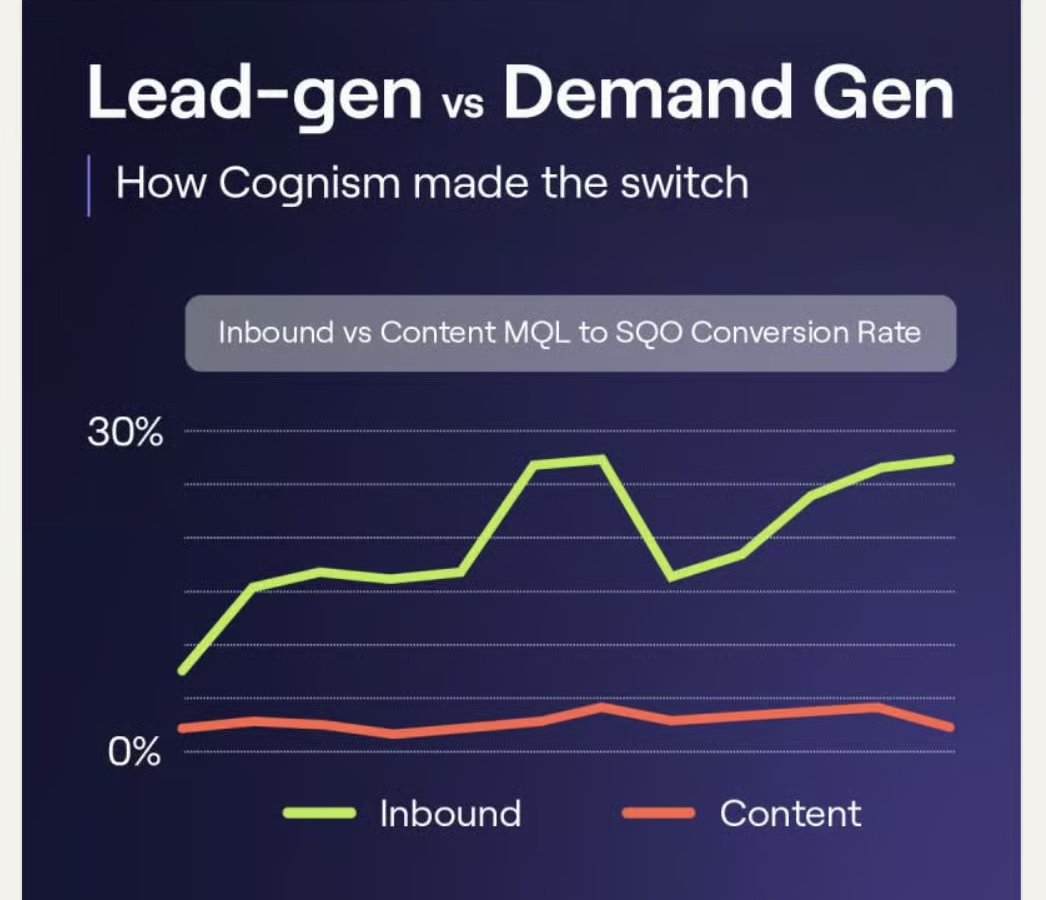
The illustrated Cognism promotion offers a demand-generation guide. It shows the message used in the ad; the image alone does not verify audience targeting or campaign results.
You do not need every channel. Choose a combination that fits the audience, available permissions and the outcome being measured.
Privacy and platform considerations
Remarketing can involve personal data and tracking. Review the actual collection and use of that data, explain it clearly and obtain qualified advice on the requirements that apply to the campaign.
The following are implementation checks, not a complete legal-compliance assessment.
Consent and tracking controls
Check which tracking requires consent in the relevant jurisdiction and ensure the implementation follows the recorded choice. A visible banner alone does not prove that tags, storage and audience sharing behave correctly.
Applicable privacy requirements
Assess the rules that apply to the business, audience and activity rather than assuming every law applies identically. Plan how to handle access, deletion, withdrawal and opt-out requests where applicable.
Responsible use of first-party data
Check that CRM or email data can be used for the intended marketing purpose. Avoid purchased or poorly documented lists, maintain permission records and honour opt-outs across connected systems.
Audience membership periods
Set a justified retention and membership period around the buying cycle and the original data purpose. Thirty or sixty days are possible planning examples, not universal legal or performance rules.
Platform policies
Review current advertising rules for the selected platform, including sensitive categories, audience eligibility and customer-data use. Platform approval does not replace the business’s own responsibilities.
Avoid excessive repetition
Monitor frequency and customer feedback. Use suitable controls where available and avoid continuing to pressure people who have opted out or are no longer interested.
Clear communication
Explain data use in accessible privacy information and make the identity of the advertiser clear. Messages should help the recipient rather than imply intrusive knowledge about them.
A responsible campaign combines relevant communication, appropriate permissions, working controls and useful measurement. Review these elements as the campaign or platform changes.