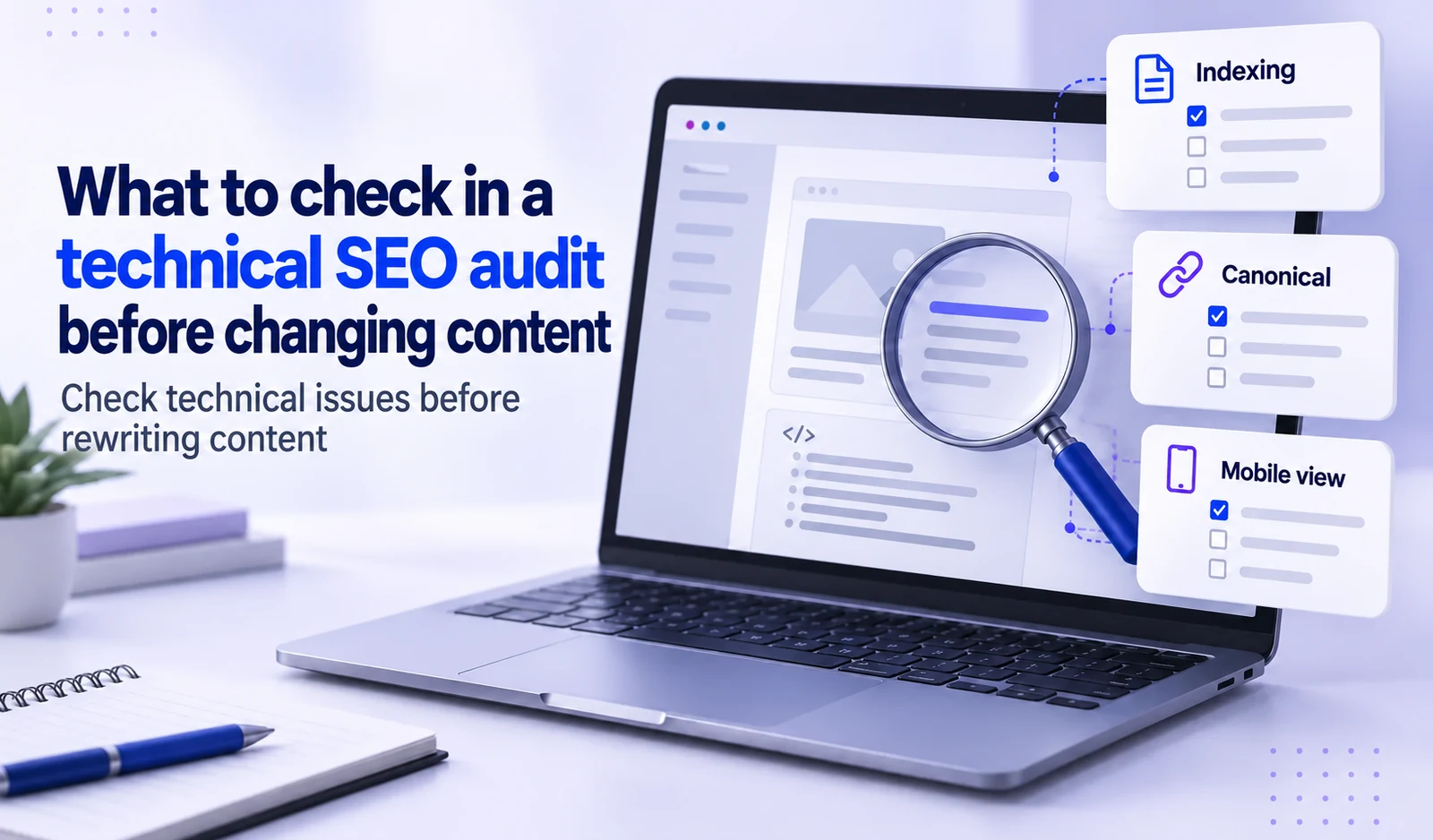
A website needs to reach the people it is intended to serve. If relevant pages rarely appear in search, start by assessing whether search engines can access and index them, whether the content answers the right needs and how the site compares with the results already shown. Businesses that need help can use SEO services.
Promoting a website
Choose promotional activity around your audience and objectives. Display advertising can be appropriate for some campaigns, while organic search requires a different approach. Relevant editorial references and backlinks can help people discover useful pages. Third-party authority scores such as DA and PA can support research, but they are not Google metrics and should not be the only selection criterion. search engines assess many signals when ranking pages. A link does not guarantee a higher position. When considering SEO articles on other websites, focus on the publisher's audience, editorial quality and relevance. There is no universal rule requiring two links per article. Paid placements should be disclosed and their links appropriately qualified, rather than purchased to manipulate rankings. Our related service is article placement.
A relevant business directory can help people find accurate information about your company. Evaluate the directory's quality and usefulness before submitting a listing. Common requested details include:
- Website name
- Category
- Website address
- Relevant keywords
- Short description
- Detailed description
Relevant professional forums can also help you learn about customer questions and contribute useful answers. Follow the community's rules, disclose relevant interests and include a link only when it genuinely helps the discussion. Do not post keyword links simply to create backlinks.

Comment fields on news sites may include a website address, but this is not a reason to submit promotional comments. Contribute only where you have something relevant to add. A comment link's presence does not establish an SEO benefit.
One approach that requires particular care is backlinks buying. Sitewide footer or widget links purchased to influence rankings can form part of a link scheme. A package containing many links is not inherently valuable. If a placement is genuinely advertising, use appropriate disclosure and link attributes such as rel="sponsored" rather than treating it as a ranking shortcut.
Understanding article directories
Article directories vary widely. Some publishers provide useful, edited material for a real audience; others exist mainly to host promotional links. Check the site's content standards, relevance and audience before submitting work. An originality requirement alone does not establish that a directory is reputable or that a link from it will improve rankings.
Write clearly, support claims and cover the subject to the depth the reader needs. There is no universal 300-word threshold that makes an article useful or guarantees faster indexing. Use headings, paragraphs and relevant visuals for readability. Any links should make sense in the context, with descriptive wording rather than repeated keyword stuffing.
Website design and optimisation
Your own website also needs a sound technical foundation, including valid SSL certificates and HTTPS. Slow loading can make a site difficult to use, so investigate the actual causes, such as server response, images or unnecessary scripts. A CDN may help with delivery or some attacks, depending on the service and configuration, but it does not solve every performance or security issue.
Make the design easy to navigate so visitors can find the information or service they need. Keep content relevant to the website's purpose and avoid overloading the homepage with unrelated material or unnecessary images.

Keep useful content current
Publish useful material when there is a genuine need and keep existing information accurate. A monthly publishing target or a minimum of five articles is not a Google indexing requirement. For a new site, prioritise the pages needed to explain the business and answer its audience's important questions.
Continue improving your content
Review existing content and identify useful gaps rather than publishing more merely to increase volume. External articles and videos can inform research, but translating or paraphrasing them does not automatically give you permission to reuse their work. Check original sources, respect rights and add a distinct contribution. If you consider advertising revenue such as AdSense, assess the site's eligibility and the effect on user experience.