The presentation looks excellent. The Digital marketing agencyseems to understand the business objectives, and the portfolio looks convincing.
After a few weeks, however, responses might become slow, recommendations repetitive and reports difficult to connect with business outcomes.
This is an illustrative situation, not a claim about a particular client.
You can reduce the risk by checking the scope, people, evidence and working process before signing.
What this guide covers
This guide covers:
- warning signs that promises may exceed the team’s capacity;
- positive evidence of a suitable working relationship;
- questions to ask before committing to the contract.
Use these criteria as a practical checklist rather than a ranking of agencies based on presentation alone.
The objective is to select a team whose capabilities fit the work you need in 2026.
Agency types: matching the team to the need
| Need | Type of team | What to clarify |
|---|---|---|
| Organic search visibility | SEO agency | Technical, content and off-page SEO work; who implements the changes? |
| Paid campaigns | Google Ads or Meta Ads specialists | Media budget, management, creative production and conversion measurement. |
| Cross-channel coordination | Broader marketing agency | Shared plan, channel responsibilities and outcome reporting. |
| A new website or shop | Web development team | Functionality, content, SEO migration, analytics and support. |
An agency label does not define its complete service. A specialist may solve a narrow problem; a broader team may coordinate several areas. In both cases, establish who does the work and who is accountable for implementation.
How should you separate the budget?
Distinguish the agency fee, platform spend, content or creative production, website work and measurement. State whether costs are one-off or recurring and whether VAT is included. Otherwise proposals with different scopes cannot be compared fairly.
Give shortlisted agencies the same brief: website, market, business objective, baseline, internal capacity and separate budgets. Ask for deliverables, responsibilities, a report example and possible additional costs. Further criteria appear in the guides to choosing an SEO agency and a Google Ads agency .
SeoRocket’s service scope appears on the advertising agency page, with a paid-search planning example in the Google Ads budget guide.
Questions before working together
Before choosing an agency, establish what your business needs.
Does the offer solve a real problem for a defined audience?
An agency cannot guarantee demand for a product that people do not need or value.
Where product–market fit is uncertain, marketing may need to test demand rather than scale an assumed acquisition formula.
Ask:
- What specific problem does the offer solve?
- Who has a reason and willingness to pay?
- What alternatives compete for the same audience?
Research tools can contribute to demand analysis, including suitable features in Ahrefs , but estimates do not establish durable demand by themselves.
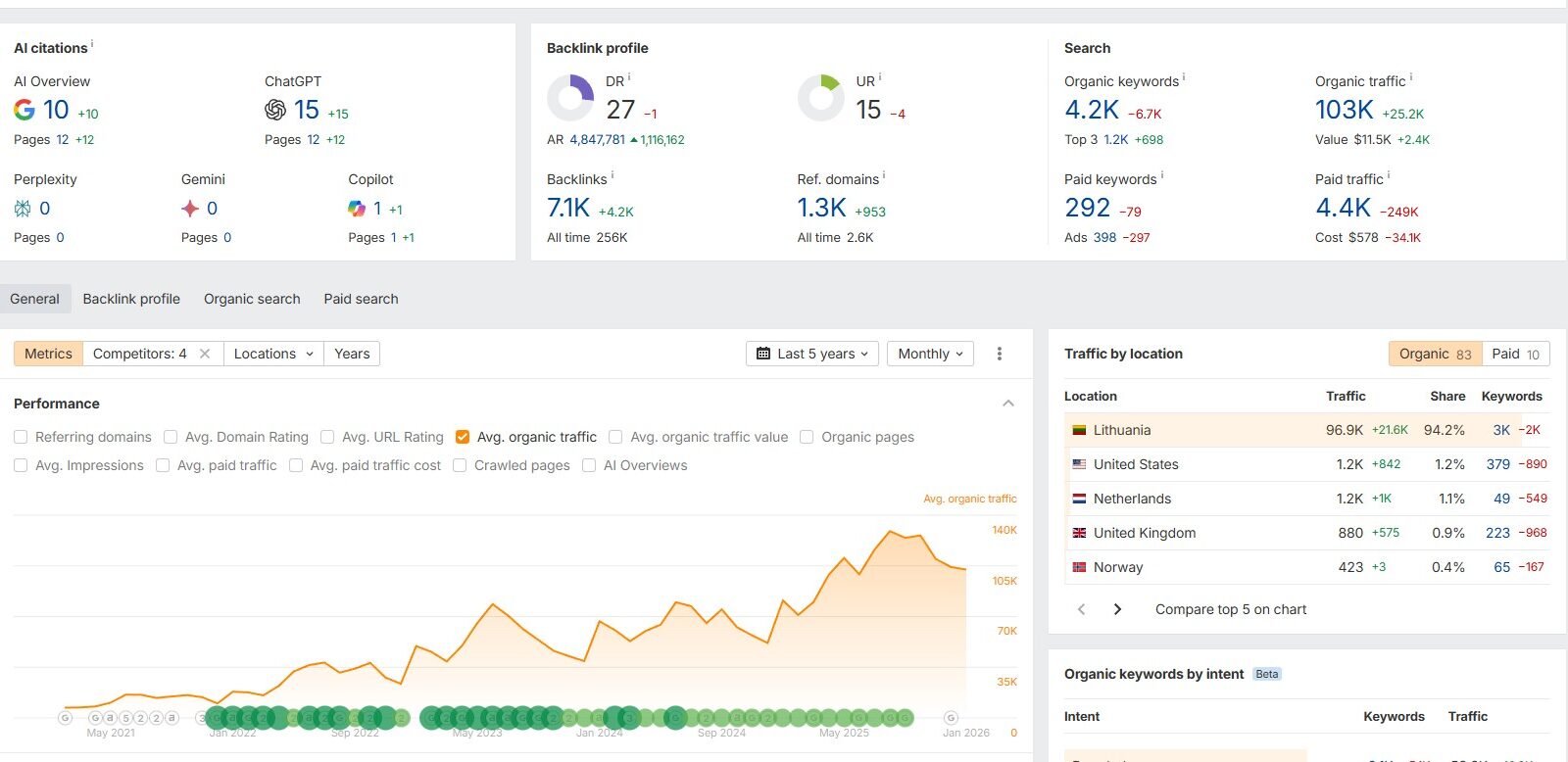
An upward chart can suggest a pattern worth investigating. It does not, without context, prove product–market fit, profitability or stable demand.
Combine search estimates with customer research, sales evidence and the cost of reaching the audience.
Is the marketing objective clear?
An agency can help refine the objective.
It is still useful to describe what success would mean before requesting a proposal.
“More traffic” is too broad on its own. A SMART objective specifies the outcome, measurement and time frame, with assumptions about whether it is achievable.
An illustrative SMART objective
For example: aim for 120 qualified demonstration requests per month within four months by improving landing-page copy and Google Ads campaigns.
This is a teaching example, not a result or promise. Its realism would depend on the starting point, audience, budget and qualification definition.
Can your team support the agency?
An agency relationship is not something the client can always set up and leave unattended.
Agree the communication and approvals the work requires.
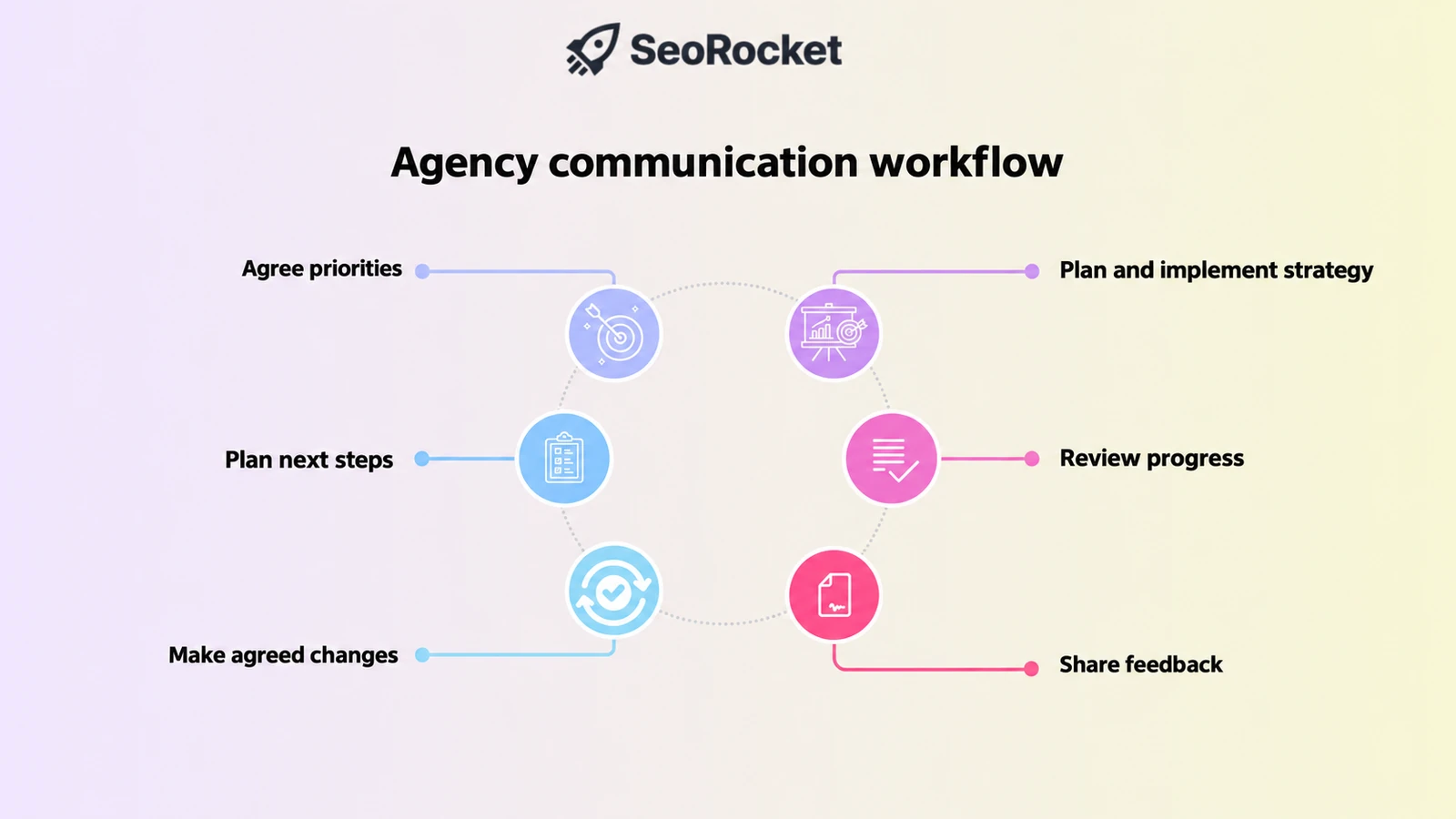
The level of involvement will vary with the project’s scope and autonomy.
Useful collaboration makes the responsibilities and decision routes clear.
Possible stages include:
-
providing source material and agreeing the strategy and deliverables;
-
scheduled working meetings at a frequency suited to the project;
-
periodic progress reviews and feedback.
Appoint an internal owner who can coordinate context and decisions. One main contact can reduce conflicting feedback without excluding the people whose expertise is needed.
Do you know which services you need?
“Full-service” is not enough information to judge value. Check whether the proposed activities address your actual priorities.
Common specialisms include:
-
SEO and content marketing : organic discovery through useful content and technical implementation;
-
PPC advertising : planning, managing and reviewing paid campaigns;
-
social media: audience communication, awareness and relevant engagement;
-
branding and design: visual identity and communication;
-
video production: video that supports the defined audience task or conversion;
-
consultancy: defining priorities and strategy before implementation.
Choosing the right direction
Review what currently works, what is unclear and what is underperforming.
A precise brief makes it easier to find a team with relevant strengths.
Start with analytics and business records. GA4 reports can provide part of the picture, but enquiry qualification, margin and sales may require other systems.
A strong historical channel is a useful starting point, not proof that more spending there will produce the same marginal return.
The role of competitor research
Investigate competitor activity without assuming that visible activity is commercially successful.
Public social and SEO tools estimate selected signals. They do not normally reveal a competitor’s full analytics or profitability.
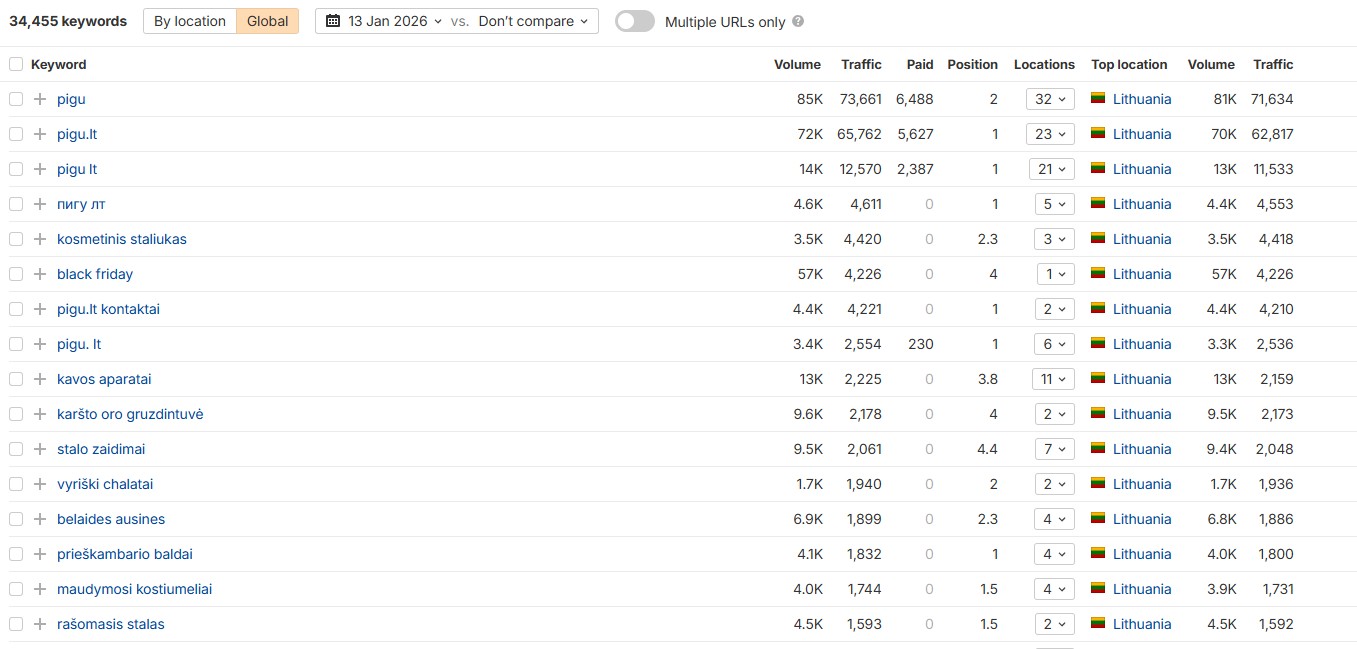
A competitor’s visible growth can suggest a hypothesis to investigate, rather than a reason to copy its channel mix.
Does your team agree on the brief?
Objectives also need agreement within your own organisation.
Conflicting internal expectations can undermine an otherwise suitable agency relationship.
For example, a logo project may go through repeated revisions before a decision-maker reveals that retaining the full name was a fixed requirement.
The avoidable cost is caused by a missing constraint in the brief. No specific client or €5,000 loss is being claimed here.
How to avoid this
Before work begins:
-
identify the internal owner of the relationship;
-
name the person who approves the final work;
-
collect essential stakeholder requirements.
Then agree how feedback and changes will be handled with the agency.
Six warning signs
A strong sales call is useful, but insufficient evidence.
How can you assess whether the relationship will work over time?
The following warning signs provide questions to investigate.
1. Capacity and attention are unclear
An agency may have limited availability without making that obvious in a proposal.
Clarify the capacity allocated to your project and how urgent work will be handled.
Staff changes can affect continuity, but turnover alone does not prove burnout or poor service. Ask how knowledge transfer and cover work.
In the initial discussion, the team should ask enough about your business to make a relevant proposal.
Agreement with everything you suggest can also be unhelpful. A good adviser can explain when a proposed tactic is unlikely to address the objective.
Ask for a general observation about the brief, not an unpaid complete strategy. Look for a reasoned answer rather than a rehearsed sales line.
A defensive response to reasonable questions about scope and responsibility is a concern.
For a paid social pilot, define the planned tasks and review points at the start. This makes it easier to identify limited delivery before the trial ends, without relying on an unverified anecdote about another client.
Review recent feedback and ask for context where needed.
Useful questions include:
-
What is the usual engagement model?
-
How long do comparable projects run?
-
Who will work on this project and what capacity is assigned?
The answers help assess whether the proposed commitment is realistic.
2. Methods are outdated or change without evidence
Platforms and audience behaviour change, including the use of AI.
Ask how the team reviews methods and decides which developments are relevant.
Older case studies can still show useful work. Check whether the agency can explain how its methods apply to the current brief rather than dismiss a case solely because of its date.
Service descriptions should explain the work clearly instead of rely on vague or obsolete promises.
Promises to “conquer Google” deserve scrutiny. For a local business, ask about relevant local-search work; an AI label is not a compulsory sign of competence.
Chasing every trend can be just as unhelpful as ignoring change.
Ask:
-
How has the service changed during the past year?
-
Which processes have changed with AI tools?
-
Where is AI used, and how is its output checked?
-
Which developments matter to our particular audience?
3. Exit conditions are unsuitable or unclear
Both parties need a workable agreement for a relationship that does not meet its purpose.
There is no universal requirement for a 30-day cancellation clause. Check the notice period, minimum term, committed production costs and handover obligations.
The terms should explain how either side can end the work.
A refusal to discuss reasonable exit conditions deserves clarification, but different project types can legitimately have different terms.
Ask:
-
How were underperforming engagements handled?
-
What risks do you see in our project?
-
What notice, payment and handover conditions apply?
4. Communication is unclear
The initial process can reveal how the team handles questions and commitments.
Potential concerns include:
-
repeatedly needing to chase agreed next steps;
-
unclear answers about timing, process or capacity;
-
not knowing who will work on the account.
Clarify:
-
Who is the main contact?
-
Who carries out the work?
-
Who joins the relevant meetings?
-
When and how will progress be reviewed?
5. Promises exceed the evidence
Ambitious claims need a credible basis.
Pause when results are guaranteed before the team understands the starting position and constraints.
Ask:
-
Which verified examples support the claim?
-
Which outcomes can the team control, and which remain uncertain?
A persuasive sales process does not establish delivery capacity. Check the proposal against the people and resources assigned.
Technology experience matters too. A team unfamiliar with the existing platform may need additional discovery or specialist support.
Ask:
-
Who has worked with the relevant technology?
-
What kind of work did they do?
-
Which comparable projects demonstrate that experience?
-
Which project best illustrates their approach?
-
Can an appropriate former client provide a reference with permission?
References are useful when their context matches your requirements.
6. The process cannot be explained
Knowing what an agency sells is different from understanding how it works.
A screenshot without dates, context or a description of the changes is weak evidence of causation.
Other concerns include:
-
unwillingness to discuss the process;
-
the same recommendation applied without regard to the brief;
-
reports focused on surface-level counts;
-
inability to explain what is known and uncertain about an outcome.
Ask:
-
How does a new engagement begin?
-
How is strategy developed?
-
How are priorities changed?
-
How often is the work reviewed?
-
What happened when a previous approach underperformed?
Clarity, accountability and a willingness to learn are more useful than a claim that every project succeeds.
Six positive signs
Suitable and capable agencies do exist.
The following positive signs help assess the fit, without guaranteeing the outcome.
1. Questions come before tactics
The team tries to understand the decision before prescribing a solution.
It asks about the offer, audience, constraints and objectives.
Useful signs include:
-
questions about the business model, customer and positioning;
-
respectful, reasoned disagreement where appropriate;
-
attention to business outcomes and measurement limits.
A PPC team, for example, may first investigate the account and objectives before quoting a scope. Standard packages are not inherently poor; the important issue is whether the proposed work fits the need.
2. Independent feedback is specific
Reviews and recommendations are useful when their source and context are credible.
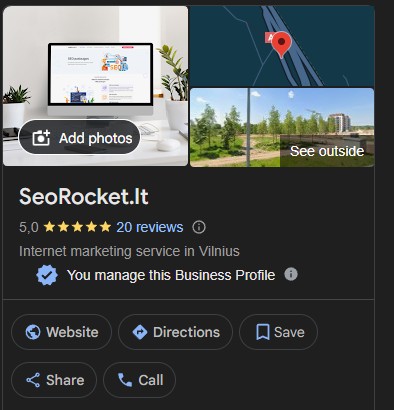
Check suitable independent review sources for comments about:
-
quality of work;
-
communication;
-
pricing and scope;
-
delivery against commitments.
Specific descriptions are usually more informative than generic praise.
Ask trusted professional contacts about direct experience. Respect confidentiality and distinguish their personal account from a general market judgement.
Awards can provide context, but assess their criteria and commercial arrangements. They are not proof that the agency is the right fit.
3. Team roles are transparent
It helps to know who will actually do the work.
Early communication provides a chance to assess clarity and responsiveness.
Agree who needs to attend which discussions. One accountable project manager can coordinate specialists effectively; every specialist does not need to join every meeting.
A public team page can help, but ask directly about the people assigned and any subcontracting that affects delivery.
4. Scope, price, timing and workflow are defined
The proposal should explain the practical terms of working together.
These include:
-
included and excluded work;
-
realistic timing and dependencies;
-
planning, implementation and review responsibilities.
Example plans and reports can make the intended service easier to understand.
Clear pricing helps prevent disputes over assumptions.
Even when prices are not public, the agency should explain its model, the relevant rates or deliverables and how changes will be agreed.
Direct answers to scope and cost questions are useful evidence of a workable process.
5. The agency’s own communication is useful
Its own website and content provide examples to inspect.
Assess clarity, consistency and relevance to its audience, while recognising that its market may differ from yours.
Useful signs can include:
-
purposeful public content;
-
a coherent visual identity;
-
resources that provide information beyond promotion.
Good self-marketing is evidence of particular capabilities, not a guarantee of success for your business.
6. Working styles are compatible
People and decision-making habits matter.
The relationship may run for a considerable period, so consider how disagreements, feedback and deadlines will be managed.
Positive signs include:
-
genuine interest in the offer and purpose;
-
respect for people at different levels;
-
compatible expectations about accountability and conduct;
-
constructive discussions rather than persistent unnecessary friction.
Thoughtful questions and respectful responses can support a good working relationship.
Combine that impression with the evidence, scope and contract. Trust is valuable when it is supported by clear commitments and a process for checking them.