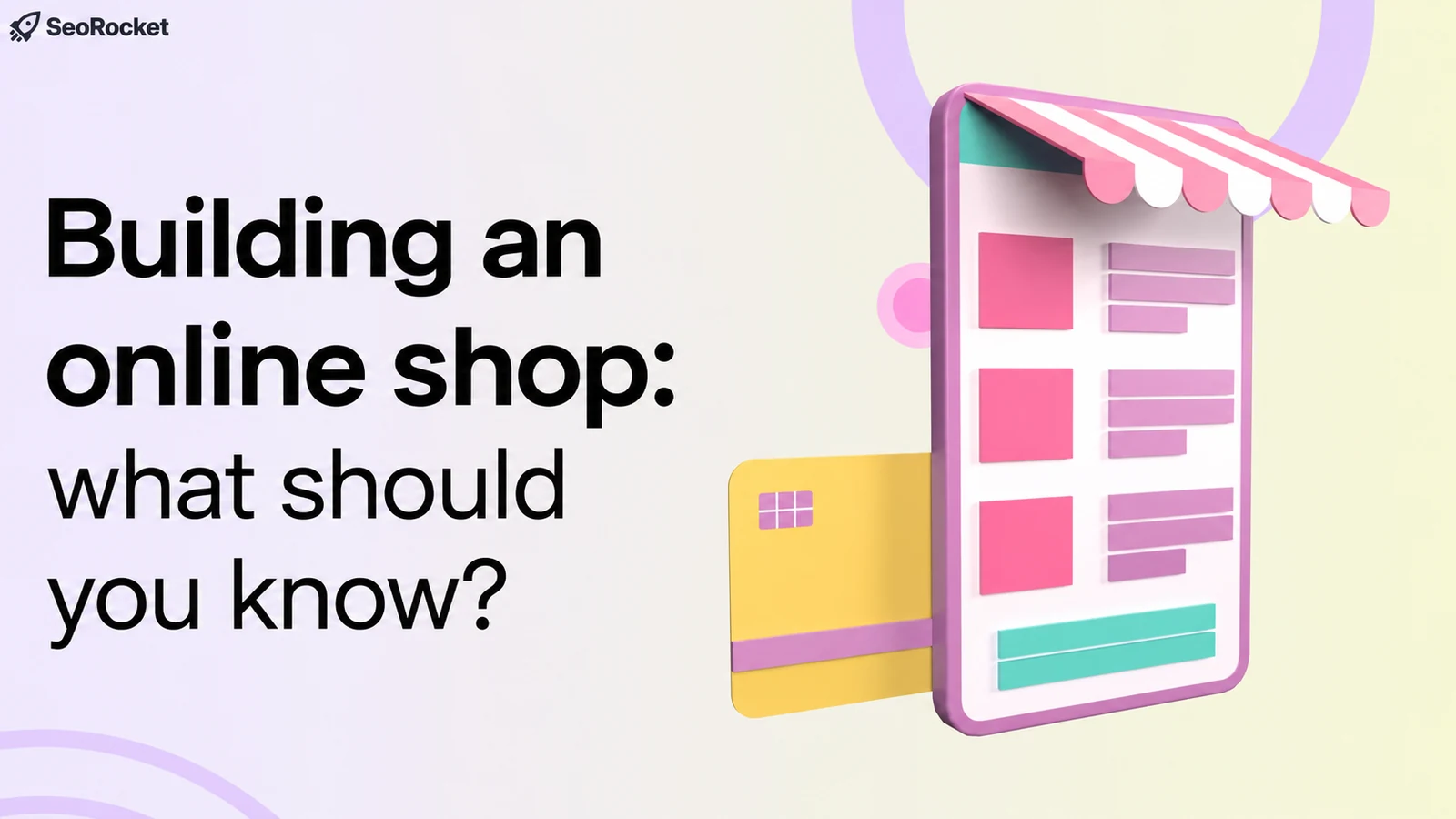
Whether selling handmade products, wholesale goods or through dropshipping, an online business needs suitable ecommerce functionality. A wide range of website development tools can reduce the need for coding, but launch still requires product, operational and technical planning. The following eight stages provide a starting framework.
How to start an online shop
Choose a viable niche and define your audience
Start by identifying whom you serve. Assess three connected factors rather than choosing products on enthusiasm alone:
- Profitability: Account for production or wholesale cost, fulfilment and delivery. A product with expensive shipping or a narrow margin may not suit the intended online model.
- Search demand: Check whether people seek the product and how they describe it. For dog leads, for example, assess relevant product and category searches. Use SEO toolsto investigate demand rather than assuming popularity.
- Interest and expertise: Familiarity with a subject can support sustained work and useful customer advice. Consider what you can explain credibly and whether you can maintain that knowledge.
The target audience matters as much as the niche. Products must address its needs and be practical to buy. Feedback from people outside that audience may not represent actual purchasing demand.
Choose the product range
Once you understand the niche and target audience, choose the range. Assess production cost, demand, storage, stock and shipping capacity before committing.
For an established product, identify a useful difference: quality, features, information, service or another defensible benefit. Popularity alone is not a strategy for becoming the preferred supplier.
Develop the brand and its assets
Choose a business or brand name and prepare assets such as a logo. Domain searches through registrars can help assess availability, including the domain services of Domenai.lt, IV.lt or Hostinger. Check that a suitable domain aligns with the brand, as well as any relevant naming rights.
Canva can help explore logo concepts, while designers can be found through services such as Fiverr, Paslaugos.lt or Upwork. Check licensing, originality and suitability rather than assuming every template establishes exclusive brand rights.
Register the business
For a business operating in Lithuania, assess the appropriate registration and tax arrangements before trading. Options include individual activity under a certificate, an MB small partnership, a UAB private limited company or another suitable form.
- Individual activity under a certificate can be registered through VMI's services where eligible. Income tax, health insurance and social contributions need to be considered. Check current registration and tax requirements rather than assuming the same treatment for every seller.
- Small partnership (MB) is a Lithuanian legal form to assess with an accountant or qualified adviser. Check current eligibility, member arrangements, contributions and tax responsibilities rather than treat it as a different label for individual activity.
- Private limited company (UAB) has corporate governance, accounting and reporting obligations that should be assessed alongside expansion needs. Confirm current capital and registration requirements with the official registry before choosing this form.
Discuss the appropriate form and taxes with an accountant or qualified adviser and consult VMI and the Centre of Registers. This Lithuanian context should not be applied automatically to businesses established elsewhere.
Choose an ecommerce platform
The platform supports building and managing the shop. Options such as Squarespace, Shopify and Square differ in features, cost, availability and usability. Compare them against your actual needs.

Examples to assess:
- Squarespace is a hosted website and commerce builder. Compare the relevant plan, commerce features, transaction fees and renewal terms before choosing it.
- Shopify is an ecommerce platform with apps and integrations, including options for dropshipping workflows. Budget for the selected plan, payments, apps and any chosen theme; a paid theme is not universally required.
- Square: online and in-person selling tools, with free tiers in some markets. Check merchant-country support, payment eligibility and fees before choosing it for a Lithuanian business.
Build the shop
After selecting a platform, create the account and configure it. The exact sequence varies, but common tasks include:
A practical setup sequence:
- Create an account on the chosen platform, such as Shopify.
- Choose or connect a domain; check whether registration is included.
- Choose a suitable theme.
- Add the business name and logo.
- Adapt the homepage and other pages.
- Add products and useful descriptions.
- Configure an eligible payment provider.
- Set tax, delivery and other required rules.
Use platform-specific instructions for detailed implementation and test the full purchase process before launch.
Optimise the website
Search optimisation can improve discoverability, but it is not cost-free by definition and does not guarantee traffic or sales. Plan technical work, useful content and ongoing maintenance alongside launch.
Useful starting checks include:
- Title tags: Write descriptive, relevant titles for products and categories. Search engines may construct displayed titles from several signals.
- Meta descriptions: Explain what is on the page and why it is relevant. Google may choose another snippet for a particular query.
- Headings: Use descriptive headings to organise information and help readers understand the page.
- Images: Use relevant, appropriately sized images and accurate descriptive alt text where meaningful, rather than inserting keywords indiscriminately.
Introduce the shop to customers
Launch needs a distribution plan as well as a working website. A longer-term approach may include SEO, with paid or direct promotion considered separately. Advertising does not guarantee immediate visitors or sales at a viable cost.
Potential approaches include:
- Relevant business directories with accurate information.
- Creator partnerships where audience fit, rights and disclosure are appropriate.
- Online advertising, includingGoogle AdsorFacebook Ads.
- Use content marketingto answer relevant questions and support discovery.
- Maintain appropriate social profiles.
- Consider referral or loyalty programmes where economically justified.
- Pitch genuine news through press releases.
- Assess affiliate partnerships and their terms.
- Support word-of-mouth through good service.
The right mix depends on products, audience, economics and operational capacity. Test a manageable set rather than launch every method at once, recording results and costs before expanding.