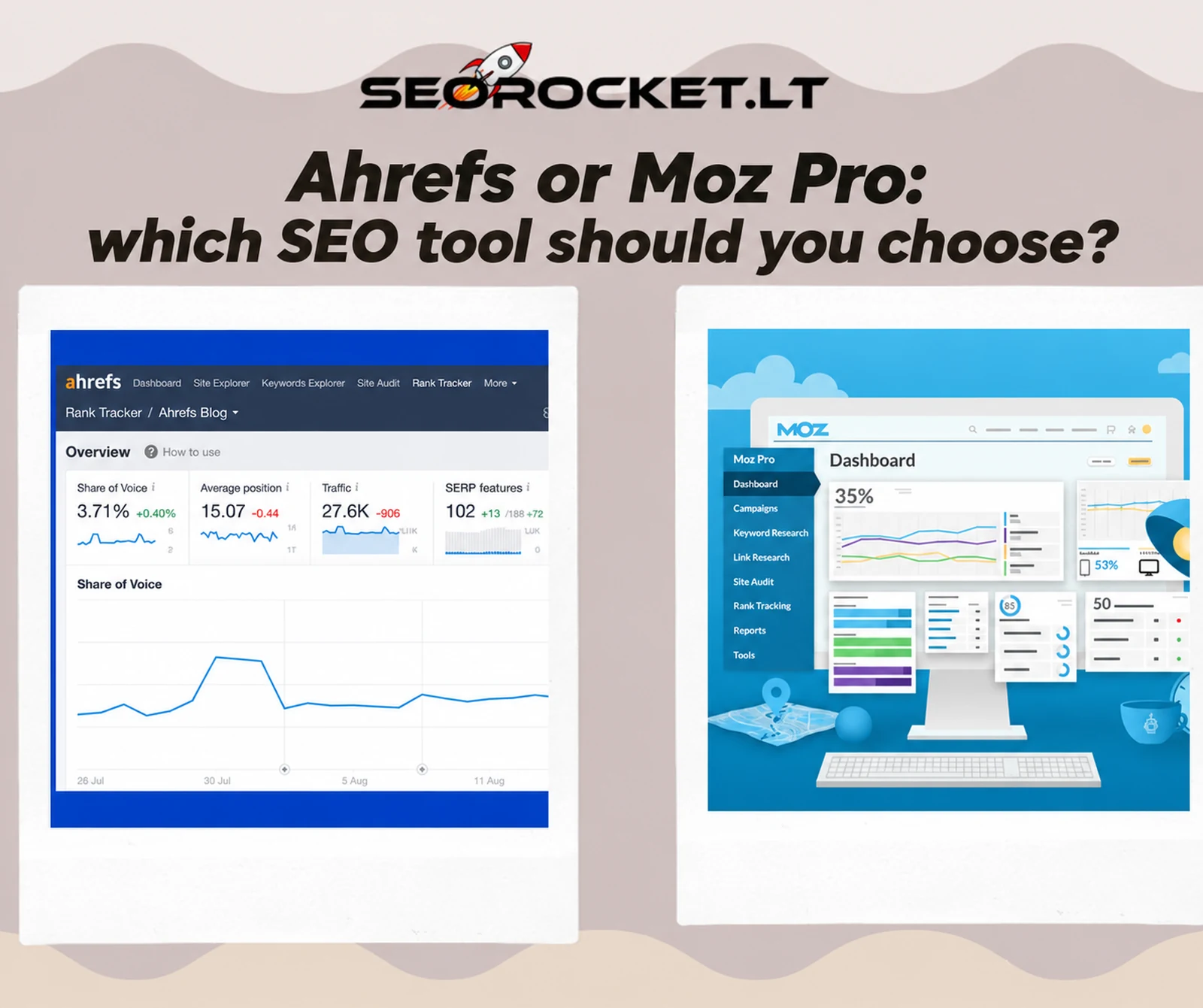
Both platforms offer paid SEO servicesthat support competitor analysis, technical reviews and keyword research. Their reports, data sources, interfaces and plan limits differ. Compare the tasks you actually need to perform rather than assuming one platform is universally better for research and the other for audits.
Ahrefs or Moz Pro: which fits your work?
There is no single answer for every team. Your goals, market, workload and budget matter. Both platforms cover several areas of SEO, but the usefulness of a report depends on its data and how it fits your process. In particular, compare keyword and backlinks research using representative examples from your own market, alongside audit findings you can verify independently.
Main areas of functionality
- Keyword research: demand estimates, difficulty metrics, related queries and ways to organise research. Definitions and available features vary by product and plan.
- Backlink analysis: referring sites, link attributes, broken links and competitor overlap. Proprietary authority scores are not Google's scores.
- Site auditing: crawl diagnostics, indexability checks and internal link analysis. A crawler's findings still need interpretation against the live website.
- Rank tracking: changes for selected queries, markets and devices. Check the update frequency and the number of keywords included in the plan.
- Content research: identifying possible topics, comparing available page data and investigating gaps. Estimated competitor traffic is not direct access to its analytics.
- Competitor research: compare query coverage, referring sources and the search results relevant to your business.
Strengths and practical limitations
Where Ahrefs may be useful
- Keywords Explorer supports keyword research and related ideas. Use its demand and difficulty estimates as inputs to a decision, not as guaranteed traffic or ranking predictions.
- Competitor research can show the queries and pages for which Ahrefs has visibility estimates. Check important opportunities against the actual search results and your offer.
- Site Explorer provides backlink reports and filters for investigating referring pages. Broken-link features and data access depend on the plan; verify the specific report you need before subscribing.
- Combining keyword and link research can help form hypotheses about a competitor's visibility. It does not prove which individual tactic caused its rankings.
Ahrefs considerations
- The range of tools takes time to learn. Try a representative task and check whether the report's definitions are clear to the people who will use it.
- The total cost depends on the selected plan, users, data limits and optional products. Compare the checkout terms and expected workload rather than assuming the advertised base price covers everything.
- Entry-level and free access have limits. Ahrefs offers limited free access for website owners; do not assume this is a full trial of every paid report.
Where Moz Pro may be useful
- A site crawl can organise technical findings for investigation. Compare the warnings with actual URLs and business priorities instead of treating every issue as equally urgent.
- Keyword research and tracking can support visibility reviews. Check the available markets, query coverage and reporting intervals for your intended workload.
- Link reports and proprietary authority metrics: Domain-level and page-level scores provide one view of a link profile. They are comparative tool metrics, not a Google endorsement or a complete measure of business value.
Moz Pro considerations
- Allow time to learn the interface, metric definitions and report limits. Ease of use varies by person and task rather than being an objective advantage for every team.
- Compare the features and limits of the actual subscription being considered. Do not choose a package based only on the presence of a feature name without checking its usable allowance.
- A lower-cost plan may not cover the required projects, tracked queries or research volume. Review those constraints before committing to a larger workflow.
Practical selection criteria
- Goals: which tasks matter most — keyword research, link analysis, technical investigation or ongoing reporting?
- Data coverage: test relevant keywords and sites, and review freshness, missing data and filtering options.
- Rank tracking: check markets, devices, update intervals and whether the selected queries represent your priorities.
- Scale: count the sites, keywords and users needed, then compare the actual plan limits.
- Workflow: assess how findings become prioritised tasks and whether reports can be shared in a suitable format.
- Budget: consider the billing currency, taxes, exchange costs where relevant, additional users and optional charges. A converted EUR figure can change with the exchange rate.
- Evaluation: use available demonstrations or permitted limited access. Do not assume that both vendors offer the same trial terms or that a trial includes every feature.
Choosing tools for today's search landscape
People research through conventional search and AI tools. Whichever platform you choose, useful content, identifiable expertise, accessible pages and careful measurement remain important. Tool reports support investigation; they do not replace judgement or guarantee visibility across search platforms.
Conclusion
Choose against a small set of real tasks: research a relevant query, investigate a competitor, crawl your website and prepare a useful report. Compare the findings and total cost under the proposed plan. A tool that handles your actual workload well is more valuable than an unsupported claim that one brand is always the best.