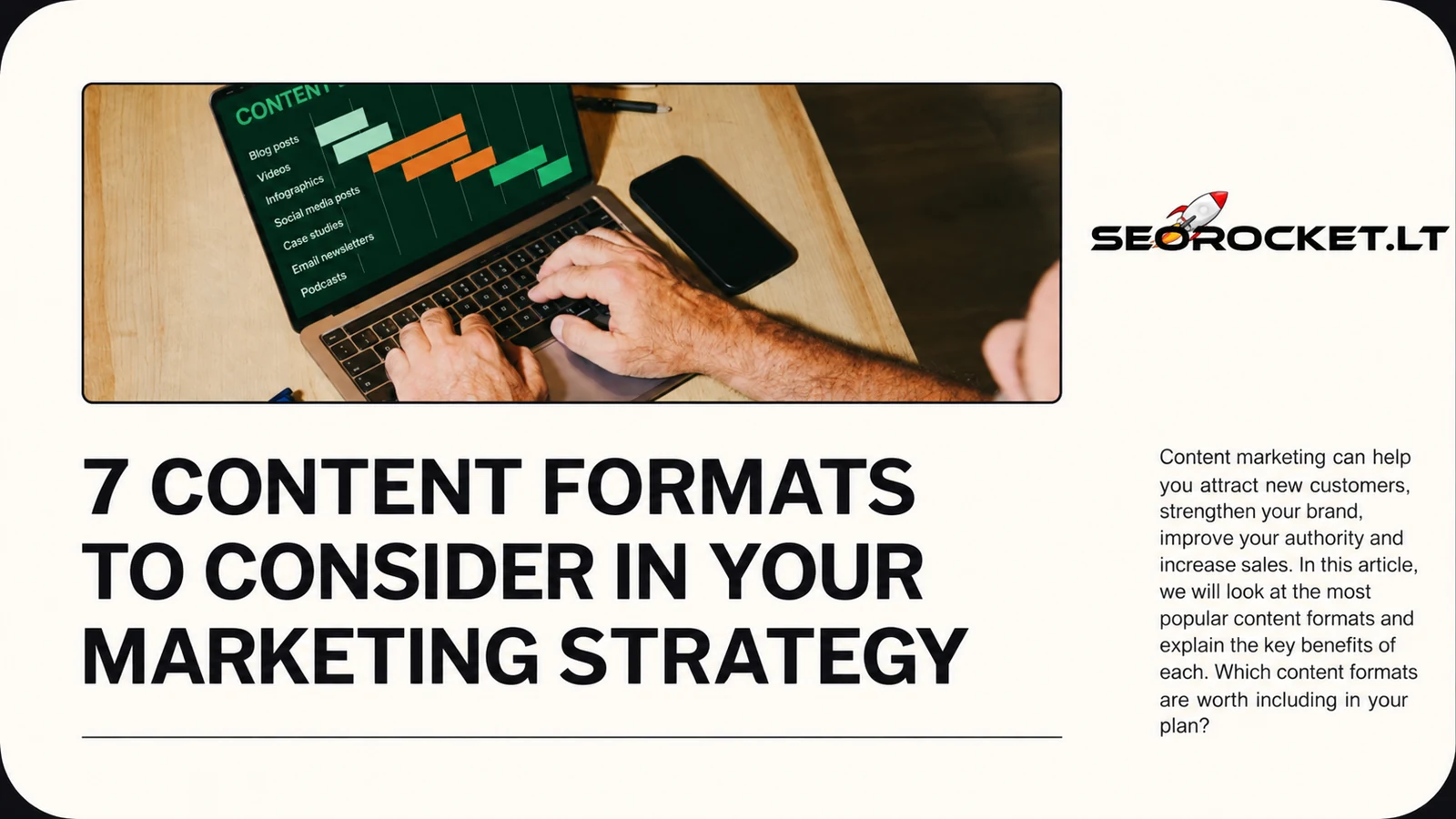
Content marketing can help people discover a brand, understand its offer and make a purchase decision. The right format depends on the audience's task and the information they need. Which types of content belong in your plan?
7 content marketing formats
Seven formats worth considering are:
- Blog posts
- Product pages
- Long-form content
- Online guides
- Video content
- Social media content
- Email content
Here is how each format can contribute to a content strategy and when it may be useful.
1. Blog posts
Blog posts often focus on explaining a subject rather than making an immediate sale. They can help people at the beginning of their research, sometimes called the top of the funnel (TOFU), while more specific posts can support later decisions too.
Choose topics that answer genuine audience questions. A financial services business might explain how to compare pension options or establish a savings routine. A retailer could discuss ideas connected to its products, such as breakfast recipes for a kitchenware shop, rather than chasing unrelated popular subjects.
A useful explanation may earn references from other websites, though links are not automatic. A first-time reader may not be ready to buy. Offer a relevant next step, then assess how people use the content instead of judging every post by immediate sales alone.
2. Product pages
Product and service pages give prospective customers the information needed to compare an offer. Depending on the product, this includes dimensions, functions, prices, included items and configuration options. Genuine customer reviews can add context about practical use.
These pages often support decisions near the bottom of the funnel (BOFU). Make the next action clear, whether it is adding an item to the basket, requesting a quote or contacting the business.
3. Long-form content
A detailed article can explain a complex problem, walk through a process or compare alternatives. Long-tail queries are often specific, but a useful answer does not need to be long simply because the search phrase is detailed.
A local plumbing company might explain how to investigate a blockage safely, while a law firm could describe how to choose a specialist for a particular issue. Review search results to understand the task and missing explanations. Write enough to answer it properly, rather than matching a competitor's word count.
4. Online guides
A guide brings several related questions into one structured resource. It may be freely accessible or offered as a downloadable PDF. If you request an email address, explain its purpose and keep any marketing subscription separate and transparent; downloading a guide is not, by itself, permission for every future campaign.
In education, a guide might be a paid learning resource or a free explanation of how to prepare an application. The format should reflect how readers will use it, including whether they need to search, print or revisit individual sections.
5. Video content
Video can make demonstrations and physical processes easier to understand. It is not automatically more usable than text: include captions or a written explanation where needed, and avoid slowing the page with unnecessary media.
Possible subjects include product demonstrations, a team's working process, answers to common questions and service walkthroughs. A roofing company could show a documented repair before and after; a logistics business might explain its vehicles and equipment.
6. Social media content
Content can reach people beyond your website. Relevant social channels offer opportunities to share updates, answer questions and hear directly from the audience.
Possible formats include:
- Photos and short video stories
- Brief news updates
- Longer videos
- Infographics
A charity could share a community initiative, while a leisure business might announce available places or explain a new activity. Choose information people can use and obtain appropriate permission before sharing identifiable customers or participants.
7. Email content
Email lets you communicate with people who have a valid reason to receive your messages. A relevant series can help subscribers learn about an offer, revisit useful material or take an agreed next step.
Common formats include:
- Monthly newsletters
- Offers and new product announcements
- Automated email sequences
Adapt useful website content for email rather than copying it indiscriminately. For example, summarise an article's main lesson and link to the full explanation. This gives the existing resource another route to an interested audience.
Building a content plan around your goals
A clear plan connects individual pieces of content with their intended purpose. Start with these steps:
- Define the goal: awareness, relevant enquiries, sales or customer retention.
- Understand the audience's needs, barriers, search habits and decision process.
- Group questions and keywords by the stage they support: early research, comparison or a purchase decision.
- Create an editorial calendar with topics, deadlines, owners and publishing channels.
- Adapt suitable material across channels, such as turning an article into a demonstration, infographic or email.
- Measure traffic, engagement and conversions. Test titles and calls to action where a meaningful comparison is feasible.
Different formats serve different purposes. Some help people discover a subject; others explain options or support a purchase. Choose the combination around those tasks, then review actual performance rather than assuming that producing more content will improve rankings or sales.
Start with one or two formats you can produce well. Expand when the audience need and available resources justify it. Consistent quality is more useful than maintaining every channel poorly.