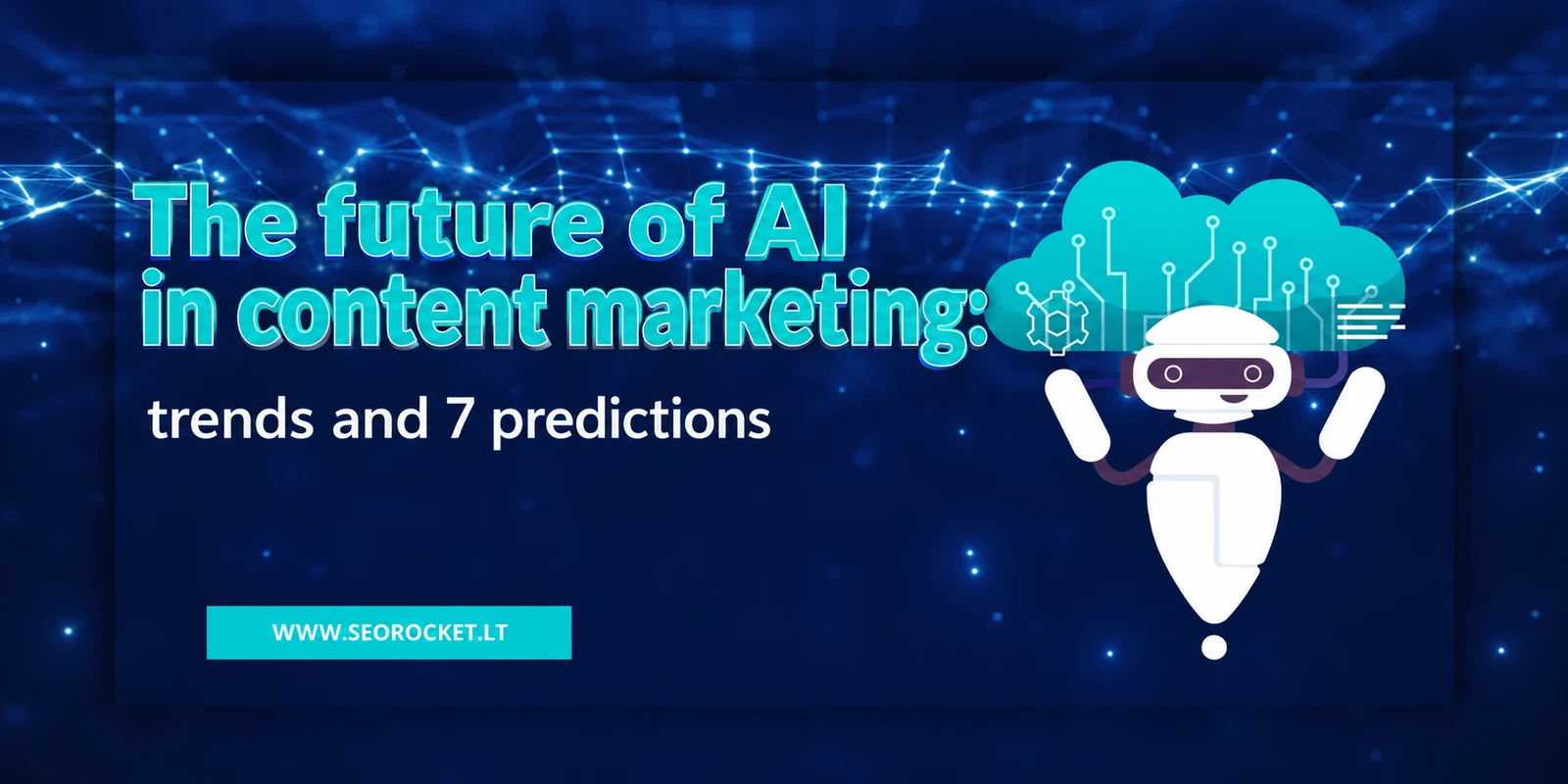
Artificial intelligence is changing how teams research, create and review material, including content marketing . Its role in drafting, distributing and optimising content depends on the tools, data and editorial controls a team uses.
This article considers possible developments in AI-assisted content marketing. The predictions are scenarios for planning, not established outcomes or attributed expert consensus. A technology's availability does not mean every business should adopt it.
Where AI already fits into marketing
Content marketing can involve AI-assisted research, drafting and analysis. Some platforms bring these functions together under the label “content intelligence”, but their methods and capabilities differ.
Content intelligence tools may analyse groups of pages or other data to identify patterns. Review what information the platform uses, what its recommendations mean and whether those recommendations fit your audience before changing a strategy.
Generative AI for content creation
Producing useful content takes research, judgement and editing. Generative AI tools such as ChatGPTcan assist with drafts of articles, social posts, web copy and emails. A faster first draft is not the same as a finished, accurate publication, so allow time for verification and revision.
More tailored marketing
AI-assisted analysis may help a team identify differences in customer needs and adapt messages accordingly. The approach depends on suitable data, an appropriate basis for using it and a useful purpose. More personalisation is not automatically more welcome to a recipient.
Predictive analysis
Predictive systems use historical data to estimate possible future behaviour. Such estimates may inform stock, budget or product decisions, but their usefulness depends on the data, assumptions and changing conditions. A prediction should include uncertainty rather than being treated as a promise.
Customer support and interactive experiences
An automated assistant can respond outside normal working hours, but the quality of help depends on its information and limitations. Define which questions it can handle and provide a route to a person when the issue requires judgement or access it does not have.
Conversational and voice queries
Questions spoken to an assistant may be conversational, but that does not establish a separate universal optimisation formula. Explain the topic naturally and clearly, and investigate the actual searches and platforms relevant to the audience.
Augmented reality in marketing
Augmented reality can help demonstrate how an item might look in a room or support a virtual product preview. It is a related interactive technology, not inherently an AI system. Its value depends on the accuracy of the representation and the customer's task.
Seven predictions to consider
- Lower barriers to producing media — Some production tasks may become more accessible to small organisations. Access to a tool does not remove the need for subject knowledge, rights checks or a distinctive offer.
- Greater pressure to demonstrate quality — As more drafts become easy to produce, useful original evidence and careful editing may become more important. AI does not automatically raise the quality of published content.
- Generative AI may change SEO traffic — AI answers may change how people use traditional SEO . Assess the effect on your own relevant queries and commercial outcomes rather than assuming the same decline for every website.
- More interactive AR and VR experiences — These technologies may create useful demonstrations in suitable markets. Test whether the experience improves a real decision before investing in production.
- More conversational automation — Assistants may handle more routine interactions, with clear limits, monitoring and human escalation remaining important.
- Continued attention to mobile use — Teams may use better analysis to adapt content to mobile tasks. Readability, accessibility and reliable interaction still matter more than personalisation for its own sake.
- Changes to marketing responsibilities — Some routine work may be automated, changing the balance of research, production and review. The effect on jobs and workloads will vary rather than simply freeing time in every organisation.
Preparing for the impact of AI
Rather than relying on an undated adoption percentage, assess your own team's needs. Identify a repetitive task, choose a limited trial and compare the complete workload, including checking and corrections. Consider data handling and responsibilities before connecting customer information to a new tool.
Develop the skills to evaluate AI output as well as generate it. A small, measured change with clear editorial accountability provides a more useful basis for adoption than a prediction that the technology will transform every part of the business.