General advice is easy to find online. In SEO work, documented practical knowledge can add something a familiar list of tips does not provide.
Many SEO articles cover the same advice.
A search can reveal several pages making similar points in slightly different words. Generative tools make it easy to produce another draft, but do not establish why that draft needs to be published.
The useful question is not how much content exists, but whether a particular page offers a clearer explanation, relevant evidence or practical detail a reader needs.
Genuine experience can make content more useful
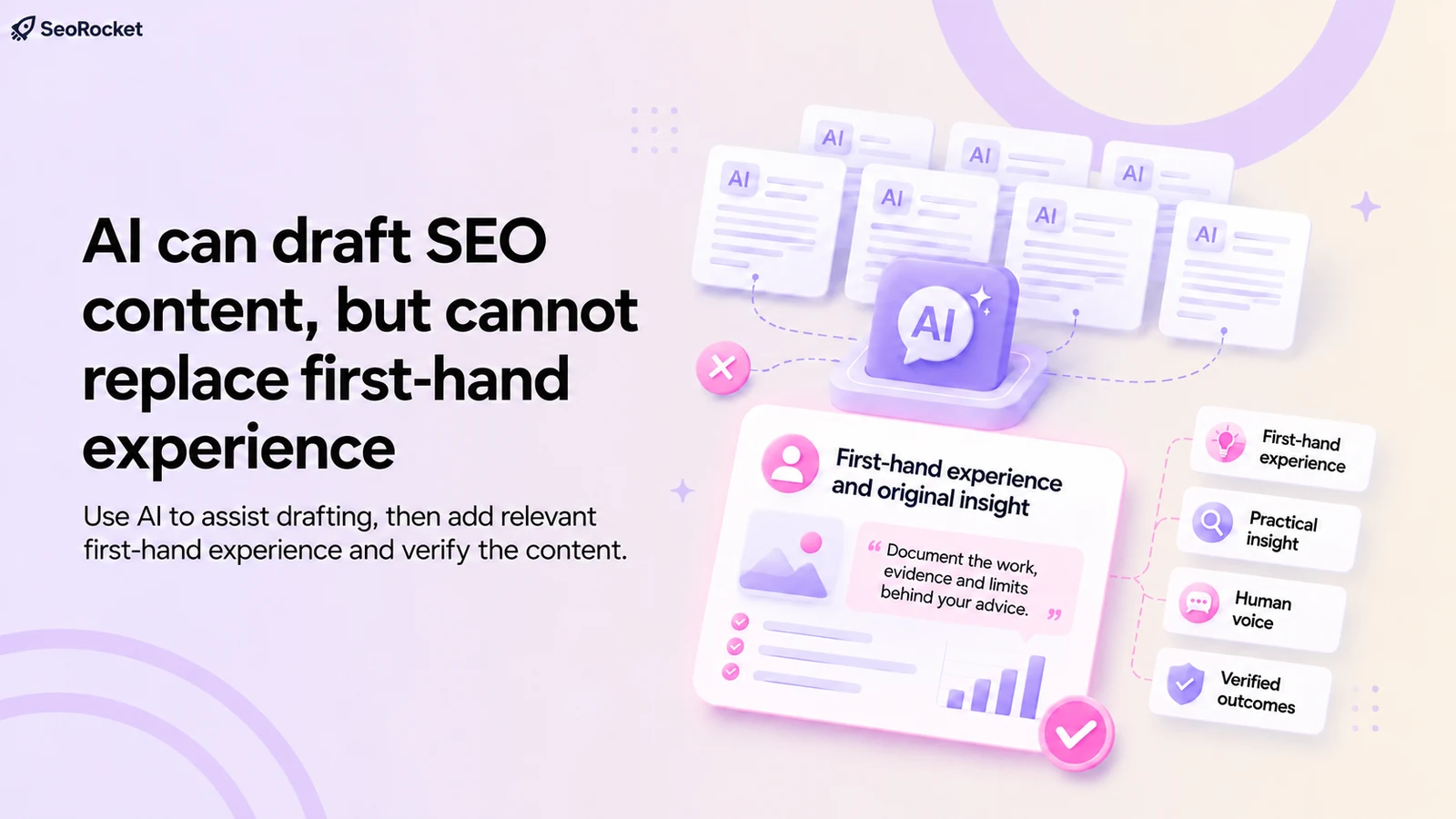
A business can distinguish its material through real work: the problem encountered, the choices made and the outcome observed, with the limitations stated honestly.
AI can help express or organise that information. It cannot become the person who carried out the work or supply genuine first-hand experience that no one provided.
A practitioner can explain why a strategy did not work, what changed during delivery and which details affected the result. A model can invent a plausible account, so the editor must ensure that any such story is real and permitted to share.
Those details help readers assess the explanation instead of relying only on confident phrasing.
Why so much SEO content sounds alike
Content plans sometimes become lists of keywords to cover, with volume of publication treated as the main objective.
That approach can produce repetitive pages with similar structure and little additional information.
AI can make this kind of production easier, without solving the underlying editorial problem.
It is straightforward to request another list of SEO tips. The worthwhile work is deciding which questions matter, checking the claims and adding information that improves the answer.
A page can be technically original in wording yet still repeat what readers have already seen. Rephrasing is not the same as providing a useful contribution.
A specific, accountable explanation can be more valuable than a polished generic draft.
Useful contributions may include:
- genuine examples;
- a clearly identified, evidence-informed opinion;
- lessons from actual work;
- client situations shared with appropriate permission;
- documented tests and their results;
- attributable professional observations.
The value comes from the work and evidence behind the account, not simply making the prose sound human. An invented first-person story is not a substitute.
What changing search experiences mean for content
Google's guidance discusses experience, expertise and trust, while AI search can present quick summaries from available information. Neither makes every basic explanation obsolete: readers still need accurate context and sources.
Before publishing another general guide, ask what it adds. A documented implementation, a useful comparison or a clear limitation may provide more help than repeating a broad recommendation.
A business owner explaining an actual decision can give readers a basis for judgement. A case example should state the circumstances and measurement limits, rather than implying that the same result applies to every customer.
Data and detail are useful when verifiable. They must not merely look credible. A model can produce precise-sounding numbers, so trace every important measurement to the evidence behind it.
Smaller businesses may have valuable direct knowledge of a niche or customer problem. Share that knowledge clearly without assuming that a personal tone automatically outweighs a larger brand or improves rankings.
Combining AI assistance with real expertise
This is not a reason to avoid AI assistance altogether.
A tool can organise research questions, propose an outline or help revise wording. The team still needs to open sources, check the draft and decide what the business can honestly claim.
Combine those uses with genuine subject knowledge and editorial responsibility. Add relevant evidence and practical context where they improve understanding, rather than adding an anecdote merely to imitate expertise.
The objective is useful, reliable material, not the largest possible publishing output. Review whether the page helps someone understand or complete a task and whether its claims can be checked.
AI can help put experience into words. It does not create the underlying experience.